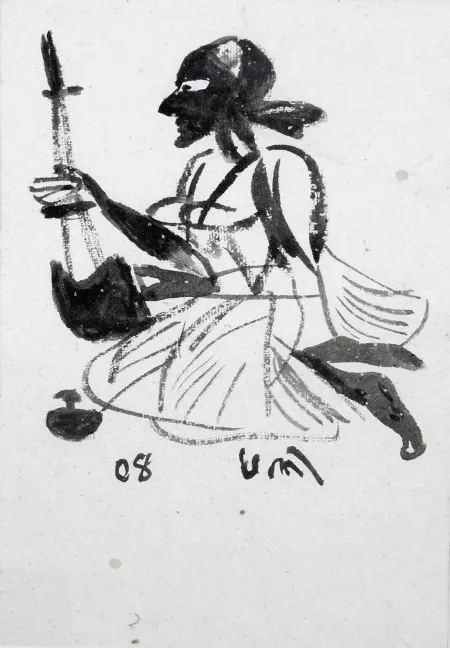
₹ 250,000
$ 2,778
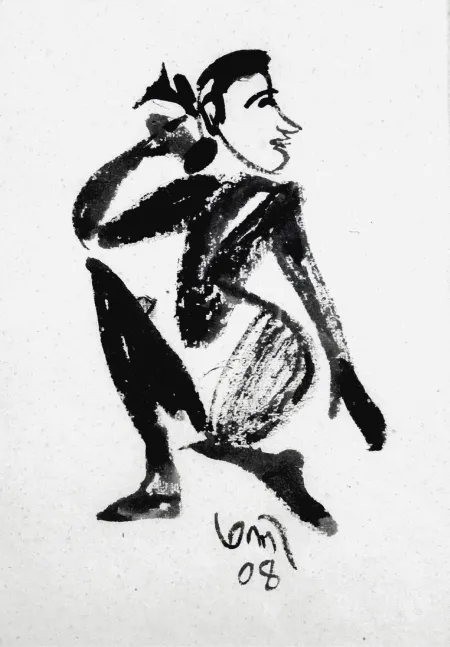
₹ 250,000
$ 2,778
Profile:
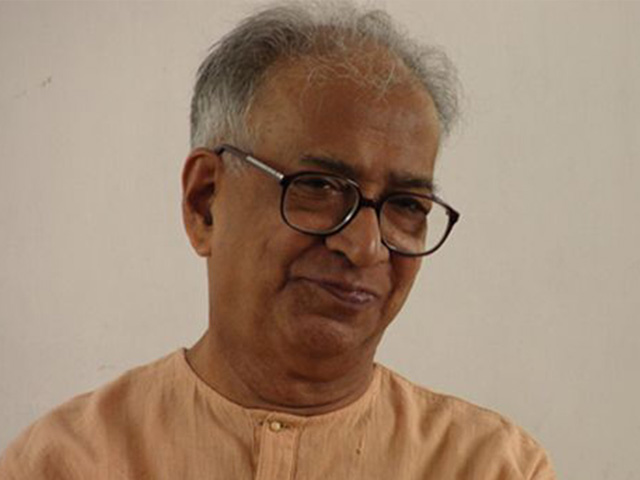
K. G. Subramanyan occupies a seminal position in the history of modern Indian art as one of its most intellectually versatile and influential figures—simultaneously an artist, pedagogue, writer, theorist, designer, and cultural thinker. Born in 1924 in Kerala, Subramanyan initially studied economics at Presidency College, Madras, before his involvement in the Indian freedom movement and adherence to Gandhian ideals led to his imprisonment during British rule. Following his release, he was barred from enrolling in government institutions, a circumstance that ultimately redirected him toward art.
A transformative moment in his artistic formation came in 1944, when he joined Kala Bhavana, Santiniketan, where he studied under pioneering modernists such as Nandalal Bose, Benode Behari Mukherjee, and Ramkinkar Baij. The Santiniketan ethos—emphasising the integration of art, craft, nature, and everyday life—became foundational to his artistic philosophy.
Subramanyan later joined the Faculty of Fine Arts, M.S. University, Baroda in 1951, where he emerged as one of the most influential teachers in post-independence Indian art. His intellectual and artistic engagements expanded further through his studies at the Slade School of Art, London (1956) as a British Council scholar, and later as a Rockefeller Fellow in New York (1966). In 1980, he returned to Santiniketan as Professor of Painting at Kala Bhavana, continuing there until his retirement in 1989, after which he was appointed Professor Emeritus.
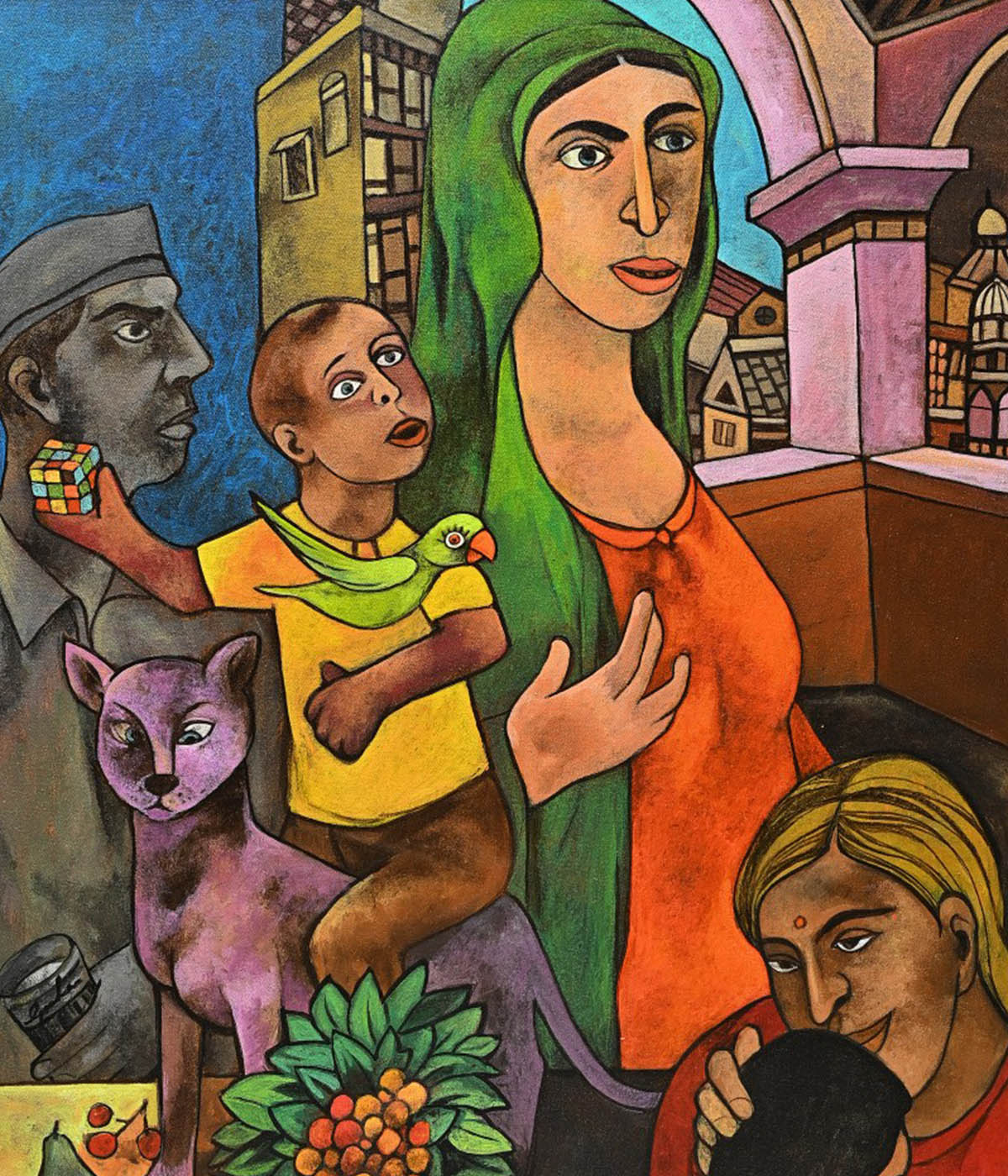
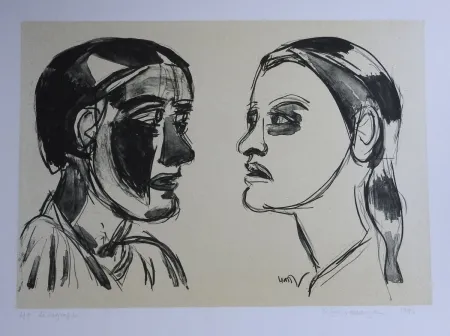
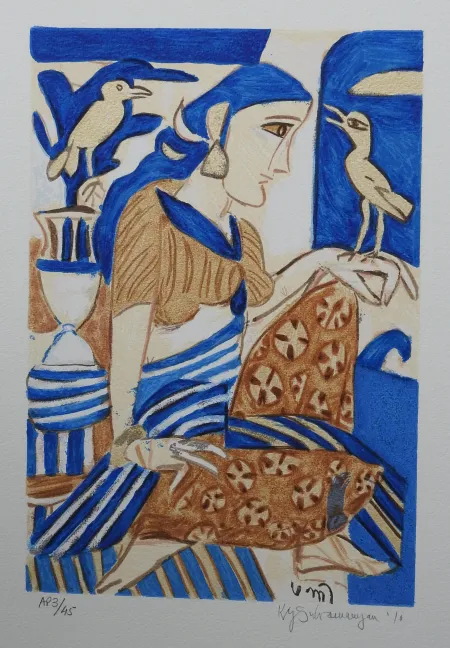
K. G. Subramanyan’s artistic practice defies singular categorisation. Working across painting, mural, printmaking, reverse glass painting, terracotta, tapestry, toy-making, weaving, and writing, he consistently challenged the hierarchy between “fine art” and “craft.” His imagery is populated by mythological figures, animals, folk motifs, erotic narratives, and fantastical hybrid forms, rendered with wit, fluidity, and remarkable formal inventiveness. Drawing equally from Indian folk traditions, classical art, popular culture, and international modernism, Subramanyan created a visual language that was simultaneously sophisticated and accessible.
His works often blur the boundaries between narrative and abstraction, combining playful surface rhythms with deeper philosophical and socio-political reflections. A prolific writer and theorist, Subramanyan also authored influential texts on art, pedagogy, and visual culture, while illustrating and writing children’s literature.
Over the decades, Subramanyan exhibited extensively in India and internationally, and his works are held in major museum and private collections worldwide. His long-standing association with Aakriti Art Gallery, Kolkata, remains an important part of the gallery’s exhibition history - 2009 & 2016, with the gallery having organised significant exhibitions of his works that reaffirmed his continuing relevance within contemporary Indian art discourse.
K. G. Subramanyan’s legacy lies in his extraordinary ability to dissolve boundaries—between art and craft, tradition and modernity, intellect and play—making him one of the most important cultural thinkers and artistic innovators of modern India.