Profile:
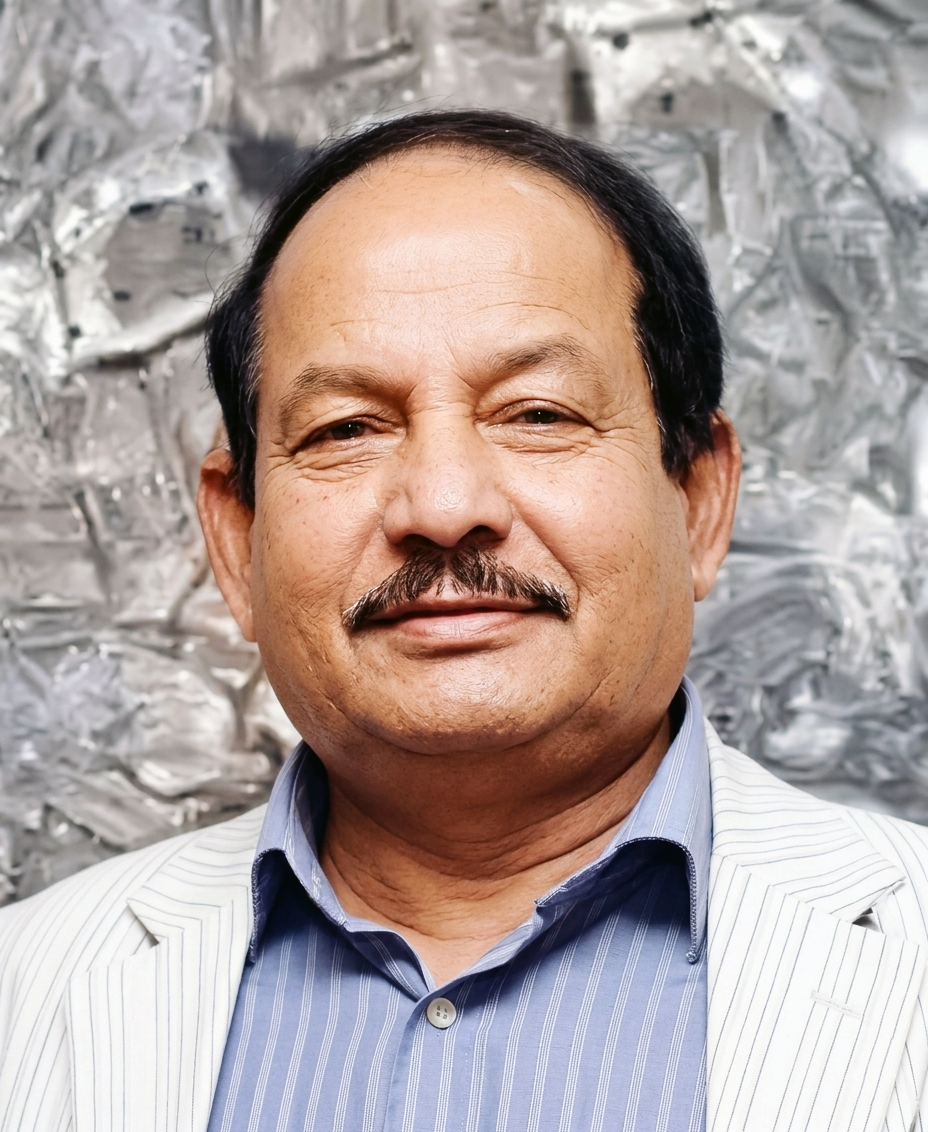
Professor Mahmudul Haque was a distinguished Bangladeshi contemporary artist, printmaker, and educator whose practice played a significant role in shaping the trajectory of modern art in Bangladesh. Born in 1945, Haque became widely recognised for his pioneering contributions to printmaking and abstraction, developing a visual language that balanced technical precision with lyrical emotional depth.
A graduate of the Faculty of Fine Arts, University of Dhaka, Haque later pursued advanced studies in Japan, an experience that profoundly influenced his artistic philosophy and formal approach. The aesthetics of Japanese art—particularly its emphasis on spatial harmony, restraint, surface sensitivity, and meditative composition—became deeply embedded within his practice. Rather than direct imitation, Haque assimilated these influences into a distinctly South Asian modernist vocabulary.
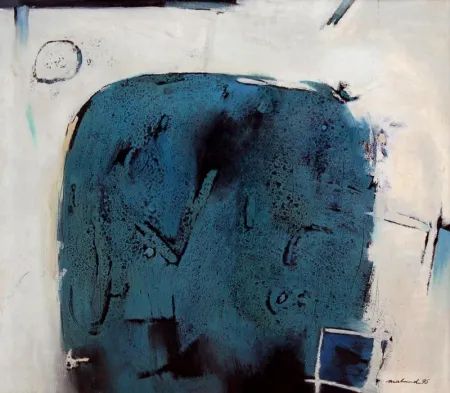
His works are characterised by layered textures, gestural abstraction, and nuanced chromatic relationships, often evoking atmospheric landscapes or inner emotional terrains without relying on direct representation. The controlled interplay between emptiness and form reflects a sensitivity to negative space and visual silence, hallmarks of East Asian aesthetics that he integrated into contemporary abstraction.
Alongside his studio practice, Mahmudul Haque was a highly respected educator who influenced generations of artists through his long association with the University of Dhaka and other art institutions in Bangladesh. His role as teacher and mentor contributed significantly to the development of modern printmaking practices in the region.
Haque participated in numerous national and international exhibitions and symposia, earning recognition for both his artistic innovation and pedagogical contribution. In acknowledgement of his cultural and artistic achievements, he was awarded the prestigious Order of the Rising Sun, one of Japan’s highest civilian honours—an extraordinary recognition of his role in strengthening artistic and cultural exchange between Bangladesh and Japan.
Professor Mahmudul Haque’s legacy lies in his ability to merge discipline and intuition, structure and emotion, creating a body of work that remains central to the discourse of contemporary South Asian abstraction and printmaking.