News & Blog
Ramkinkar Baij’s Bronze Sculptures: A Modernist Legacy in Form and Vitality.
Ramkinkar Baij (1906–1980) stands as one of the most influential figures in the history of Indian sculpture, renowned for his radical departure from classical traditions and his embrace of modernist approaches. His work, deeply rooted in his experiences at Santiniketan under Rabindranath Tagore’s influence, was groundbreaking in its use of bronze—a medium that, while less prevalent in his body of work compared to his cement pieces, revealed the raw intensity and texture that became the hallmark of his style. Baij’s bronze sculptures represent a unique fusion of indigenous themes with avant-garde experimentation, emphasizing a spontaneous, tactile approach that was in stark contrast to the smooth, finished surfaces of classical sculpture.
Baij’s bronze sculptures are notable for their rough, gestural quality—often incorporating a direct modeling approach using clay or wax before casting. This unrefined, instinctive method allowed Baij to retain the energy of the original form, presenting a sense of immediacy and vitality. His signature technique involved leaving the marks of his hands or tools on the surface, creating dynamic textures that evoke the organic rhythms of nature and the human condition. The earthy patinas and angular planes of his works convey the raw vitality of rural life, infusing his pieces with an inherent sense of movement, struggle, and endurance.
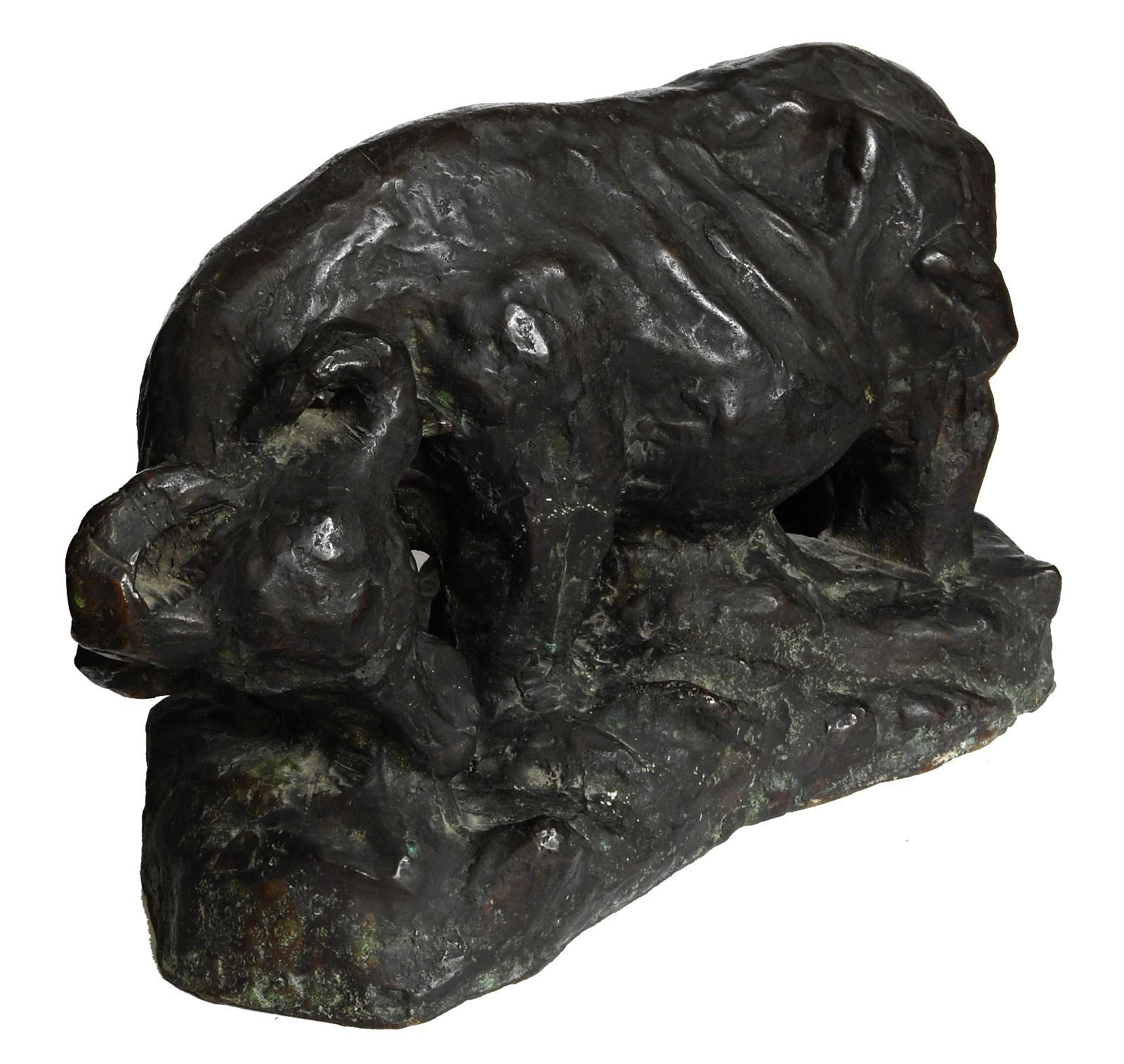
Among his most significant works, Baij’s sculptures often drew inspiration from rural Bengal and the Santhal tribal communities surrounding Santiniketan. These figures, whether human or animal, embody strength and resilience, symbolizing an intrinsic connection to the earth. In his Untitled Buffalo Sculpture (mid-20th century), the animal is portrayed with muscular tension and heavy mass, its rugged form evoking the toughness of rural endurance. The raw, unfinished surface of the sculpture highlights Baij’s technique, while the subject matter itself, representing labor and livelihood, reflects his commitment to capturing the essence of life in rural Bengal.
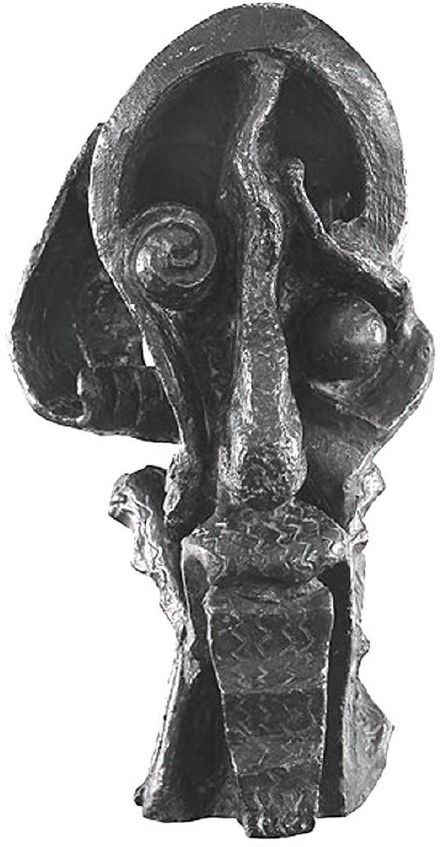
Another prominent example of Baij’s bronze work is Towards Kankalitala (early 1970s), a dynamic sculpture of a figure, whose sharp angular planes and bold textural contrasts speak to the energy and vitality inherent in Baij’s artistic practice. The figure appears to move with urgency, as if in constant motion, which mirrors the agrarian struggle and the spiritual journey that frequently pervades Baij’s body of work. In contrast to more traditional sculptures, which often idealize their subjects, Baij’s work embodies the physicality and rawness of life itself.
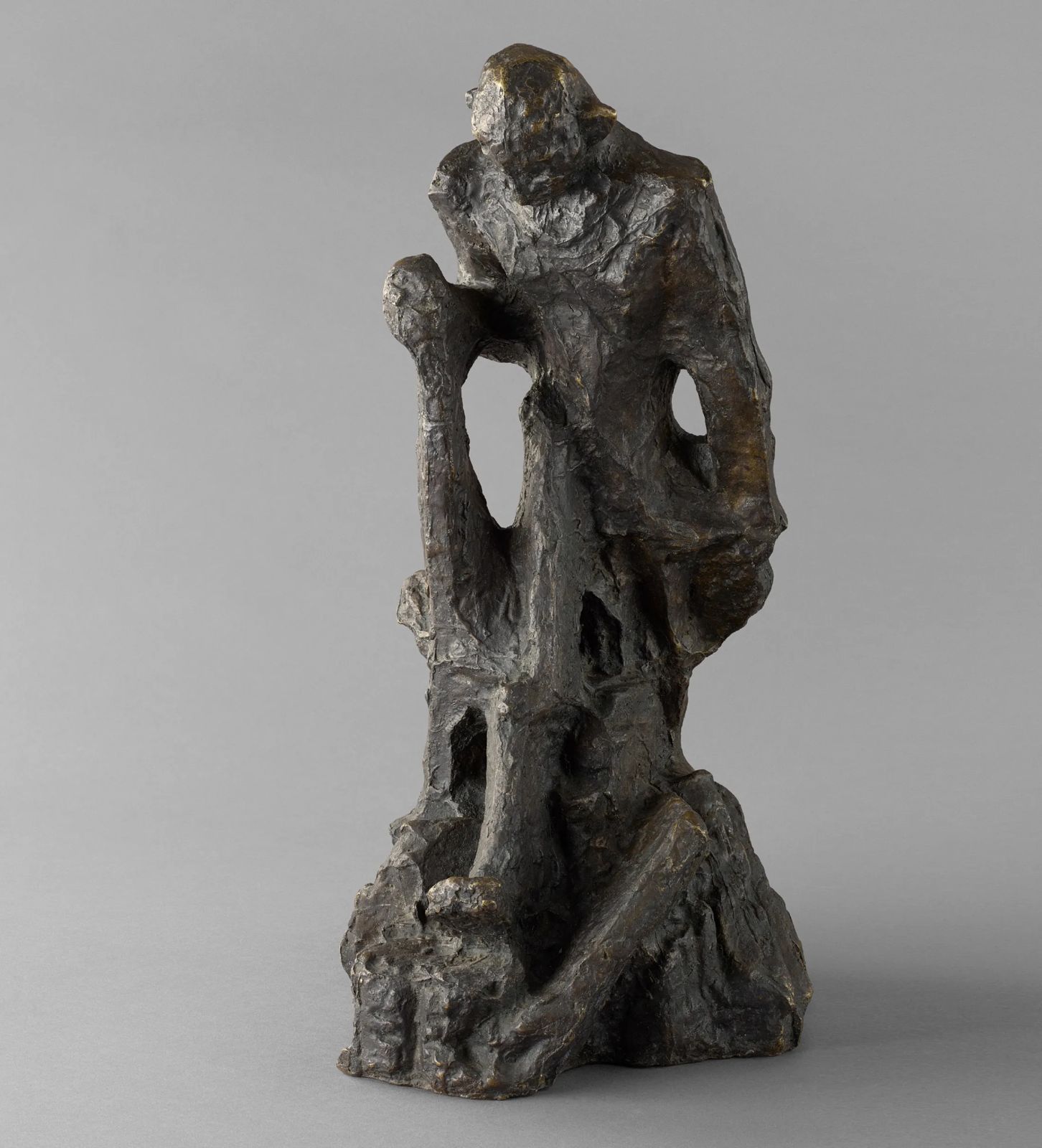
Baij’s Untitled Gandhi Sculpture (1930s–1940s), part of the collection at the Delhi Art Gallery (DAG), captures Mahatma Gandhi in mid-stride, with fluid casting that conveys both his movement and moral authority. The minimalist form eschews ornamentation, focusing instead on the essence of the figure’s forward motion, which resonates with Baij’s overall style of representing strength through simplicity.
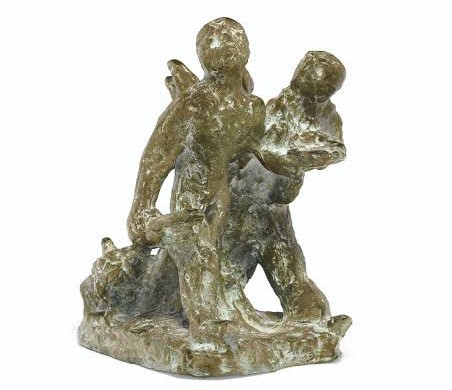
The Santhal Family (1938, cast 1983), in particular, is one of Baij’s most celebrated works. Originally created in cement, the later bronze casting now held in the DAG collection retains the same emotive power—its raw, textured surfaces and stylized forms accentuating the themes of tribal life and communal resilience. The figures’ intertwined postures speak to the solidarity and strength of the family unit, reflecting Baij’s deep empathy for the rural and tribal populations he frequently depicted.
Baij’s signature was typically simple, often inscribed as “RK” (his initials), carved into the base or reverse of the sculpture. This modest marking reflects his minimalist philosophy and desire to remain anonymous within his material, focusing more on the work itself than on personal accolades. Not all of Baij’s bronzes are signed, but his distinct stylistic traits—raw surfaces, unrefined shapes, and dynamic energy—remain unmistakable indicators of his authorship.
Ramkinkar Baij’s bronze sculptures are not just objects of artistic expression but also embody the spirit of modern Indian sculpture. His ability to blend indigenous themes with a modernist approach set him apart from his contemporaries. His work transcends the boundaries of medium, form, and content, and in doing so, it remains a defining legacy within the broader history of Indian art. Through his bronzes, Baij expressed a deeply rooted connection to the land, the people, and the enduring vitality of rural life, while pushing the boundaries of modernist sculpture.