News & Blog
Unspoken Stories: The Collectible Legacy of Pradip Maitra
In the world of Indian contemporary art, Pradip Maitra occupies a space that is as introspective as it is quietly radical. Born in 1959 in Sreerampore, West Bengal, Maitra’s journey into the visual arts began with a formal education at the Indian College of Art and Draftsmanship in Kolkata, where he graduated with distinction. But it is his internal education—his personal, patient reckoning with light, silence, and the emotional residue of modern life—that truly defines his practice. His canvases rarely raise their voices; they speak in low, persistent murmurs, inviting the viewer not to glance but to gaze, not to react but to reflect.
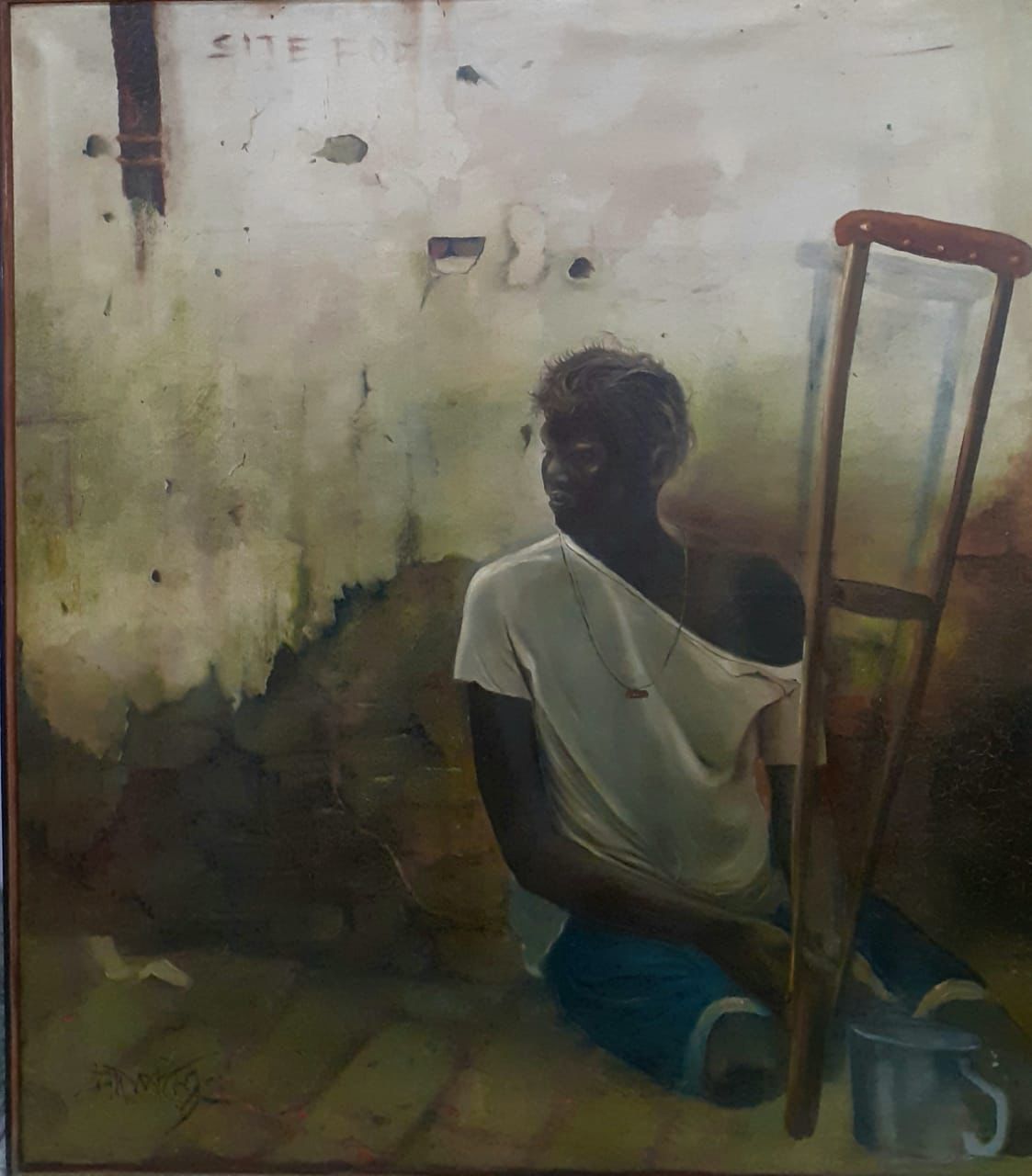
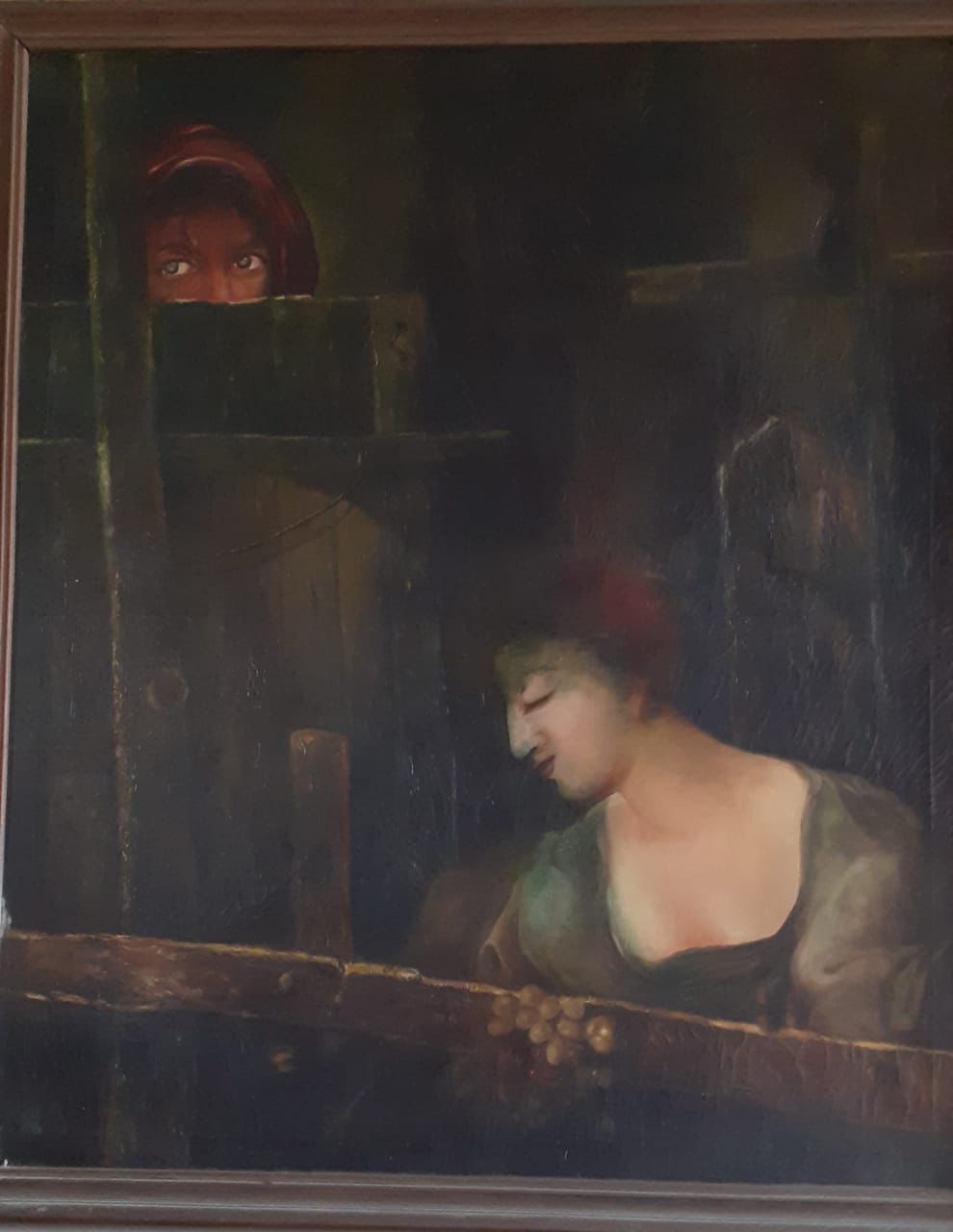
Over four decades, Maitra has developed a painterly language that resists easy classification. His figures are rooted in realism yet surrounded by elements that defy literal interpretation. A man with a crutch crouches against a crumbling wall. A floating helmet beside an unseen worker hints at a life erased by the very machinery he once served. A woman gazes out from behind a fence, her face partially hidden, her presence both vivid and elusive. These are not portraits in the conventional sense—they are distillations of memory, vulnerability, and endurance. There is often a cinematic stillness in Maitra’s compositions, a sense that the moment we are witnessing is suspended between past and future. His use of shadow and texture creates atmosphere rather than drama, while his muted palette renders each frame timeless. In many ways, his paintings echo the quiet poetry of filmmakers like Vittorio De Sica or auteurs like Antonioni, where what is unsaid carries more weight than what is spoken.
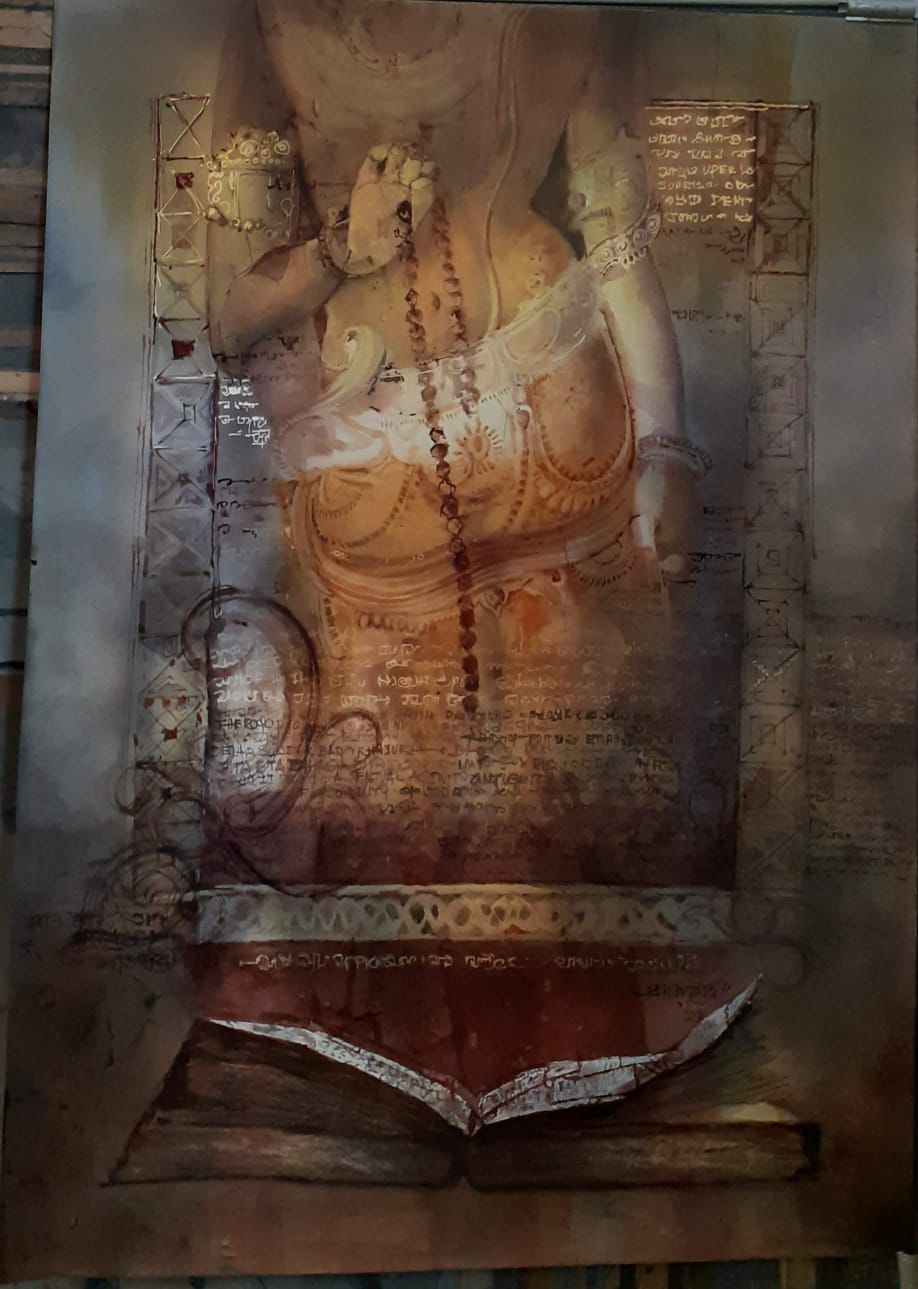
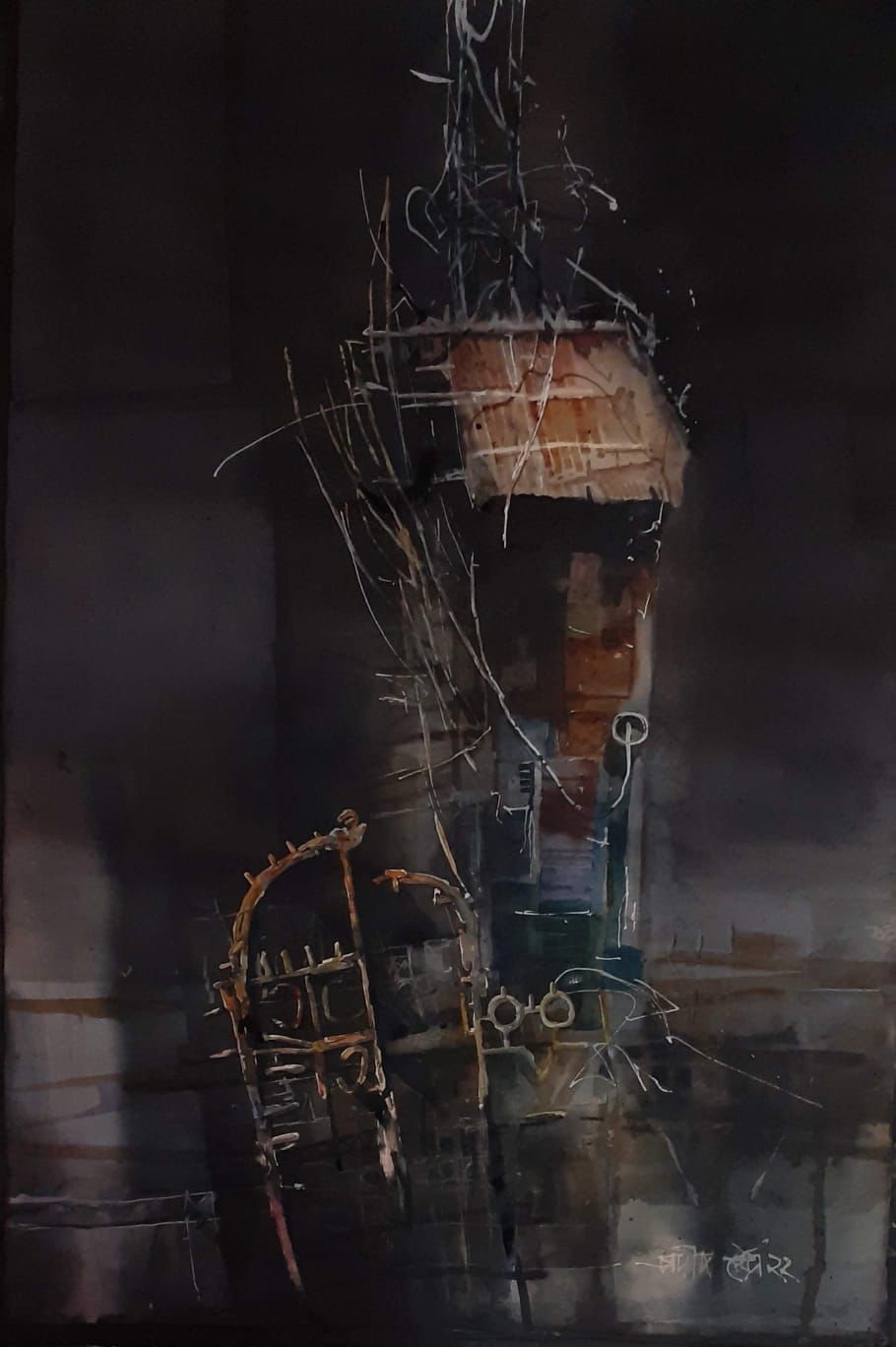
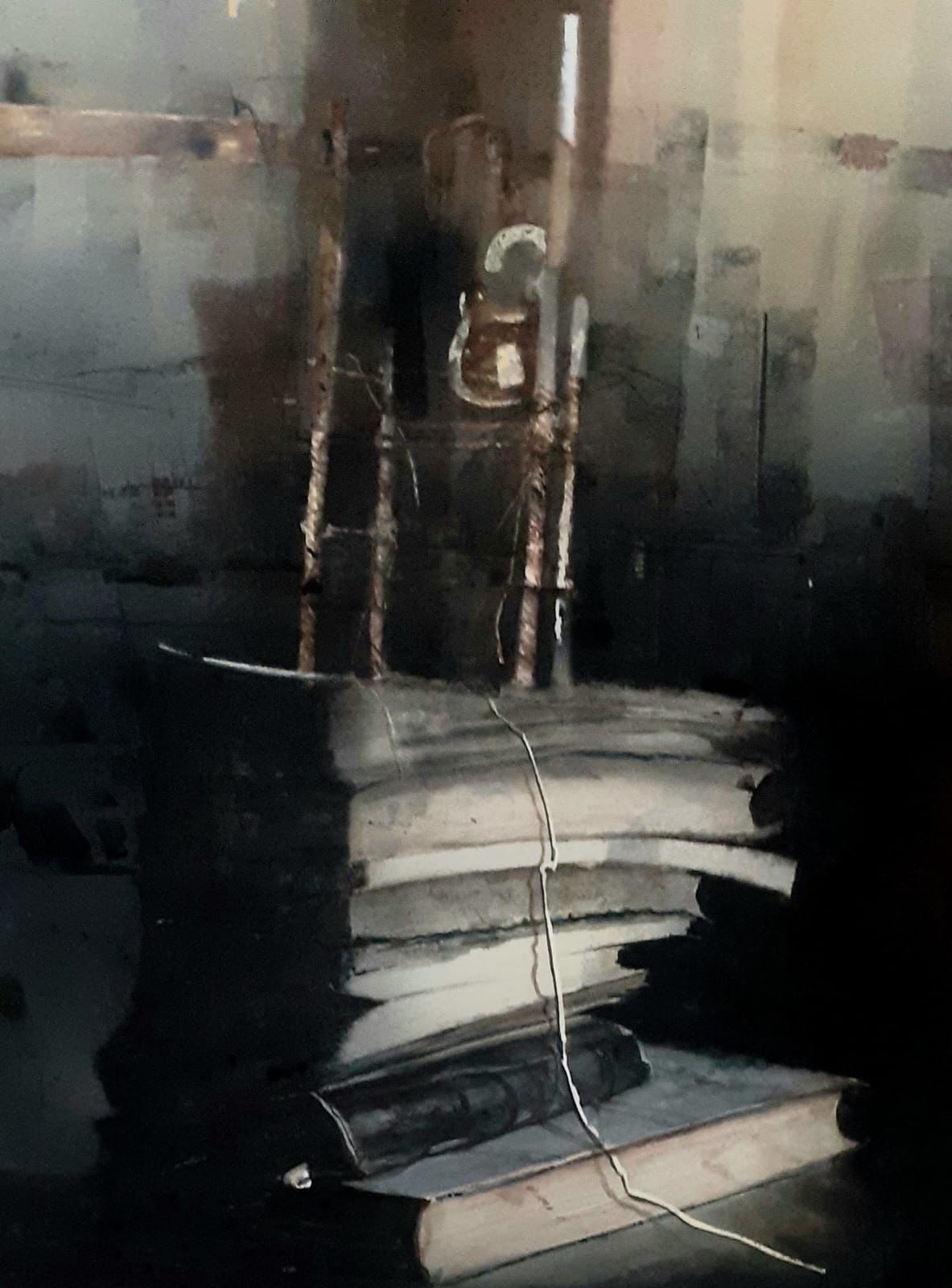
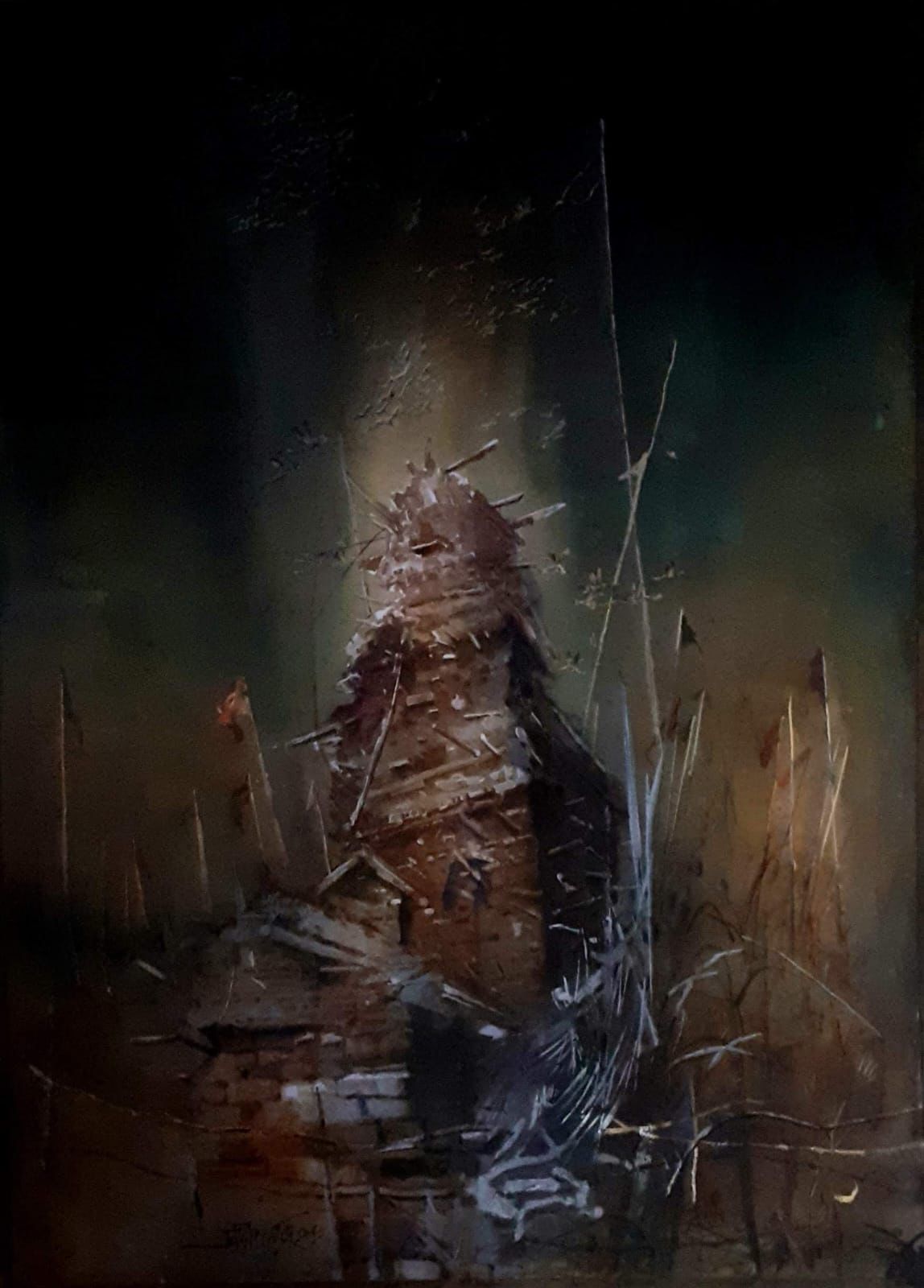
In recent years, his works have grown more symbolic. He introduces architectural fragments, books, tools, and motifs drawn from myth and history—not as literal references, but as emotional anchors. The recurring image of the horse, for instance, often appears ghostlike, bearing within it echoes of epic narratives, loss, and motion. In other paintings, layered scripts and markings surface like submerged thoughts, whispering of forgotten knowledge or fragmented memory. What is particularly striking about Maitra’s practice is his ability to blend the tactile with the ephemeral. Even when working in mixed media or experimental formats, he never loses his grip on the emotional core of the image. Each painting is a slow burn, constructed patiently, allowing the medium to settle into itself before it finds its final form.
Though he has never chased the spotlight, Maitra’s work has been widely exhibited and deeply admired. He has held solo shows at premier institutions like Jehangir Art Gallery, Birla Academy of Art and Culture, and Dhoomimal Art Centre. His work has featured in major exhibitions across India and abroad, including Manifestations by Delhi Art Gallery, Young Faces in Contemporary Art, and Best of Bengal. His paintings are housed in collections ranging from the National Gallery of Modern Art and L.V. Prasad Eye Hospital to Reliance Industries and private collectors around the world. And yet, there is a certain retreat from spectacle in his personality—an artist who prefers the work to speak, not the biography.
Maitra’s art asks for time and rewards those who stay with it. In an age of instant consumption and visual overload, his paintings create a space to breathe and reconsider. He does not paint to illustrate stories. He paints the silence that stories leave behind. In doing so, he has become one of the most quietly compelling voices in Indian art—an artist whose canvases do not demand your attention but earn it, slowly and deeply.