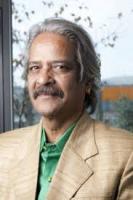
Akhilesh is a distinguished Indian abstract painter, writer, and curator whose practice is marked by a sustained enquiry into colour, line, space, and the material presence of paint. Born in Indore in 1956, he grew up in an environment closely connected with art; his father was an art teacher in Madhya Pradesh. He received his National Diploma in Fine Arts in Indore in 1977–78 and subsequently developed an independent practice outside the dominant metropolitan centres of Indian art.
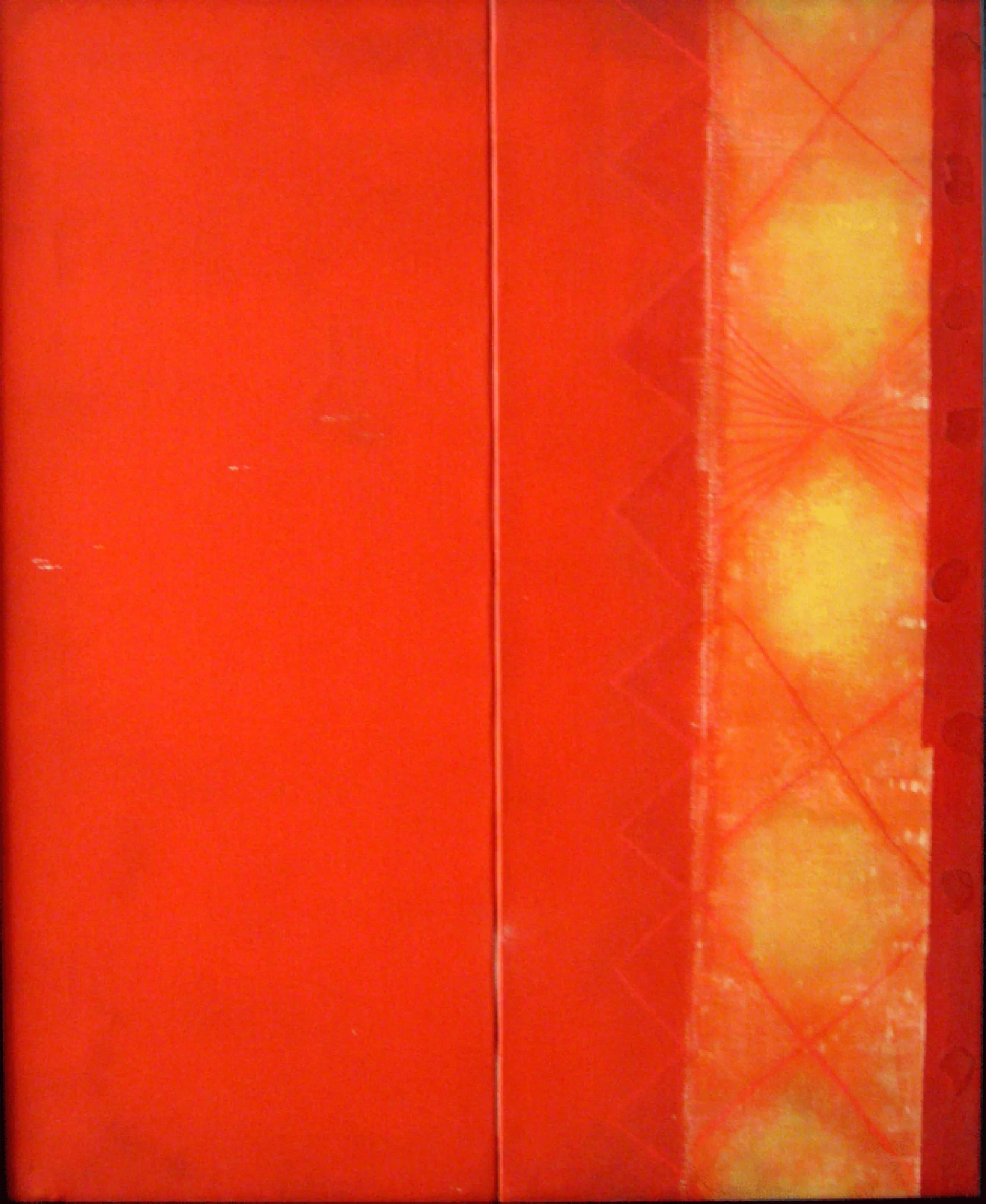
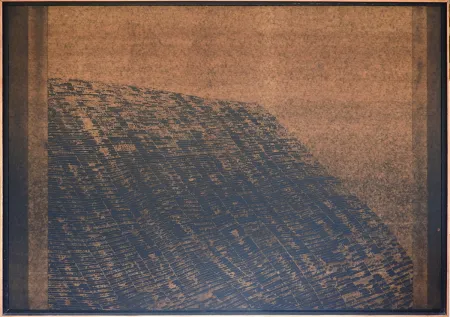
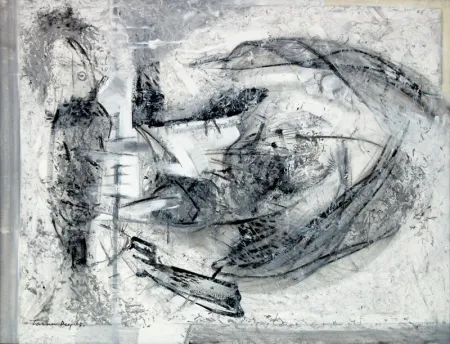
Akhilesh’s paintings do not depend upon recognisable subjects or descriptive narratives. Instead, they emerge through the gradual interaction of colour, gesture, surface, and open space. Forms appear, dissolve, and reappear across the canvas, creating compositions that seem to remain in a state of becoming. His paintings often resist a fixed beginning or conclusion; marks and colour-fields suggest movement without directing the viewer towards a single interpretation.
Line plays an important role in his work, though it rarely functions as a conventional boundary. It may drift across the surface, merge into colour, or interrupt a larger field of pigment. Similarly, colour is not used merely for decoration. It carries emotional, spatial, and structural significance. Transparent passages may be placed beside dense areas of paint, creating a tension between weight and openness, activity and repose.
Although Akhilesh’s work is firmly abstract, it remains connected to visual traditions encountered in central India. Folk and tribal art, regional craft practices, signs, symbols, and the rhythms of vernacular culture have informed his sensibility. These references are not directly illustrated. They are absorbed into a contemporary language in which traditional memory and modern abstraction coexist.
His paintings frequently evoke the experience of landscape without depicting a specific location. Expanses of colour, floating shapes, layered textures, and isolated marks may suggest earth, sky, water, vegetation, or architectural fragments. Yet such associations remain unstable. The viewer is encouraged to move through the composition intuitively, discovering changing relationships between surface, depth, colour, and emptiness.
Akhilesh has participated extensively in solo and group exhibitions, workshops, residencies, and art camps in India and abroad. Alongside his studio practice, he has contributed to Indian art as a curator and writer, engaging critically with the work of other artists and with broader questions concerning modern and contemporary art. The Raza Foundation recognises him as an artist, curator, and writer whose practice has received national and international attention.
Association with Aakriti Art Gallery
Akhilesh has maintained an important exhibition and representation association with Aakriti Art Gallery. His work forms part of the gallery’s programme devoted to significant modern and contemporary Indian artists, and he has been presented through solo and curated exhibitions organised by Aakriti.
The relationship is especially relevant to the gallery’s interest in abstraction and in artists whose practices developed outside narrowly defined regional or metropolitan categories. Through exhibitions, publications, and continued representation, Aakriti has contributed to making Akhilesh’s work accessible to collectors and audiences in eastern India and beyond.
The final website version should include the exact titles, dates, and venues of his exhibitions with Aakriti Art Gallery after these are confirmed from the gallery’s internal records and printed catalogues.
Akhilesh occupies a distinctive position in contemporary Indian abstraction. His paintings combine spontaneity with careful formal control, while allowing colour and line to retain a sense of freedom. Rather than presenting abstraction as a closed intellectual system, he treats it as an open and evolving process—one that invites contemplation, emotional response, and repeated discovery.