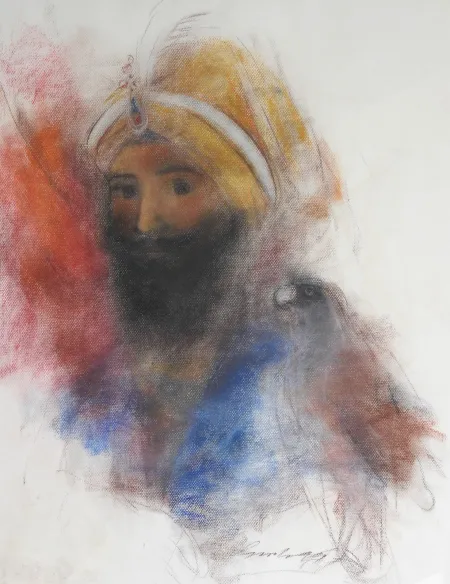
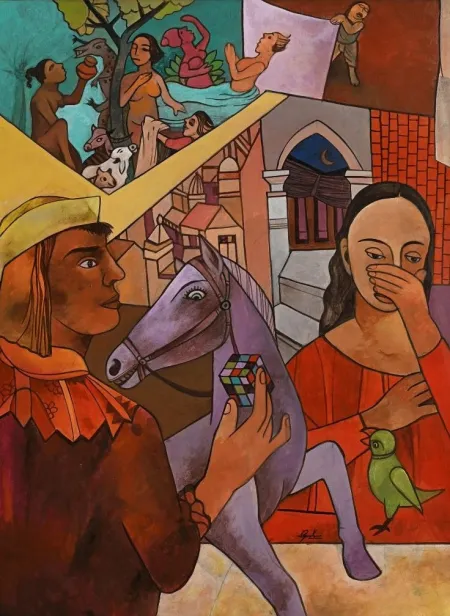
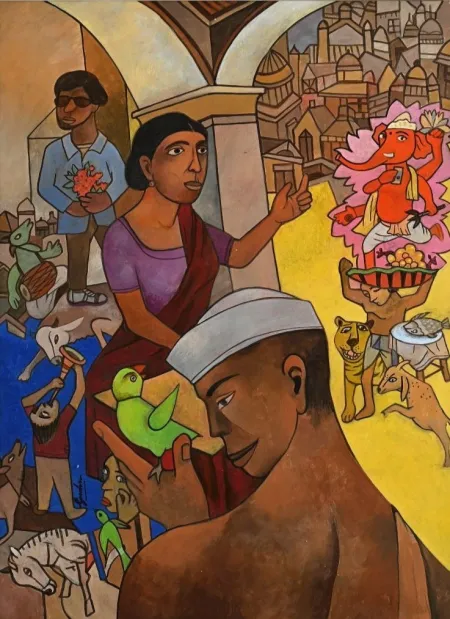
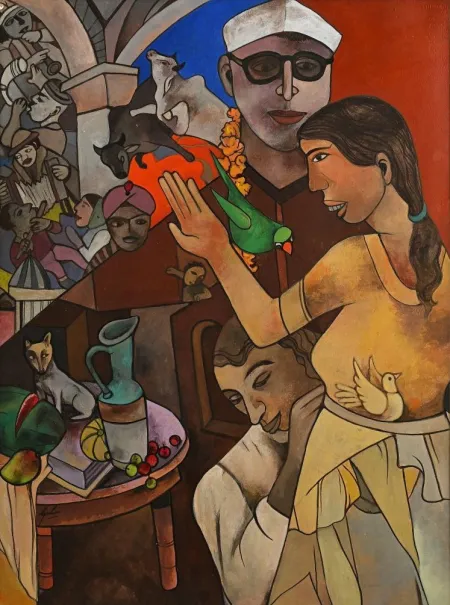
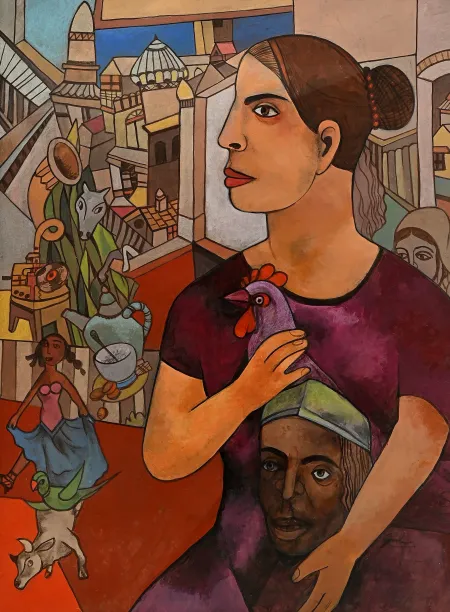
Gurcharan Singh is an important contemporary Indian painter known for his powerful figurative compositions and sustained engagement with people living on the social margins of urban India. Born in 1949 in Patiala, Punjab, he graduated from the Government College of Art and Craft, Chandigarh, in 1973. Over more than five decades, he has developed a distinctive visual language characterised by monumental figures, dramatic colour, expressive distortion, and an unsentimental observation of human vulnerability.
Singh’s paintings frequently depict workers, labourers, musicians, street dwellers, wandering figures, and animals. These subjects are not presented as picturesque representatives of poverty or as passive objects of sympathy. Instead, he gives them physical weight, psychological presence, and individual dignity. Their bodies often dominate the canvas, confronting the viewer directly and refusing to remain invisible within the wider social landscape.
The artist’s engagement with marginalised lives developed through his observation of crowded urban neighbourhoods and the people inhabiting spaces usually excluded from respectable public representation. Yet his paintings do not function as journalistic records. Through exaggeration, compression, and theatrical arrangement, he transforms observed reality into an emotionally charged form of expressionist figuration.
Figuration and Visual Language
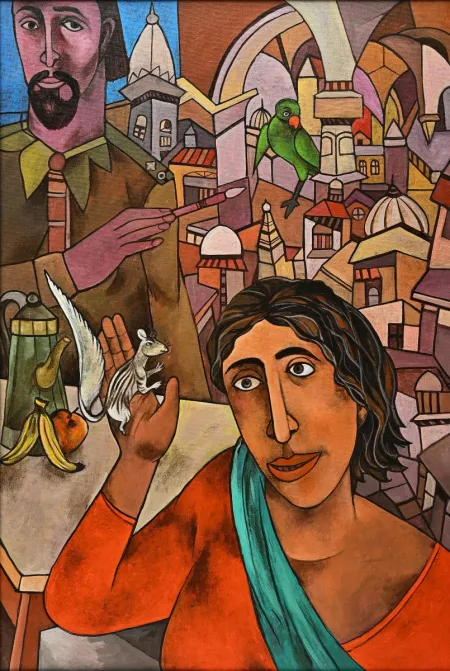
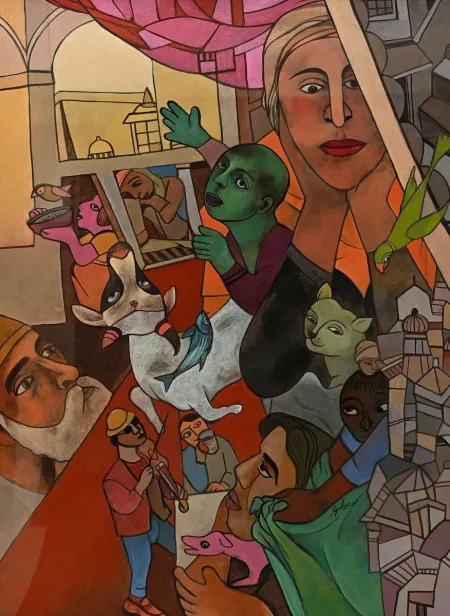
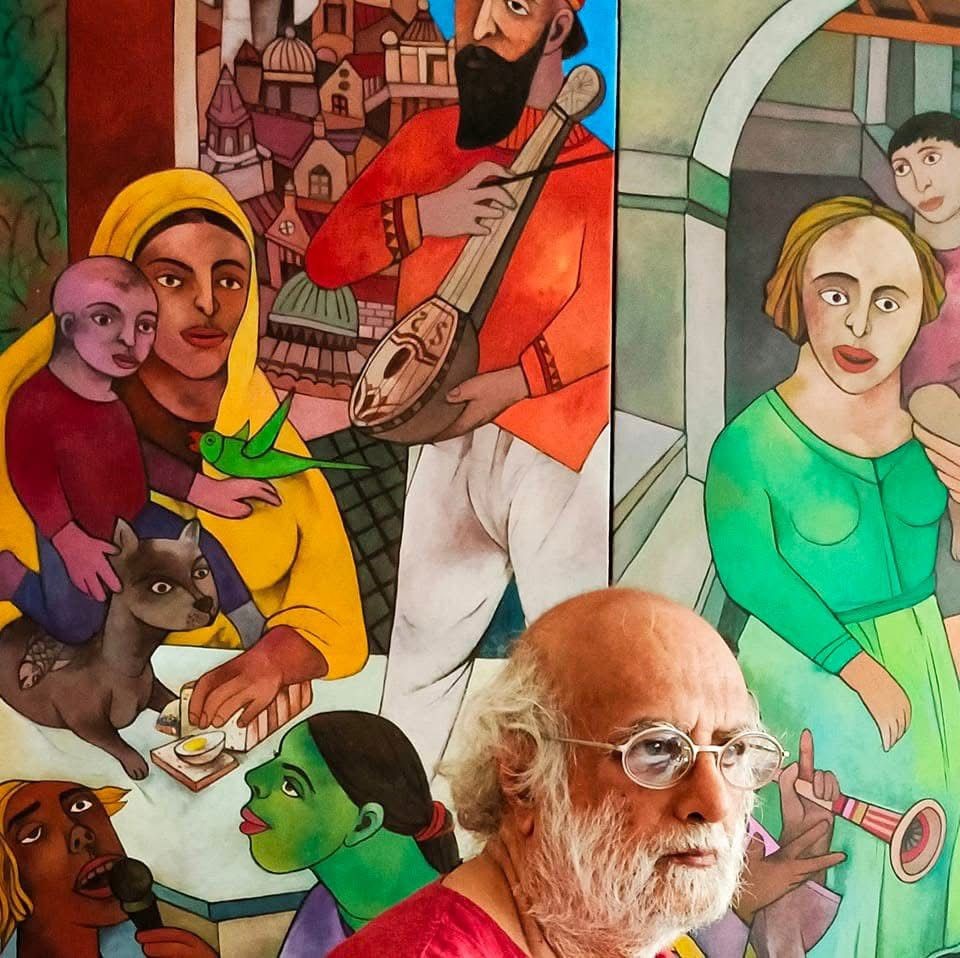
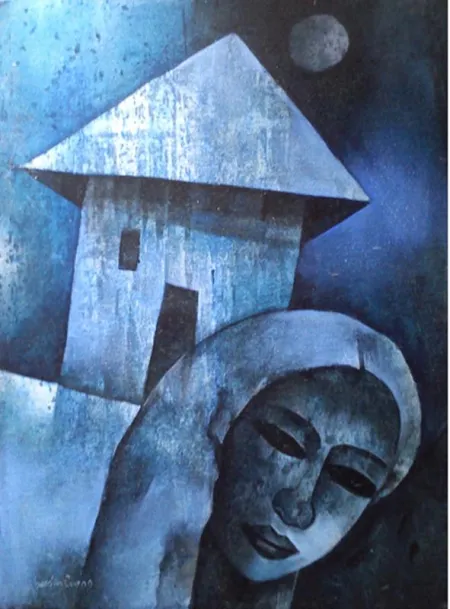
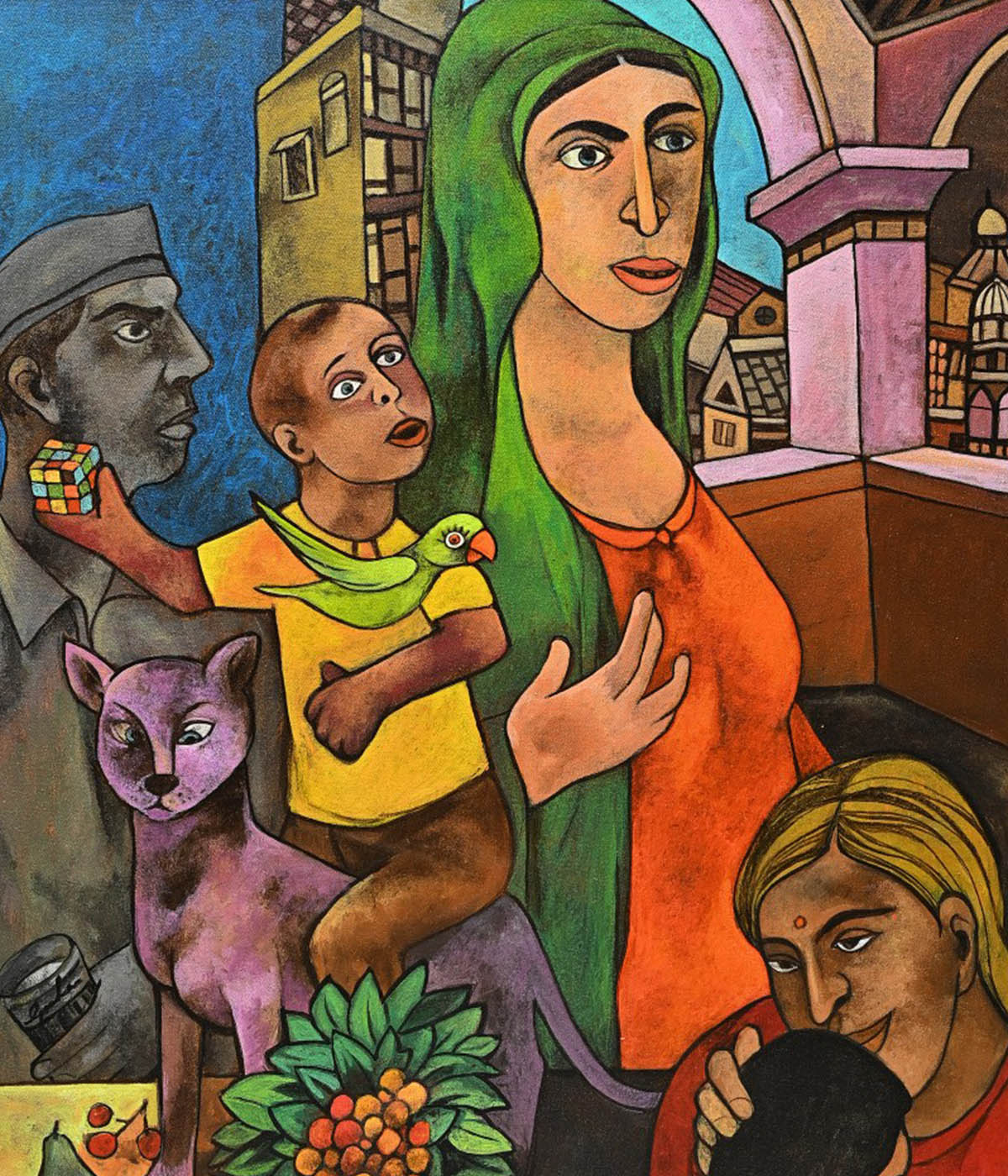
The human figure is central to Singh’s practice. His men and women are frequently elongated or enlarged, with powerful limbs, heavily modelled faces, and emphatic gestures. Their bodies may appear exhausted, defiant, sensual, isolated, or introspective. Although individual works suggest specific situations, the figures often acquire a broader symbolic significance, embodying endurance, loneliness, desire, exploitation, and survival.
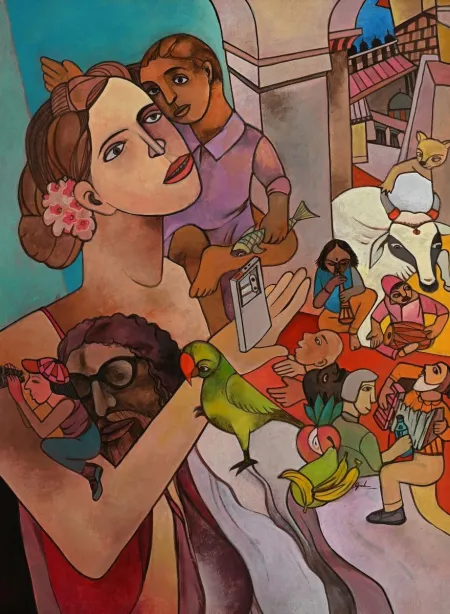
Singh employs strong contours, flattened or compressed spaces, and richly worked areas of colour. Reds, yellows, blues, greens, browns, and blacks are often placed in forceful relationships, giving the compositions an immediate visual intensity. His colour is rarely naturalistic; it heightens mood and separates the painting from ordinary observation.
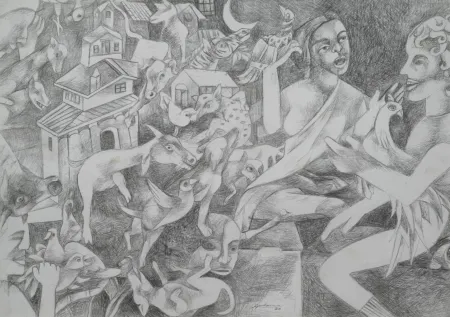
His treatment of space combines modernist construction with echoes of Indian miniature painting and vernacular visual traditions. Figures, animals, furniture, musical instruments, and architectural fragments may be stacked or brought together within shallow pictorial fields. The resulting compositions appear crowded yet carefully organised, allowing several emotional and narrative relationships to coexist.
Dogs recur frequently in his paintings, sometimes as companions and at other times as witnesses to human isolation or social neglect. Musicians and performers also appear, introducing rhythm and theatricality into scenes that might otherwise seem sombre. These recurring motifs strengthen the sense that Singh’s paintings belong to an interconnected social world shaped by hardship, intimacy, and resilience.
Social Observation without Sentimentality
Although Singh’s choice of subject matter reflects a strong social awareness, his paintings avoid simple moral judgement. He does not idealise poverty or transform marginalised people into decorative symbols of suffering. Nor does he approach them from a detached ethnographic position. Instead, he presents them as complex individuals whose lives contain sensuality, humour, weariness, violence, tenderness, and self-possession.
This refusal of sentimentality distinguishes his practice. The viewer is invited to confront lives that are commonly overlooked, but the paintings do not offer an easy emotional resolution. Their theatrical colour and formal beauty coexist with discomfort, social contradiction, and psychological tension.
Singh’s art may therefore be understood within the broader history of socially engaged figuration in post-Independence India. His approach, however, remains highly individual. Rather than illustrating a political programme, he concentrates on the expressive presence of the body and on the emotional realities contained within everyday encounters.
Exhibitions, Award and Collections
Gurcharan Singh has held solo exhibitions in India and internationally, including presentations in Chandigarh, New Delhi, Mumbai, Paris, and Canada. A significant solo exhibition was held at the Jehangir Art Gallery, Mumbai, in 2008. He has also participated in numerous national and international group exhibitions.
In 1976, Singh received the National Award of the Lalit Kala Akademi, recognising his contribution to contemporary Indian painting. His works are represented in important public collections, including the National Gallery of Modern Art, New Delhi, the Lalit Kala Akademi, New Delhi, India House, Paris, the Birla Academy of Art & Culture, Kolkata, and other institutional and private collections in India and abroad. The National Digital Repository of Museums also records a work by him in the collection of the National Gallery of Modern Art.
Association with Aakriti Art Gallery
Gurcharan Singh has a significant exhibition and publication association with Aakriti Art Gallery. His work has been represented through the gallery’s exhibitions, publications, and collection, forming part of Aakriti’s continuing engagement with important figurative practices in modern and contemporary Indian art. The gallery has also published and documented his work within its broader programme of artist-focused scholarship.
As part of Aakriti Art Gallery’s twentieth-anniversary programme, the gallery presented the major solo exhibition A World Made Visible from 19 November to 6 December 2025. Curated by poet and art critic Prayag Shukla, the exhibition brought renewed attention to Singh’s socially observant figurative language and his ability to make visible individuals who often remain excluded from mainstream representation.
Gurcharan Singh’s importance lies in his ability to combine formal strength with profound human observation. Through monumental bodies, intense colour, and psychologically charged situations, he has created a distinctive record of lives existing beyond the comfortable boundaries of urban society. His paintings insist that those who are habitually ignored must be seen—not merely as social types, but as complex and enduring human presences.