Yusuf is an important contemporary Indian abstractionist whose practice is distinguished by its economy of means, geometric discipline, and meditative use of space. Born in Gwalior, Madhya Pradesh, in 1952, he received a National Diploma in Fine Arts in 1974 and a National Diploma in Sculpture in 1978, both in Gwalior. Although trained in painting and sculpture, he became best known for works on paper and canvas that explore the expressive possibilities of line, form, rhythm, and silence.
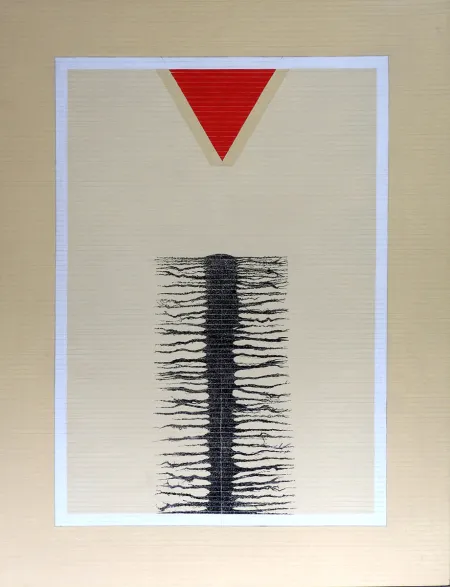
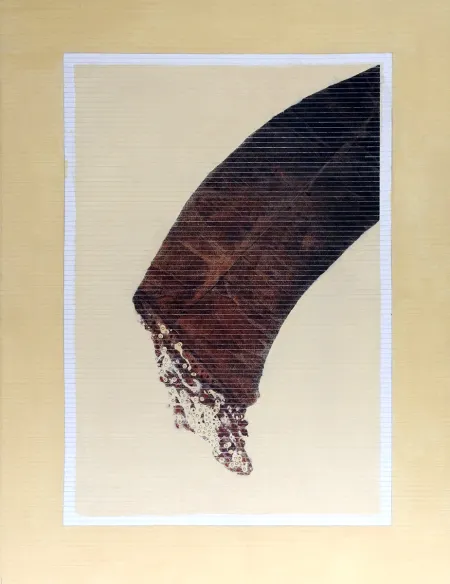
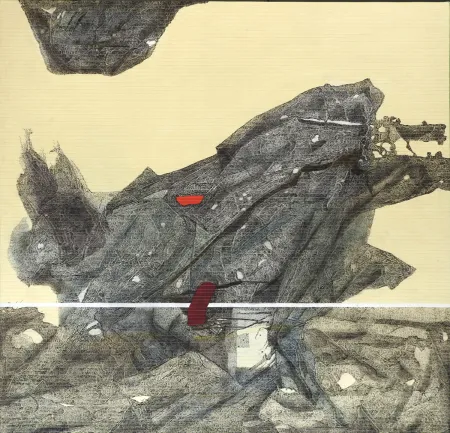
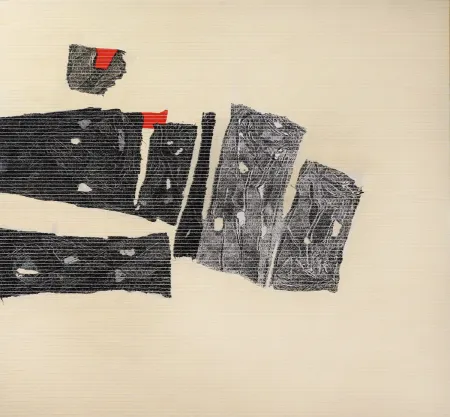
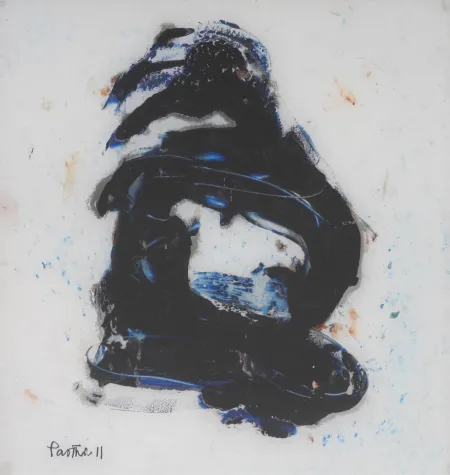
Yusuf’s mature compositions are generally non-representational. They are constructed through sparse geometric forms, fine linear structures, restrained colour, and carefully considered areas of emptiness. Rather than filling the entire pictorial surface, he allows unmarked space to remain active within the composition. This balance between the drawn mark and the surrounding field gives his work a contemplative quality.
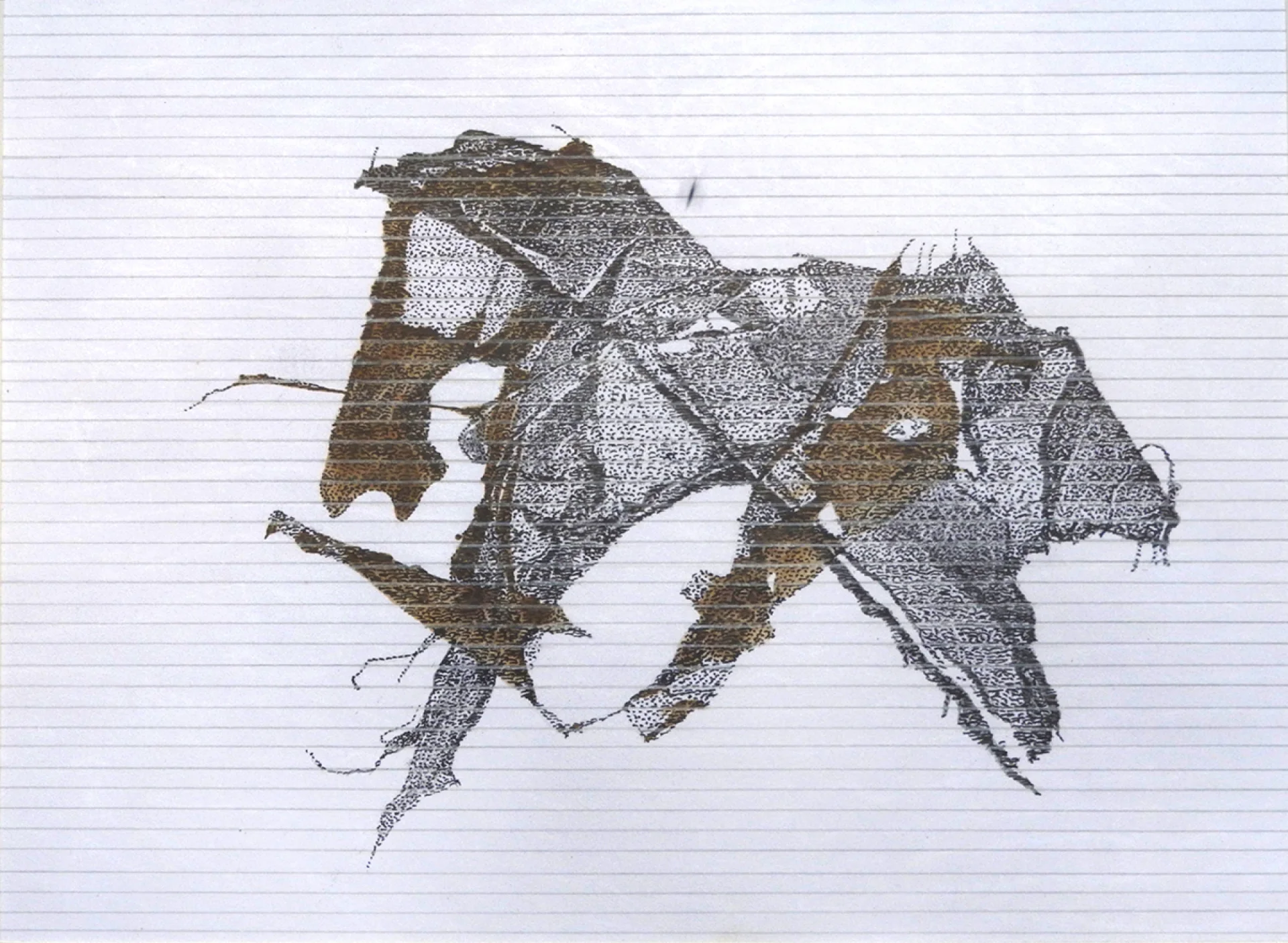
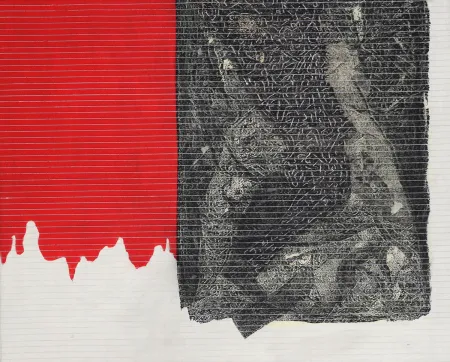
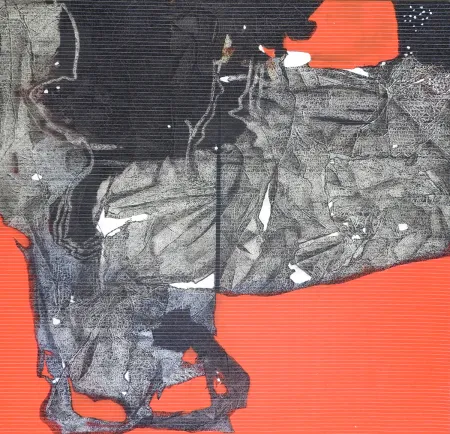
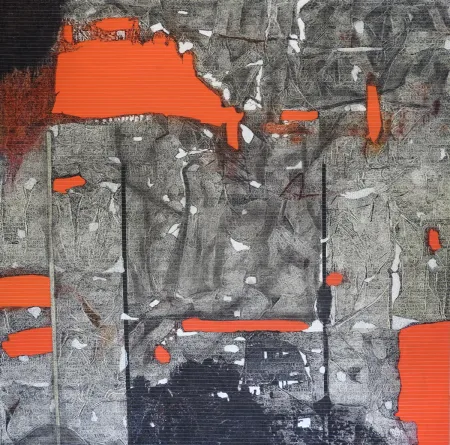
Ink on paper, particularly ink on rice paper, has occupied an important place in his practice. The delicacy and absorbency of the material enable lines to appear both controlled and vulnerable. Some marks are sharply defined, while others seem to dissolve into the paper. Through this limited vocabulary, Yusuf creates compositions that suggest movement, tension, balance, and gradual transformation. He has also worked in oil and acrylic on canvas, extending the structural principles of his drawings into larger fields of colour and form.
Abstraction, Geometry and Space
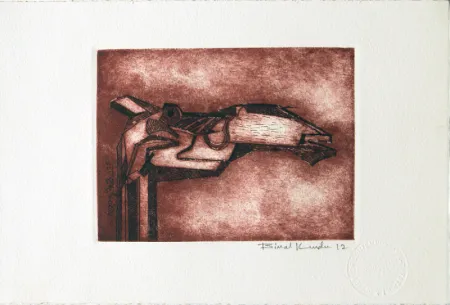
Geometry in Yusuf’s art is rarely rigid or mechanical. Rectangles, lines, divisions, and architectural fragments appear to shift, overlap, and remain suspended within open space. The forms may suggest structures, pathways, thresholds, maps, or fragments of an unknown script, but they do not resolve into a fixed subject.
His restricted palette reinforces the quiet intensity of these compositions. Black, grey, white, brown, and muted colour are often used with considerable restraint. Colour does not function as decoration; it establishes weight, distance, rhythm, and visual emphasis. Even when stronger tones appear, they remain integrated within an essentially balanced and economical structure.
Yusuf’s background in sculpture may be seen in his sensitivity to volume, proportion, and spatial relationships. His paintings and drawings frequently appear to organise space rather than merely cover a surface. Lines function almost like structural supports, while open areas acquire the presence of voids. This interaction between solidity and emptiness gives his abstraction a subtle architectural character.
At the same time, his work avoids mathematical coldness. Variations in pressure, density, texture, and repetition introduce a distinctly human rhythm. The apparent simplicity of his compositions is therefore the result of careful observation, technical control, and sustained reduction.
Bhopal and the Context of Central Indian Modernism
Yusuf lives and works in Bhopal, a city that became an important centre of modern and contemporary art through institutions such as Bharat Bhavan. His practice developed within the wider artistic environment of Madhya Pradesh, where abstraction, poetry, theatre, music, and Indigenous visual traditions frequently entered into dialogue.
Although Yusuf’s work does not directly illustrate regional motifs, its restraint and contemplative character place it within the broader history of abstraction in central India. His paintings seek neither dramatic narrative nor easily identifiable symbolism. Instead, they offer an inward visual experience based on the interaction of mark, material, and space.
Exhibitions and Recognition
Yusuf has held numerous solo exhibitions and participated in major national and international presentations. Significant group exhibitions include the VII Triennale–India, New Delhi, in 1992 and the Bangladesh Biennale, Dhaka, in 1995. His works have also been exhibited in Korea, Japan, Turkey, and other international centres.
His early recognitions included awards at the All India Exhibition of the Mahakoshal Kala Parishad, Raipur, in 1976–77, the International Asian-European Biennial in Turkey in 1980, and the All India Drawing Exhibition, Chandigarh, in 1984–85. He participated in the Bharat Bhavan Biennial, Bhopal, in 1986 and received the National Award of the Lalit Kala Akademi, New Delhi, in 1987. He was also awarded the Raza Award in 1984.
His works are represented in public, corporate, and private collections in India and abroad.
Association with Aakriti Art Gallery
Yusuf has an important and continuing association with Aakriti Art Gallery, Kolkata. The gallery represents a substantial body of his paintings and works on paper and includes him among its featured artists.
In 2024, Aakriti Art Gallery organised the solo exhibition Visions Unveiled: The Canvas Symphony of Yusuf, held in Kolkata from 2 to 10 August. Curated by the poet and art critic Prayag Shukla, the exhibition presented a focused selection of Yusuf’s paintings and drew attention to the evolution of his abstract language, his controlled use of colour, and his treatment of pictorial space.
Through this exhibition, its continuing representation of his work, and its archival and editorial initiatives, Aakriti Art Gallery has contributed to the documentation and wider appreciation of Yusuf’s position in contemporary Indian abstraction.
Yusuf’s significance lies in his ability to create visual intensity through restraint. By reducing painting to essential relationships among line, geometry, colour, material, and emptiness, he has developed a language that is both disciplined and quietly expressive. His works invite prolonged looking and reveal how abstraction can communicate not through narrative or spectacle, but through balance, silence, and the subtle movement of form across space.