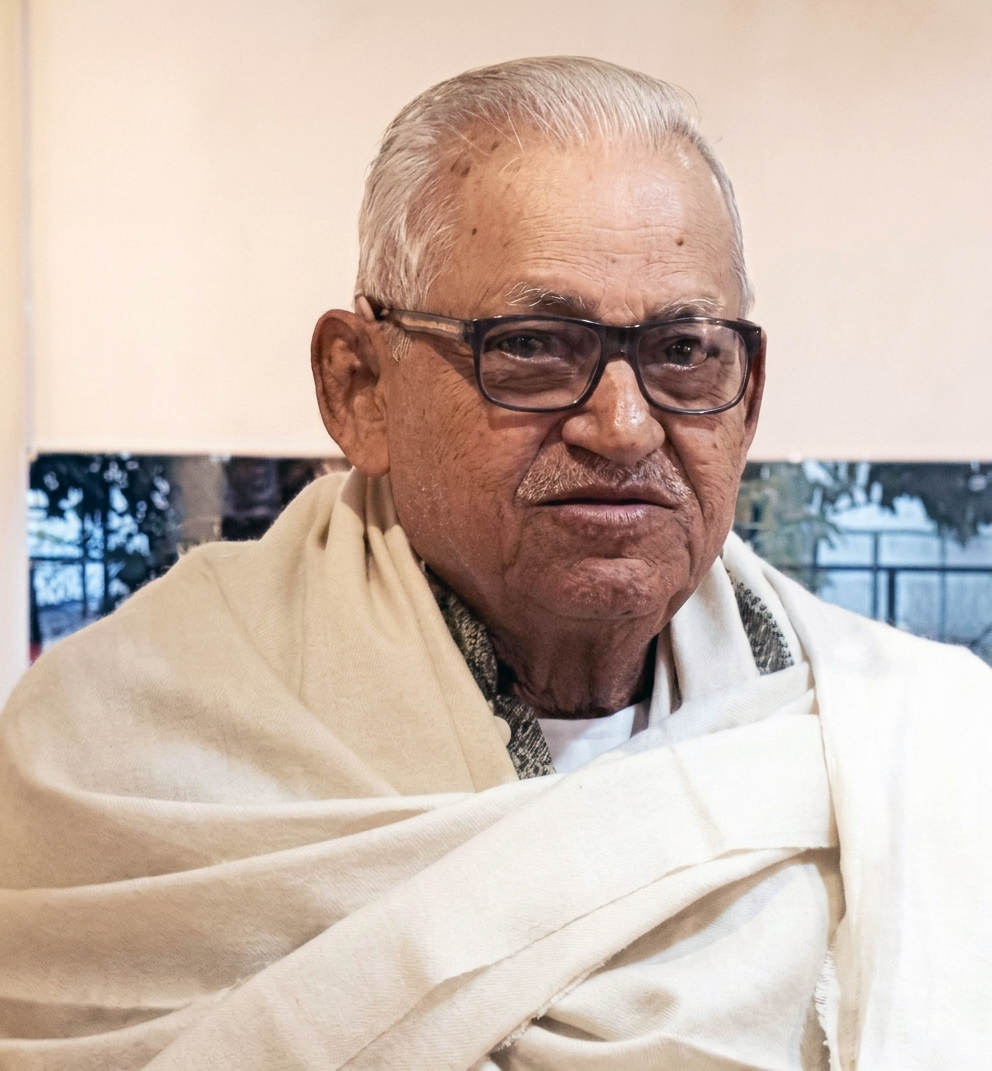
Lalu Prasad Shaw is a distinguished Indian painter and printmaker whose practice occupies an important position in the development of post-Independence art in Bengal. Born in 1937 in Suri, Birbhum, West Bengal, he received his Diploma in Painting from the Government College of Art & Craft, Calcutta, in 1959. Over a career extending across several decades, Shaw has worked in printmaking, drawing, tempera, gouache, conté, and sculpture, developing a visual language recognised for its formal clarity, quiet humour, and refined observation of Bengali social life.
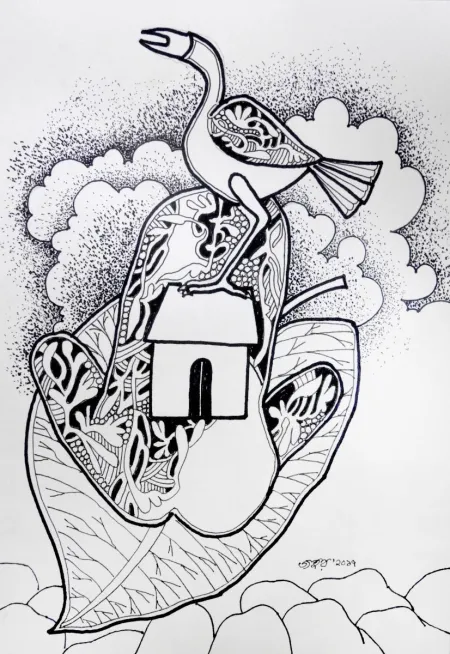
Shaw first came to prominence as a printmaker during the revival of graphic art in India in the 1960s and 1970s. Working in lithography and intaglio, he explored the expressive possibilities of line, tonal contrast, texture, and simplified form. His prints contributed to the recognition of printmaking as an independent artistic practice rather than merely a reproductive medium.
He participated in several important international exhibitions of graphic art, including the Second British International Print Biennale, London, in 1970, the Seventh Paris Biennale in 1971, the Norwegian International Print Biennales of 1974 and 1978, and the Second Asian Art Biennale, Bangladesh, in 1984. These exhibitions situated his work within the wider international development of modern printmaking.
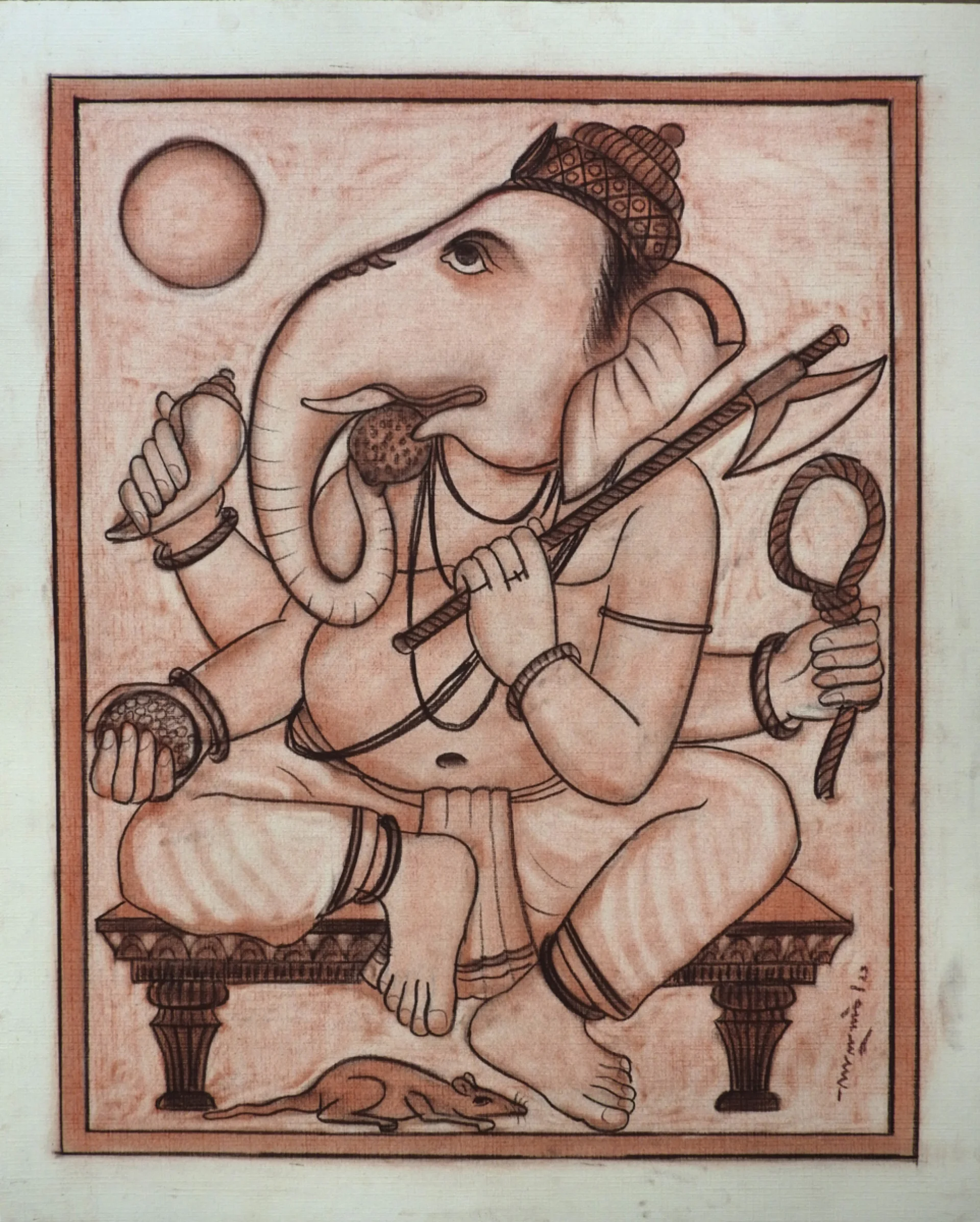
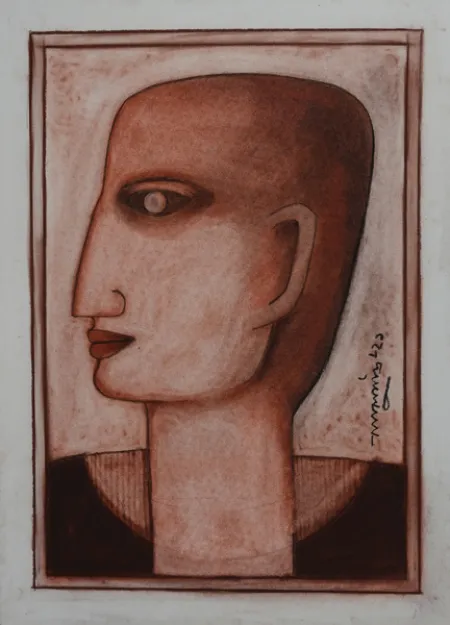
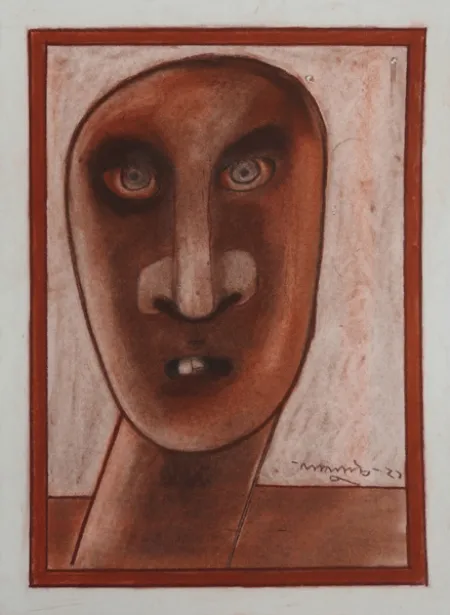
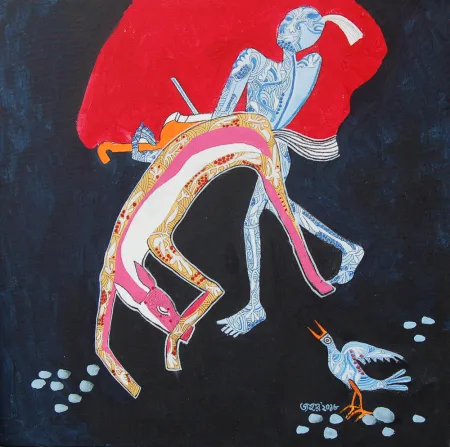
Although Shaw established his early reputation through graphics, he later became widely known for his paintings of Bengali men, women, couples, and families. Frequently executed in tempera or gouache, these works combine precise outlines, flat areas of colour, carefully designed costumes, and restrained backgrounds. His figures often appear in profile or in composed frontal poses, occupying shallow pictorial spaces framed with great formal economy.
Shaw’s visual language draws upon several historical traditions, including Kalighat painting, Company School art, Indian miniature painting, and the murals of Ajanta. He does not imitate these sources directly. Instead, he adapts their simplified forms, controlled contours, decorative surfaces, and observational character to create a modern language of figuration.
Bengali Life and the Human Figure
A central subject in Shaw’s paintings is the Bengali middle class. His familiar images of the babu and bibi reflect domestic rituals, dress, leisure, courtship, pride, and social manners. The figures may appear silent and self-contained, yet subtle gestures, glances, hairstyles, clothing, and objects reveal their personalities and relationships.
His women are frequently presented in elegant saris, with carefully arranged hair, jewellery, flowers, books, mirrors, or domestic accessories. The men may appear formally dressed, introspective, self-conscious, or gently theatrical. Through these figures, Shaw examines social identity without resorting to elaborate narrative or dramatic expression.
The apparent simplicity of his paintings is the result of rigorous control. Every contour, colour, and empty space contributes to the composition. His restricted backgrounds prevent distraction, while the smooth, matte surface of tempera gives the images a sense of stillness. This compositional restraint allows minor details—a raised eyebrow, folded hand, patterned textile, or turned head—to acquire psychological and narrative significance.
Humour and affection are important elements of Shaw’s practice. His figures are stylised but rarely caricatured harshly. They are observed with warmth, curiosity, and a subtle awareness of human vanity. The result is a body of work that is both culturally specific and widely accessible.
Teaching, Awards and Collections
Alongside his studio practice, Shaw contributed to art education in Bengal. He taught at the Government College of Art & Craft, Kolkata, and later at Kala Bhavana, Visva-Bharati, Santiniketan, where he influenced younger generations of artists.
His achievements have been recognised through several honours, including the West Bengal Lalit Kala Akademi Award for Graphic Art in 1959, the National Award for Graphic Art of the Lalit Kala Akademi in 1971, and awards from the Birla Academy of Art & Culture.
Shaw’s works are represented in important public and private collections in India and abroad, including the Birla Academy of Art & Culture, Kolkata, the Government Museum and Art Gallery, Chandigarh, and international institutional collections.
Association with Aakriti Art Gallery
Lalu Prasad Shaw has maintained an important exhibition association with Aakriti Art Gallery, Kolkata. The gallery identifies him among the major modern Indian artists whose solo exhibitions have contributed to its institutional history. Aakriti has presented and documented his paintings, drawings, and graphic works, while continuing to make a substantial selection of his work available to collectors.
Among the gallery’s documented presentations is Morning Dew: Recent Paintings by Lalu Prasad Shaw, which focused on the artist’s mature figurative practice. Aakriti’s archival publication platform has also documented his artistic development through the feature Lalu Prasad Shaw: The Journey Man.
The precise year, venue, and full exhibition history of his solo presentations with Aakriti should be added from the gallery’s internal catalogues and archival records before final publication.
Legacy
Lalu Prasad Shaw’s significance lies in his ability to transform ordinary human observation into images of enduring formal elegance. His art connects the historical traditions of Bengal with the concerns of modern figuration, while remaining independent of both academic realism and nostalgic revivalism.
Through a disciplined economy of line, colour, and gesture, he has created a distinctive visual record of Bengali character and social life. His prints established him as an important figure in Indian graphic art, while his tempera paintings have become among the most recognisable expressions of contemporary figurative painting in Bengal.