A Star Amongst Too Many: Chandra Bhattacharjee at Birla Academy of Art & Culture
In an age where contemporary art is increasingly dominated by spectacle, excess, and conceptual noise, Chandra Bhattacharjee’s A Star Amongst Too Many arrives like a long pause — quiet, meditative, and deeply human.
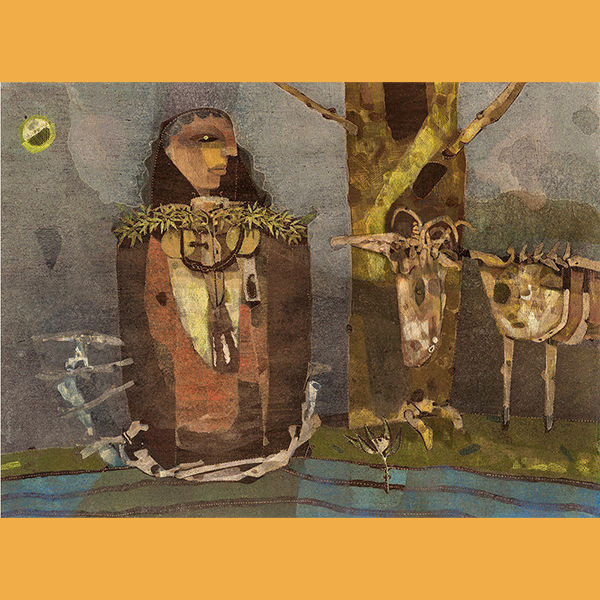
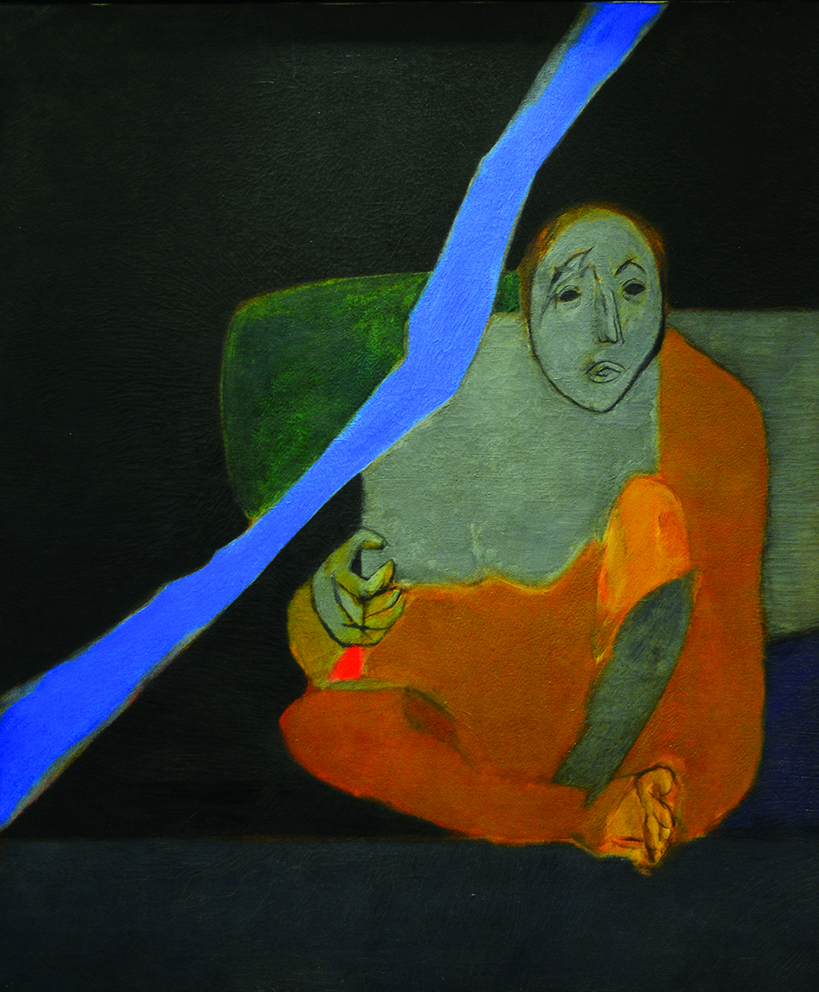
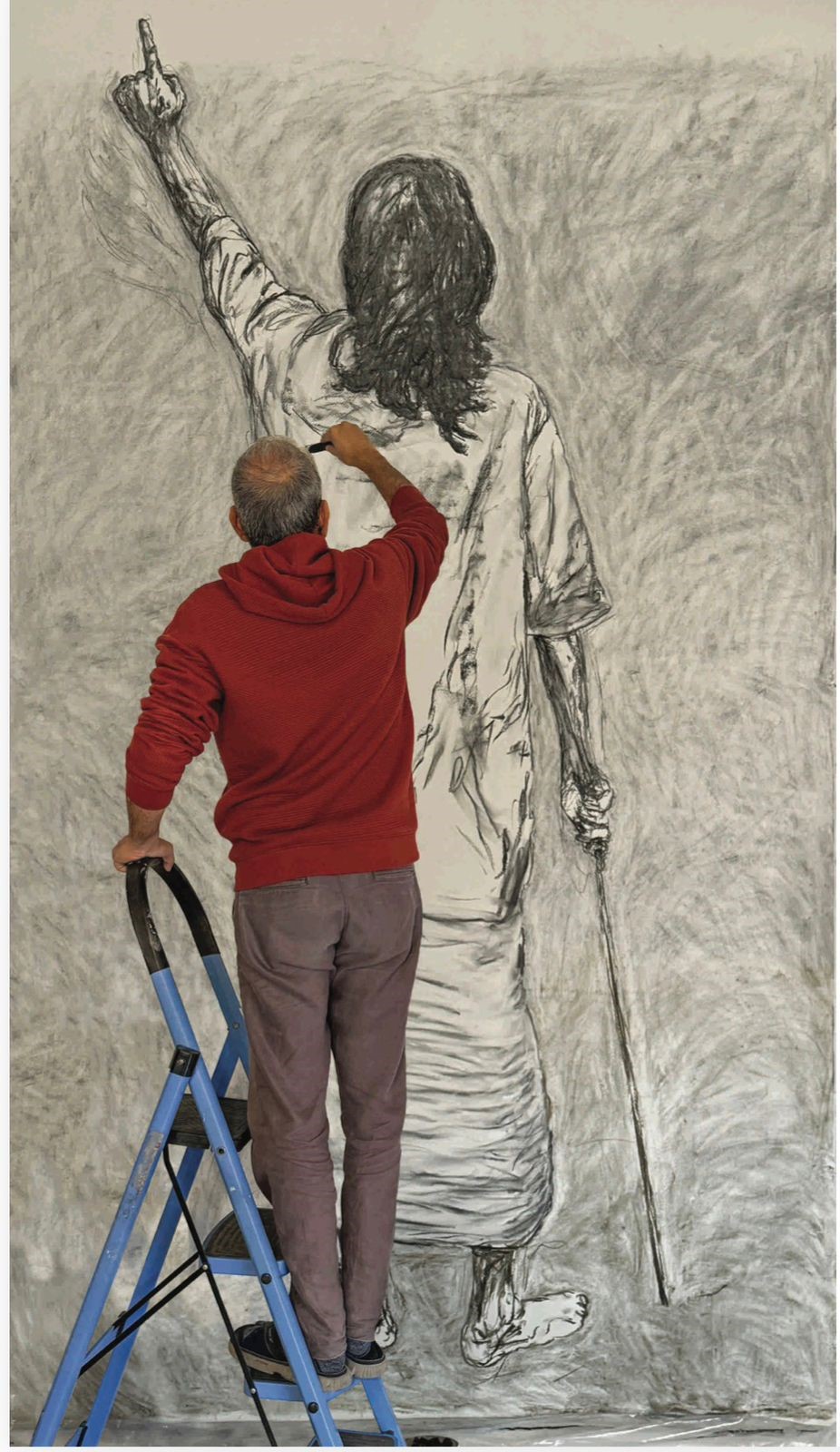 Curated with sensitivity by Uma Ray, the exhibition transforms the gallery space at the Birla Academy into a contemplative landscape of urban solitude. Executed largely in charcoal, dry pastel, and mixed media, the works revolve around anonymous figures — wanderers, workers, sleepers, drifters, and silent witnesses of the city. Yet these are not portraits of individuals. They are psychological presences.
Bhattacharjee has long been known for his observational intensity and layered visual language, but this exhibition marks one of his most resolved bodies of work in recent years. The monumental scale of several drawings immediately alters the viewer’s relationship to the subject. These figures are not framed as victims, nor romanticized as symbols of poverty. Instead, they occupy space with unsettling dignity.
The exhibition’s strongest achievement lies in its refusal to dramatize suffering. The artist observes rather than comments. He watches rather than judges.
“What makes Chandra Bhattacharjee’s work exceptional is not merely his mastery over charcoal, but his ability to restore dignity to those whom society has trained itself to overlook. These are not just drawings — they are meditations on silence, endurance, and human presence.” - Vikram Bachhawat
The recurring motif of luminous circular forms — floating yellow and rust-coloured orbs — punctuates the otherwise monochromatic surfaces like emotional residues or fragments of memory. They interrupt the silence without breaking it. At moments they resemble city lights blurred through exhaustion; elsewhere they feel like wounds, celestial markers, or passing thoughts. Their ambiguity becomes essential to the exhibition’s emotional texture. 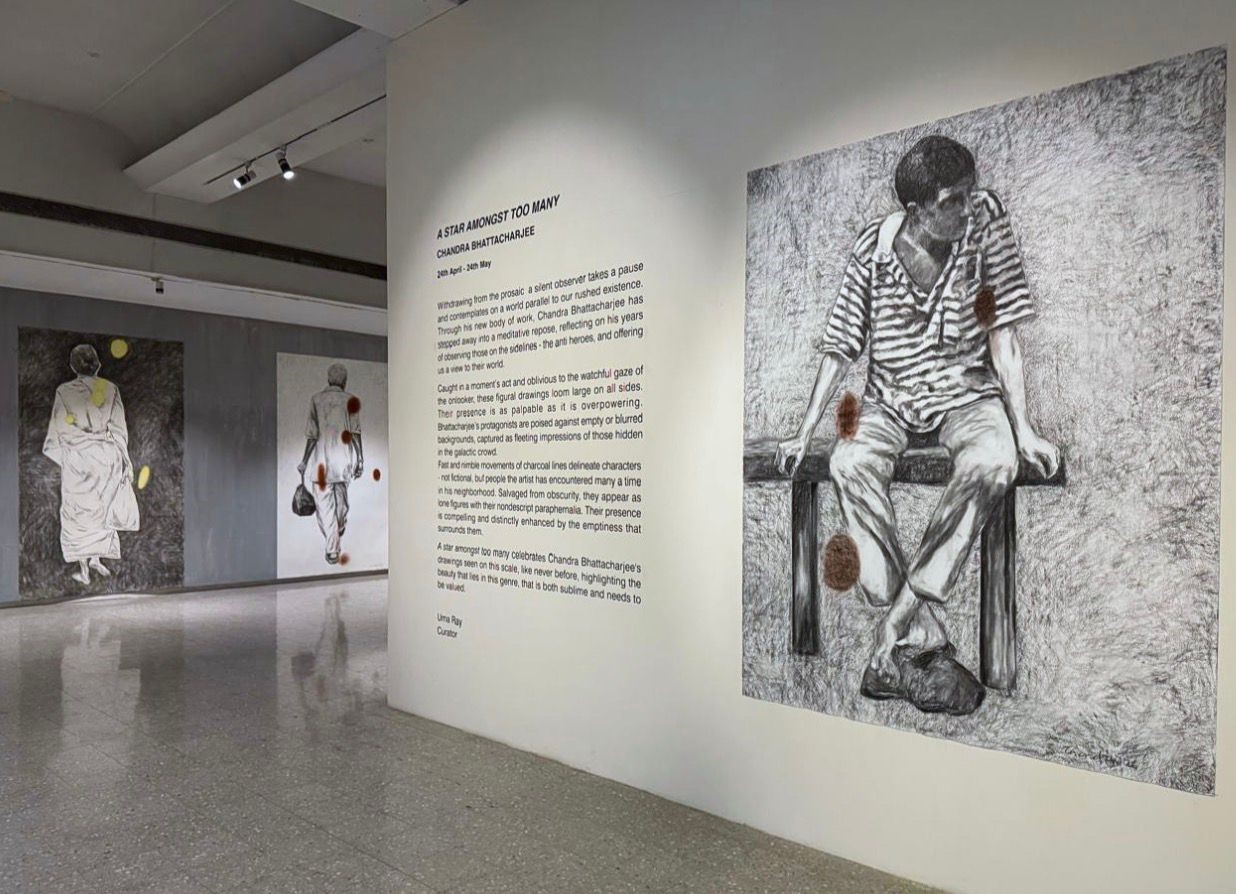
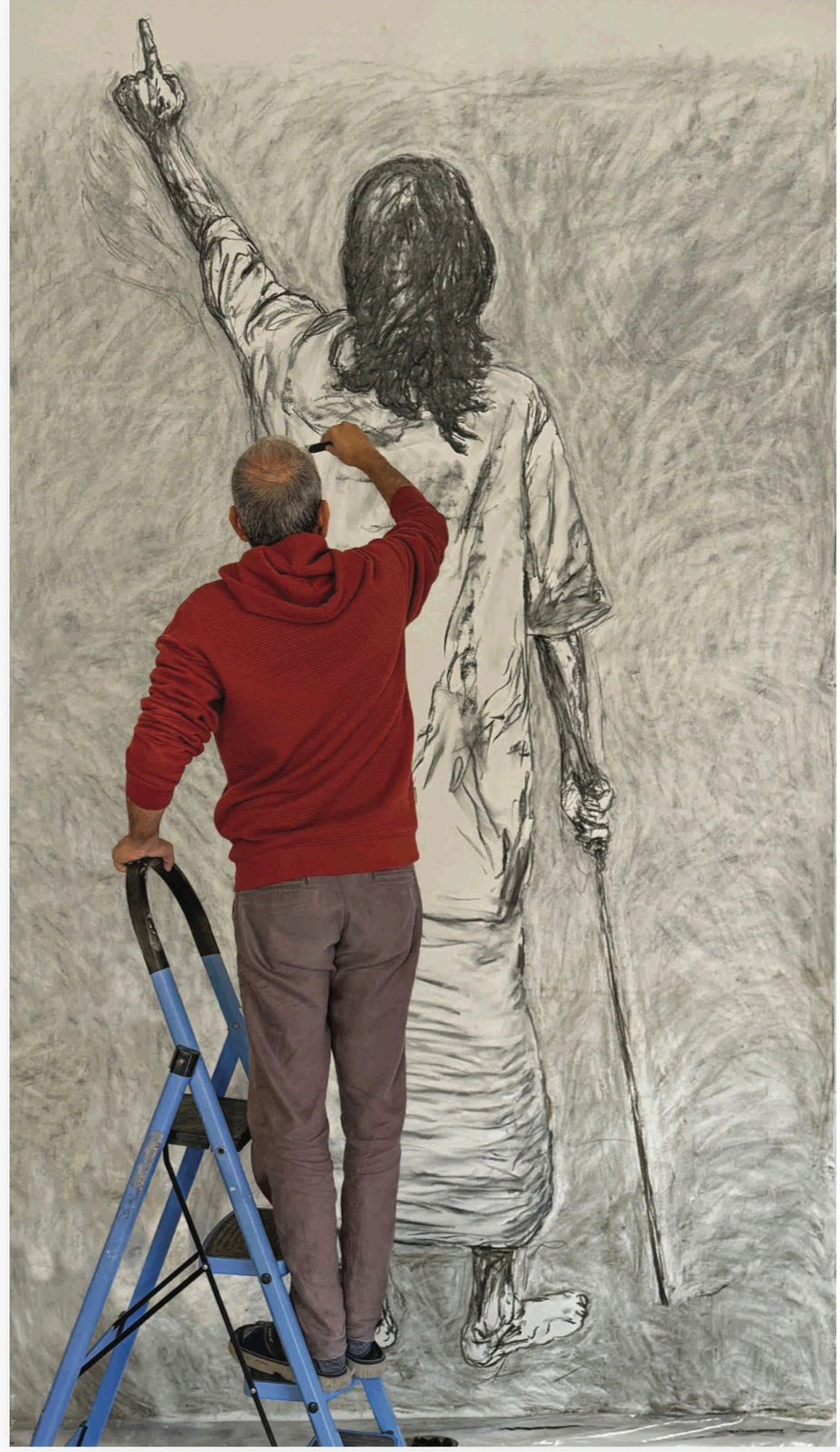
What is particularly striking is Bhattacharjee’s command over charcoal as a medium. His surfaces breathe. Smudges, erasures, scratches, and layered tonal shifts create a fragile atmosphere where forms seem to emerge and dissolve simultaneously. The works carry the immediacy of drawing while possessing the weight and scale of painting.
One of the most compelling aspects of the exhibition is the way emptiness is used architecturally. The installation allows the works to breathe. Large stretches of grey walls and controlled lighting intensify the silence surrounding the figures. The viewer becomes conscious not only of the drawings, but of distance, stillness, and absence.
The smaller mixed-media works depicting bundles, possessions, wrapped objects, and makeshift belongings are especially poignant. These are not merely still lifes; they become metaphors for displacement, migration, memory, and survival. In many ways, these modest works quietly anchor the emotional core of the exhibition.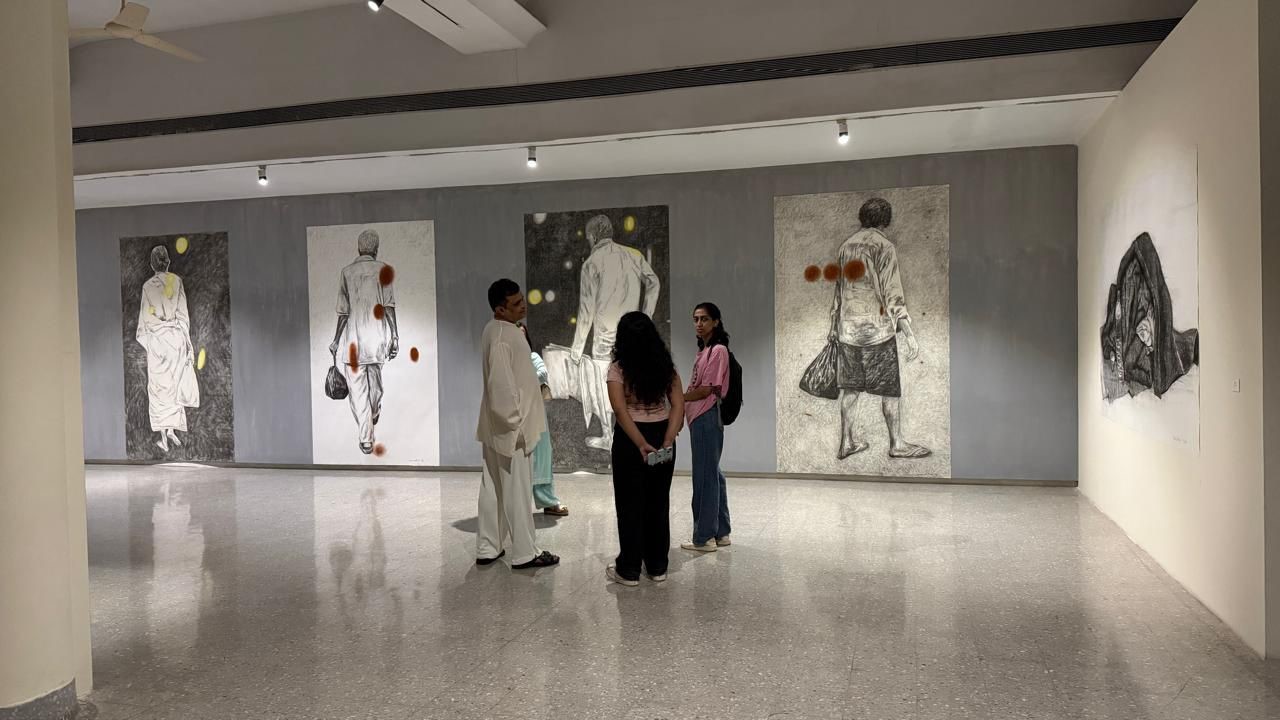 Equally significant is the artist’s visible physical engagement with scale. Photographs of Bhattacharjee working directly onto monumental surfaces reveal a process that is almost performative — part drawing, part excavation. The body of the artist becomes inseparable from the bodies he depicts.
The exhibition also reflects an artist deeply aware of the socio-political climate of contemporary India, though never illustratively so. The city here is not represented through architecture or explicit narrative, but through human residue — through fatigue, waiting, anonymity, and endurance.
Curator Uma Ray deserves credit for maintaining restraint throughout the presentation. The curatorial framework does not overpower the works with excessive theoretical language. Instead, it allows the drawings to unfold gradually, preserving their emotional ambiguity. 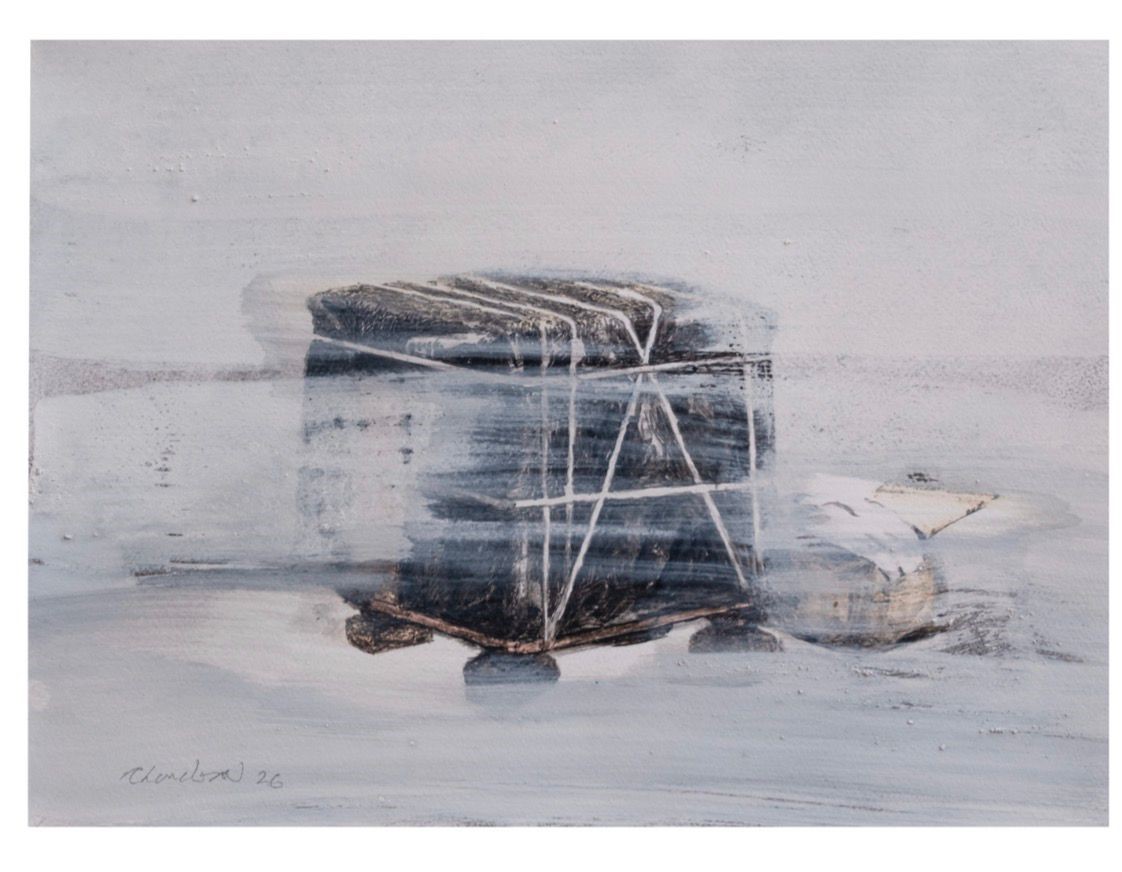
A Star Amongst Too Many is ultimately an exhibition about visibility — about those who remain present yet unseen in the urban landscape. Bhattacharjee does not attempt to rescue or explain them. He simply asks us to look longer.
And in that prolonged act of looking, the exhibition finds its power.
Far removed from the decorative tendencies often associated with large-format figurative work today, this exhibition stands as one of the more mature and psychologically resonant presentations seen in Kolkata in recent times. Quietly political, formally rigorous, and emotionally restrained, A Star Amongst Too Many reaffirms Chandra Bhattacharjee as one of the most sensitive draftsmen working in contemporary Indian art today.
- Research & Compiled by Aakriti Art Gallery team
Comments
Join the Discussion
Please login to post comments.
Login