_-thumb.webp)


Profile:
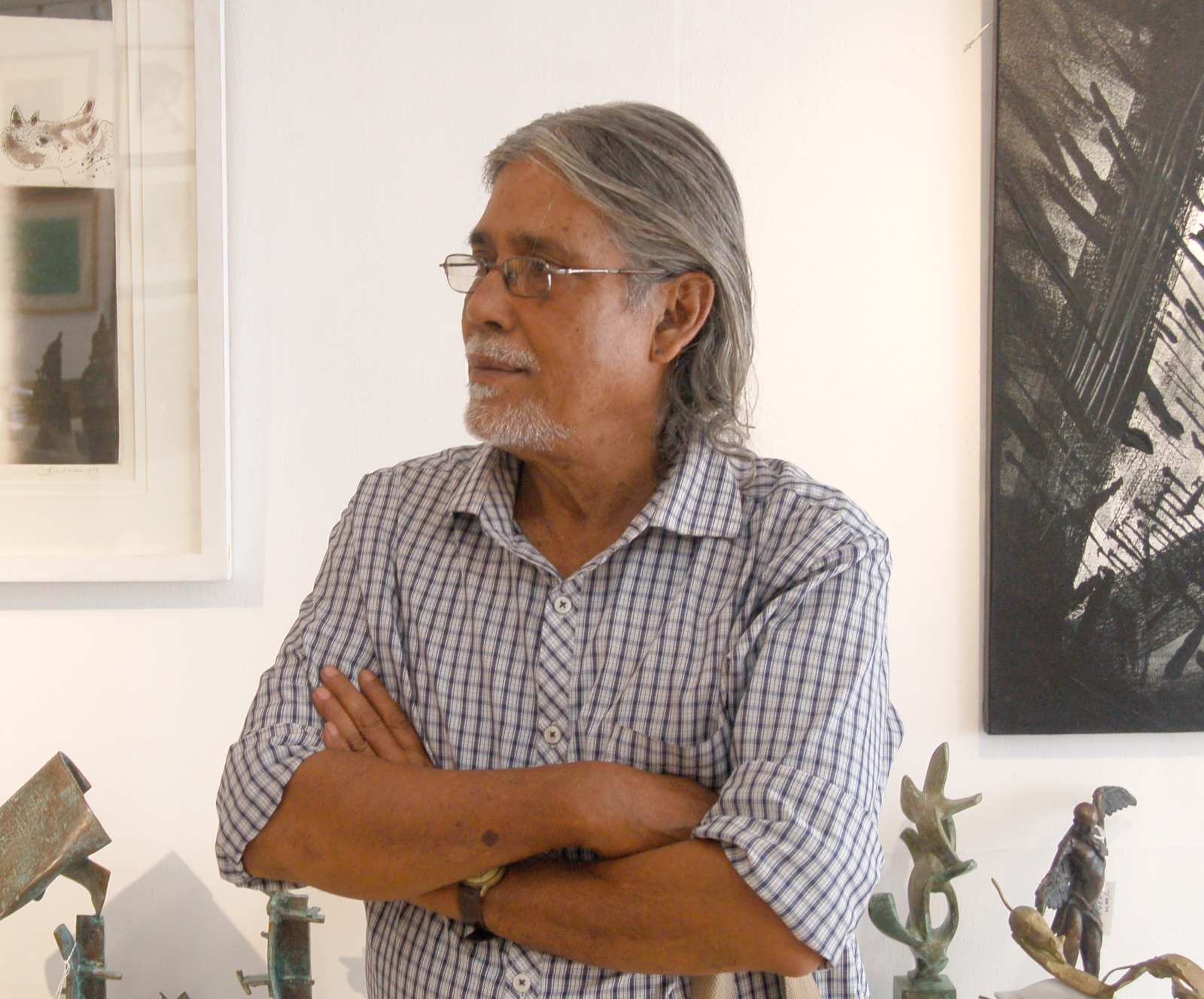
Asim Basu is one of the most distinctive contemporary sculptors to emerge from Bengal in the post-independence period. Born in 1947, he received his formal training at the Government College of Art & Craft, Kolkata, where he developed a strong foundation in drawing, modelling, and sculptural practice. Over a career spanning more than five decades, Basu has established a highly individual artistic language marked by imagination, technical finesse, and a profound engagement with the human condition.
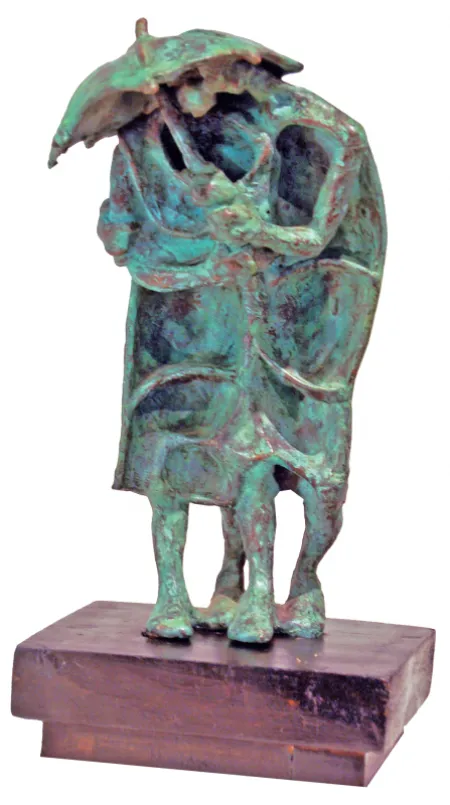
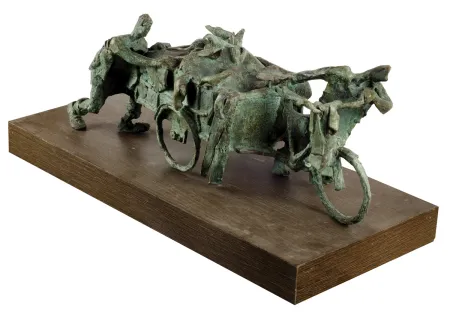
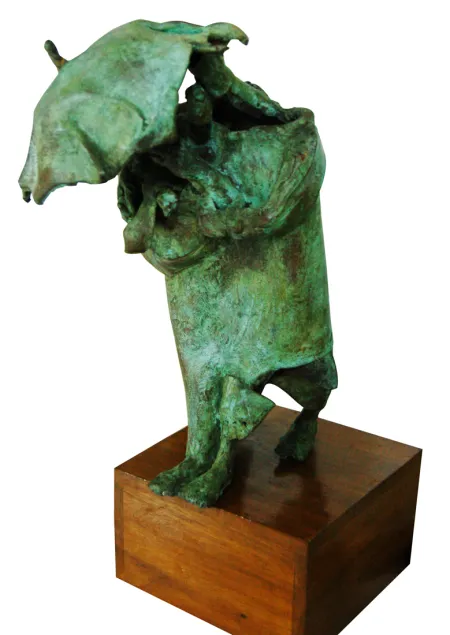
Working primarily in bronze, wood, terracotta, and mixed media, Basu is celebrated for his ability to transform everyday observations, memories, and social experiences into compelling sculptural narratives. His works frequently oscillate between the figurative and the fantastical, creating a visual world populated by enigmatic human figures, animals, mythic presences, and symbolic forms. Rather than pursuing strict realism, he constructs poetic and often surreal scenarios that invite reflection on contemporary life and human relationships.
A defining feature of Basu’s sculpture is its narrative character. His compositions often unfold like visual stories, combining humour, irony, social commentary, and emotional depth. The artist’s ability to animate form with movement and psychological presence has distinguished his work within the broader discourse of contemporary Indian sculpture. Critics have frequently noted his remarkable technical control and inventive use of form, qualities evident throughout his long artistic career.
Throughout the 1980s and 1990s, Basu emerged as one of the most active sculptors in eastern India, participating in numerous exhibitions and receiving critical acclaim in publications such as The Telegraph, Anandabazar Patrika, Desh, Economic Times, and other leading newspapers and journals. Reviews frequently highlighted the originality of his sculptural vocabulary, his technical dexterity, and his ability to create powerful visual metaphors through figurative forms.
His work has been exhibited extensively across India, including at major venues such as the Academy of Fine Arts, Kolkata, Lalit Kala Akademi, Jehangir Art Gallery, and numerous galleries and museums. He has participated in important national and international exhibitions and has been recognised through several awards, including honours from the Academy of Fine Arts, Kolkata, and the West Bengal Charukala Parishad.
Beyond sculpture, Basu is also an accomplished draftsman. His drawings reveal the same inventive spirit found in his three-dimensional works, demonstrating a keen understanding of anatomy, movement, and expressive form. Whether working on an intimate scale or creating monumental public sculptures, he approaches art as a means of exploring both the visible and the imagined worlds.
In later years, Asim Basu developed a close association with Aakriti Art Gallery, Kolkata, which has actively represented and exhibited his work. Through exhibitions and publications, the gallery has contributed significantly to documenting and promoting his contribution to modern Indian sculpture. His works have featured prominently in Aakriti’s exhibitions on contemporary and modern sculpture, helping introduce his practice to newer generations of collectors and scholars.
Today, Asim Basu is regarded as one of the important sculptural voices of modern Bengal. His oeuvre, characterised by inventive storytelling, technical mastery, and a deeply humanistic vision, occupies a significant place within the continuing narrative of contemporary Indian sculpture.