Andrée Karpelès: The Forgotten French Artist Who Helped Shape Santiniketan’s Global Legacy
Artist, printmaker, educator and publisher, Andrée Karpelès (1885–1956) became one of Rabindranath Tagore’s closest European collaborators. From teaching at Kala Bhavana to promoting Tagore’s paintings in Paris and championing Indian crafts, her remarkable contribution to the international history of Santiniketan has remained largely overlooked.
Among the many international personalities who became associated with Rabindranath Tagore, few have remained as overlooked as Andrée Karpelès (1885–1956). Artist, printmaker, teacher, publisher and cultural intermediary, she quietly helped build artistic bridges between France and Santiniketan at a crucial moment in the development of modern Indian art.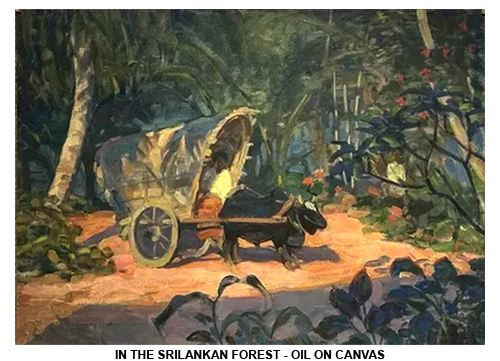
Although her name rarely appears in standard histories of the Bengal School, archival correspondence and contemporary publications reveal that Karpelès played an important role in promoting Tagore’s artistic vision, encouraging intercultural dialogue, and bringing Indian art before European audiences.
Rather than being a visitor to Santiniketan, she became an active participant in its intellectual life.
A French Artist Drawn to India
Born in Paris in 1885, Karpelès spent part of her childhood in colonial Calcutta,where she developed an early fascination with Indian culture.
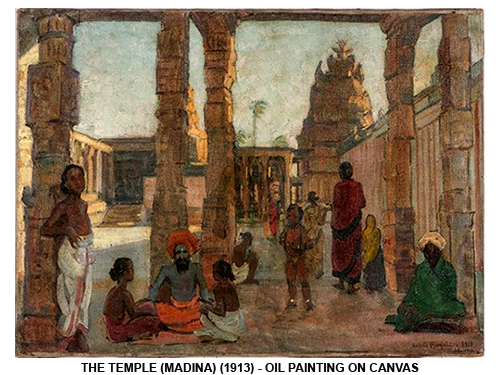
After returning to France and receiving academic artistic training, she increasingly turned her attention towards Asian art and literature. By the time she met Rabindranath Tagore in Paris around 1920, she had already established herself as both an artist and an interpreter of Indian aesthetics for European audiences.
Their meeting marked the beginning of a lasting intellectual friendship.
Santiniketan and Kala Bhavana
In 1922, Karpelès accepted Tagore’s invitation to Santiniketan.
She joined Kala Bhavana during its formative years, teaching painting and graphic arts while working alongside Nandalal Bose and other artists associated with the Bengal School.
Unlike many European teachers working in colonial India, Karpelès did not attempt to impose academic European methods. Instead, she embraced Tagore’s educational philosophy, which encouraged dialogue between cultures rather than imitation.
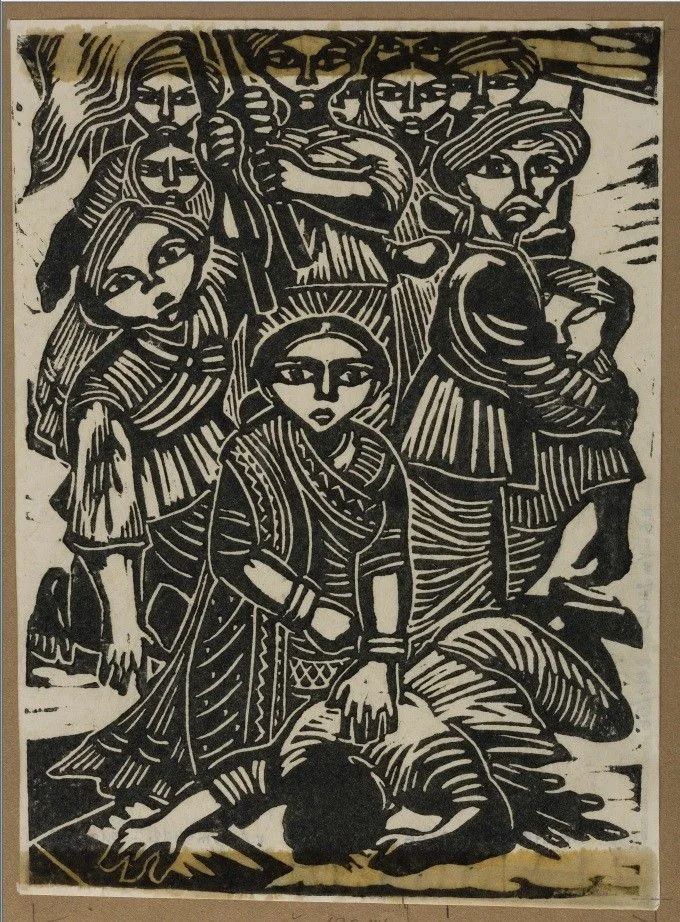
Her knowledge of engraving, illustration and printmaking broadened the artistic vocabulary available to Santiniketan students while remaining sympathetic to indigenous traditions.
Her stay illustrates one of Tagore’s central ideals—that modern Indian art could evolve through cultural exchange without surrendering its identity.
Supporting the Revival of Indian Crafts
Karpelès also became associated with Tagore’s efforts to revive Indian handicrafts.
Working with Pratima Devi and other members of the Santiniketan community, she supported the activities of Vichitra, the experimental workshop that later influenced the development of Silpa Bhavana.
In her writings she argued that artists and craftsmen should not occupy separate worlds but should collaborate creatively—a philosophy entirely consistent with Tagore’s educational vision.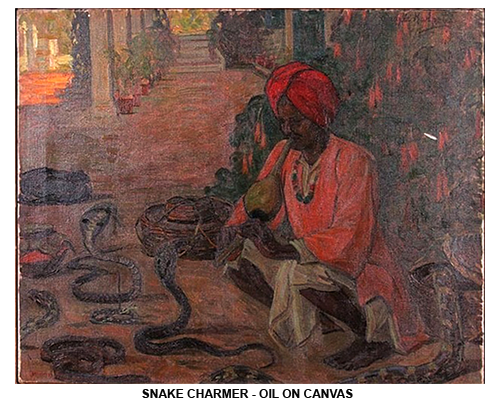
Her advocacy anticipated many later discussions on design education and craft revival in India.
Helping Europe Discover Tagore the Painter
Perhaps her most remarkable contribution came when Rabindranath Tagore unexpectedly emerged as a painter in the late 1920s.
Tagore himself often expressed uncertainty about his paintings. They had grown organically from corrections and doodles in his manuscripts and represented an entirely new visual language unlike anything produced by the Bengal School.
When preparations began for exhibiting these paintings in Europe, Karpelès became one of the trusted figures assisting this transition.
Correspondence suggests that she helped advise, encourage and facilitate aspects of Tagore’s artistic presentation in France. Alongside supporters including Victoria Ocampo, she formed part of the circle that enabled European audiences to encounter Tagore not only as a Nobel Prize-winning poet but also as an original modern painter.
The landmark exhibition at Galerie Pigalle, Paris (1930) became the beginning of Tagore’s international reputation as a visual artist.
Publisher, Illustrator and Cultural Ambassador
Returning to France, Karpelès continued promoting Indian literature and art.
Through publication Chitra, she published French editions of works by Rabindranath and Abanindranath Tagore, often illustrating them herself.
Her illustrations were not decorative additions but thoughtful visual interpretations that introduced French readers to Indian literary imagination through sympathetic imagery.
In many ways she became one of Tagore’s earliest artistic ambassadors in Europe.
A Portrait Left Behind
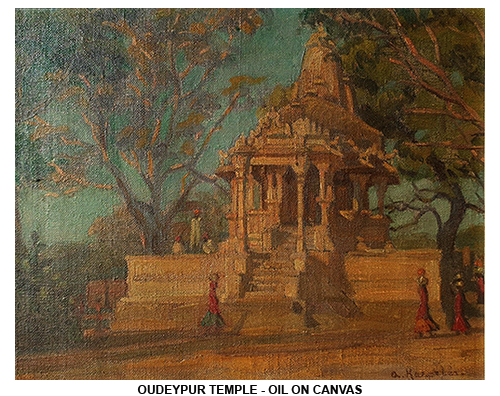
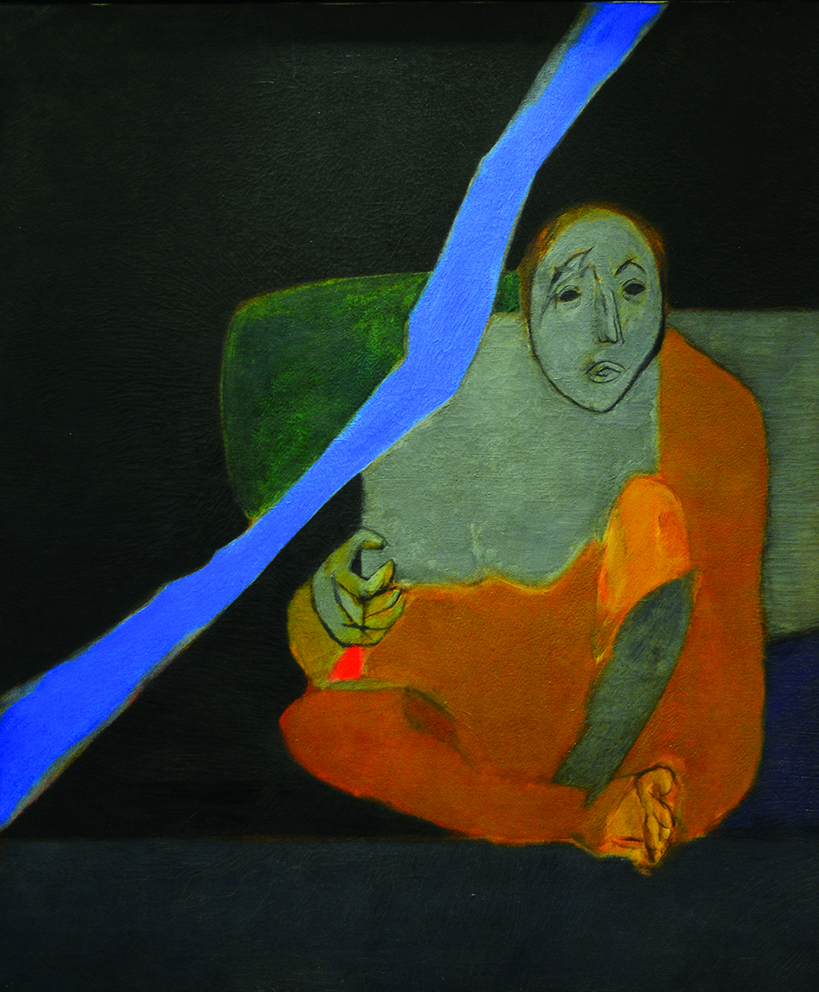
Among the quieter reminders of her Santiniketan years is her Self-Portrait, presented to Rabindra Bhavana, where it remains today.
It serves as a symbolic record of an artist who became part of Santiniketan’s history without ever seeking prominence.
Why Has She Been Forgotten?
Unlike Stella Kramrisch, Victoria Ocampo or Ananda Coomaraswamy, Andrée Karpelès never cultivated a large public intellectual profile.
She worked behind the scenes—as a teacher, illustrator, correspondent and organiser.
Consequently, her contribution became scattered across archives, letters, exhibition catalogues and French publications rather than preserved within a single narrative.
Yet her career demonstrates how modern Indian art evolved not in isolation but through meaningful conversations across continents.
A Legacy Worth Rediscovering
As scholars increasingly revisit Santiniketan through archival research, Andrée Karpelès emerges as one of the forgotten international figures who helped shape its early identity.
She was more than a visiting French artist.
She became a trusted collaborator of Rabindranath Tagore, an early teacher at Kala Bhavana, an advocate for Indian crafts, and an important intermediary through whom Indian modernism entered European cultural life.
Recovering her story enriches not only the history of Santiniketan but also our understanding of how Indian modern art became a truly global conversation.
Selected Bibliography
- Singh, Udaya Narayana. “Andrée Karpelès and Santiniketan: Letters from Flora Hogman Archive.” Rabindra Viksha 53 (2020): 21–35. (Rabindra Bhavana / Flora Hogman Archive materials; confirms teaching, Vichitra collaboration, Self-Portrait donation, and Tagore correspondence.)
- Olivier, Marie. “Andrée Karpelès (1885-1956), une artiste au cœur des échanges franco-indiens.” INHA, 26 Dec. 2024. https://www.inha.fr/actualites/andree-karpeles-1885-1956-une-artiste-au-coeur-des-echanges-franco-indiens/ (Overview of biography, Santiniketan role, 1914/1930 exhibitions, and publications.)
- Andrée Karpelès entry. French Wikipedia (with BNF, INHA, and archival references). https://fr.wikipedia.org/wiki/Andr%C3%A9e_Karpel%C3%A8s (Biographical details, illustrated works, Self-Portrait.)
- Visva-Bharati Quarterly and Prabasi (contemporary references to her wood-engraving teaching, Vichitra aims, and Tagore’s farewell song, early 1920s).
- Classiques de l’Orient series and Publications Chitra editions (e.g., Lucioles by Rabindranath Tagore, 1930; illustrated works for Bossard, 1920s–1940s).
- Peintres Orientalistes Français exhibition records (Grand Palais, 1914) and Galerie Pigalle exhibition catalogue (Tagore paintings, Paris, May 1930).
- Mitter, Partha. The Triumph of Modernism: India’s Artists and the Avant-Garde, 1922–1947 (2007) (context on Bengal School and Santiniketan international exchanges).
- Benezit Dictionary of Artists / Oxford Art Online (standard entry on Karpelès).
- Aakriti Art Gallery resources / Ramendranath Chakravorty accounts (printmaking introduction at Kala Bhavana, 1921–22).
- Research & Compiled by Aakriti Art Gallery team
Comments
Join the Discussion
Please login to post comments.
Login