Before the Brushstroke
The Untold Story of Art Supplies, Colonial Trade, and the Making of Modern Indian Art
When we admire a painting by Raja Ravi Varma, Abanindranath Tagore, Hemendranath Majumdar, or Jamini Roy, we often focus on the artist and the image. Rarely do we stop to ask a simple but fascinating question:
Where did they buy their paints?
The answer opens an unexpected chapter in the history of Indian art. It is a story of British imports, local merchants, Swadeshi ideals, family-run shops, and artists who experimented with everything from handmade paper and natural dyes to imported oils from London.
The history of Indian art is also the history of its materials.
The Arrival of European Art Supplies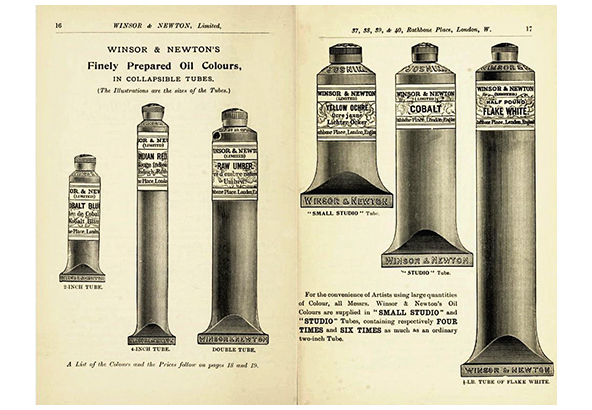
During the nineteenth century, British colonial rule transformed the artistic landscape of India. The establishment of institutions such as the Government School of Art in Calcutta (1854), the Madras School of Arts (1850), Sir J.J. School of Art in Bombay (1857), and the Mayo School of Industrial Arts in Lahore (1875) introduced European methods of drawing, oil painting, anatomy, and perspective.
These new techniques required new materials.
Suddenly there was demand for prepared canvases, stretched linen, oil colours in tubes, sable brushes, watercolour cakes, palette knives, and imported papers.
Most of these supplies arrived from Britain.
Companies such as Winsor & Newton, Reeves & Sons, George Rowney & Co., and J. Whatman became familiar names to artists across colonial India. Their products reached Calcutta, Bombay, Madras, and other ports through British trading networks connected to the East India Company and later the India Office.
For many aspiring painters, artistic modernity literally arrived by ship.
 The Colonial Art Shop
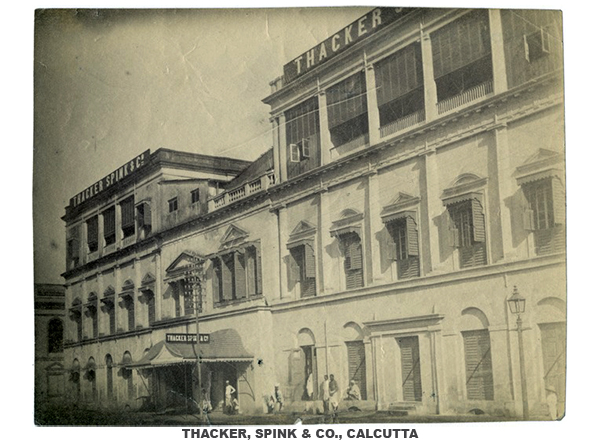
Among the earliest suppliers was Thacker, Spink & Co. in Calcutta.
Best known today as publishers and booksellers, they also functioned as important importers of European stationery and artists’ materials. Their catalogues advertised Whatman papers, Winsor & Newton watercolours, Rowney oils, drawing instruments, and sketchbooks to British officers, surveyors, architects, and increasingly to Indian artists.
For students at the Government School of Art, these imported materials represented both quality and prestige.
Yet they were also expensive.
G.C. Laha: A Kolkata Institution
As Indian entrepreneurship expanded in the early twentieth century, local businesses began challenging British dominance.
Among the most celebrated was G.C. Laha, established in 1905 on Esplanade in Calcutta by Girindra Coomar Laha.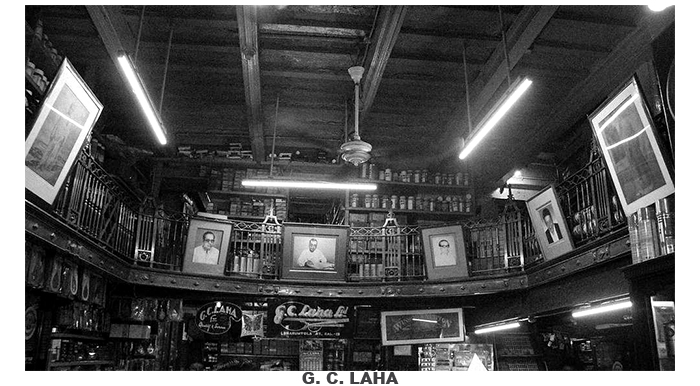
The shop became much more than a retailer.
By securing the agency for Winsor & Newton products, G.C. Laha gave generations of Indian artists direct access to professional-quality materials without relying entirely on British intermediaries. Students, professors, and established painters alike visited its counters in search of brushes, pigments, papers, and easels.
For many artists in Bengal, a visit to G.C. Laha became almost a rite of passage.
Even today, it remains one of India’s most recognisable names in artists’ supplies.
Indigenous Enterprise and the Swadeshi Spirit
Another important name was Abinash Chandra Dutt Paints, established in 1888 in Dharmatala, Kolkata.
Originally dealing in industrial paints and varnishes, the company expanded into fine art materials while producing locally made easels, palette boards, and studio equipment using Indian timber.
Its growth reflected a broader movement taking shape across the country.
The Swadeshi movement, which gathered momentum after the Partition of Bengal in 1905, encouraged Indians to reduce dependence on imported goods and revive indigenous industries.
Artists became active participants in this movement.
For them, choosing materials was also a cultural statement.
The Colours of Burrabazar
Not every artist could afford imported tubes of oil paint.
Many relied instead on the wholesale markets of Burrabazar in Calcutta, where Marwari and Bengali merchants sold dry pigments in bulk.
Artists purchased powdered colours and prepared them by hand, mixing them with natural binders such as gum arabic, bel fruit gum, tamarind seed paste, or animal glue.
The process demanded patience and technical knowledge.
Painters often became chemists in their own studios.
Kalighat patuas and many traditional artists continued this practice well into the twentieth century, creating vibrant images with remarkably simple ingredients.
The Bengal School and the Return to Indigenous Materials
While Raja Ravi Varma embraced imported oil paints and academic realism, the Bengal School consciously looked in another direction.
Artists such as Abanindranath Tagore, Nandalal Bose, and Kshitindranath Majumdar experimented with wash techniques inspired by Mughal miniatures, Japanese painting, and Ajanta murals. Their preference for transparent pigments, handmade papers, and softer tonal effects stood in deliberate contrast to the heavy oils of European academic painting.
This was not merely an aesthetic choice.
It was part of a larger search for an Indian artistic identity.
By reviving indigenous materials and techniques, Bengal School artists challenged the assumption that artistic excellence depended upon imported products.
 Village Traditions Never Disappeared
Outside the major cities, India’s folk traditions continued largely unaffected by colonial supply chains.
Pattachitra painters in Odisha, Madhubani artists in Bihar, Gond painters in central India, Kalamkari practitioners in Andhra Pradesh, and countless local traditions relied upon materials gathered from their immediate surroundings.
Mineral pigments, charcoal, lamp black, turmeric, indigo, red earth, flower extracts, and natural gums remained central to their practice.
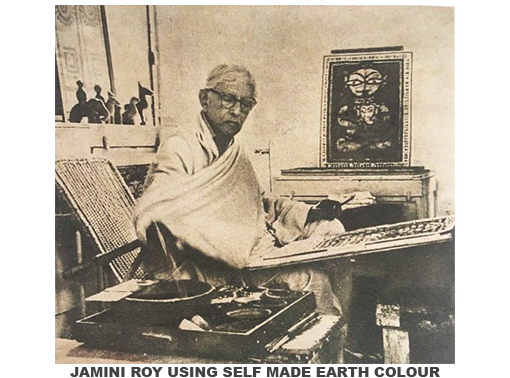
Even Jamini Roy, despite his academic training at the Government School of Art, consciously abandoned European oils in favour of indigenous pigments and homemade tempera, drawing inspiration from Bengal’s village painters.
His decision was both artistic and ideological.
More Than Materials
The story of colonial art supplies is ultimately about choice.
Some artists embraced imported technology.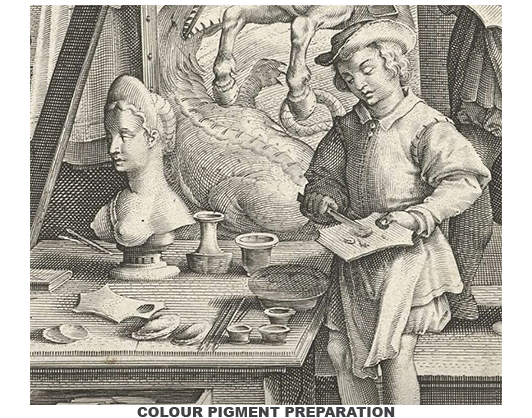
Others resisted it.
Many adopted a hybrid approach, combining British pigments with Indian papers or European brushes with locally prepared colours.
The result was not a simple conflict between East and West but a continuous negotiation between tradition and modernity.
The Legacy Today
Walk into an artist’s studio in India today and you may still find Winsor & Newton colours sitting beside handmade papers from Jaipur or natural pigments sourced from village artisans.
This coexistence reflects a history more than a century old.
The colonial marketplace introduced new possibilities, but Indian artists refused to become passive consumers. Instead, they adapted, experimented, and reinvented materials according to their own needs and philosophies.
The story of Indian modern art, therefore, is not only about paintings and sculptures.
It is also about brushes bought from Esplanade, pigments ground in Burrabazar, papers carried across oceans, and colours mixed by hand in modest studios.
Every masterpiece begins long before the first brushstroke.
Sometimes, it begins in an art supply shop.
Endnotes
- Tapati Guha-Thakurta, The Making of a New “Indian” Art: Artists, Aesthetics and Nationalism in Bengal, c.1850–1920.
- Partha Mitter, Art and Nationalism in Colonial India, 1850–1922.
- Archival advertisements and catalogues of Thacker, Spink & Co., Calcutta.
- Historical records relating to G.C. Laha and artists’ materials in colonial Kolkata.
- Studies on the Swadeshi movement and indigenous artistic practices.
- Research on Jamini Roy’s use of local pigments and tempera techniques.
Selected Bibliography
- Guha-Thakurta, Tapati. The Making of a New “Indian” Art. Cambridge University Press.
- Mitter, Partha. Art and Nationalism in Colonial India. Cambridge University Press.
- Exhibition catalogues on the Bengal School and Jamini Roy.
- Archival records relating to colonial art supply trade and commercial stationers in Calcutta.
- Studies on indigenous pigments and traditional painting techniques in South Asia.
- Research & Compiled by Aakriti Art Gallery team
Comments
Join the Discussion
Please login to post comments.
Login