GenNext: Discovering Tomorrow’s Masters
How Aakriti Art Gallery Built One of India’s Most Significant Platforms for Emerging Artists
When Aakriti Art Gallery launched GenNext in 2006, it introduced something that was still relatively uncommon in the Indian art world: a sustained institutional commitment to emerging artists.
At a time when most galleries understandably relied on established names to attract collectors and audiences, Aakriti chose to invest in potential rather than reputation. Conceived as part of the gallery’s first anniversary celebrations, GenNext was founded on a simple but ambitious belief—that today’s unknown artist could become tomorrow’s master.
What began as a single exhibition soon evolved into one of the gallery’s most important curatorial initiatives. Between 2006 and 2013, Aakriti organised seven annual editions of GenNext, creating a platform for hundreds of young artists from India and abroad. Painters, sculptors, printmakers, photographers, installation artists and multimedia practitioners were brought together under a common objective: to showcase emerging talent before the wider art world had fully recognised it.
Looking back nearly two decades later, the importance of GenNext lies not merely in the exhibitions themselves, but in the remarkable number of artists who went on to build significant national and international careers.
A Platform Ahead of Its Time
The first decade of the twenty-first century was a period of rapid expansion for the Indian art market. Auction records were being broken, new galleries were opening, and contemporary Indian art was attracting growing international attention.
Yet opportunities for younger artists remained limited. Commercial galleries were often cautious, institutional support was still evolving, and collectors naturally gravitated towards familiar names.
GenNext sought to bridge this gap.
Rather than focusing on market success, the exhibitions prioritised originality, technical accomplishment, conceptual strength, and the willingness to experiment. This approach transformed GenNext into a testing ground for new ideas and new artistic voices.
In many ways, the series became a laboratory for contemporary art practice at a moment of important transition within the Indian art ecosystem.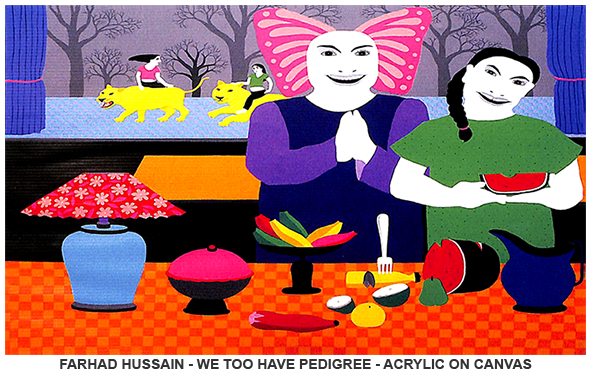
Artists Who Went On to National Recognition
One of the most striking aspects of GenNext is the number of participants who subsequently established substantial careers.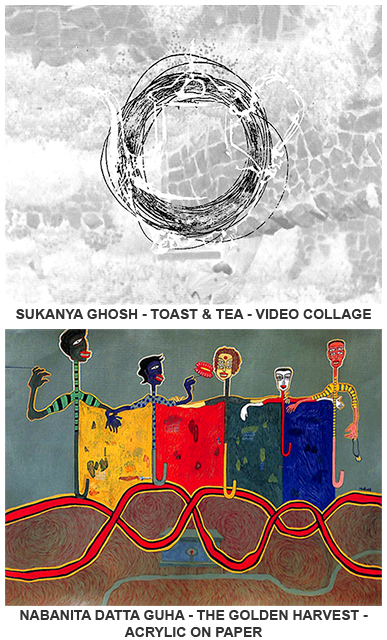
Among painters, Farhad Hussain (GenNext I) has emerged as one of the most distinctive contemporary voices of his generation. His vibrant, satirical compositions combine popular visual culture with observations on consumerism, aspiration and urban life.
Debraj Goswami (GenNext I) developed a highly individual visual language that draws upon mythology, memory and narrative structures, while Birendra Pani (GenNext I) built a respected practice through paintings that bridge traditional Indian imagery and contemporary realities.
The exhibitions also provided an early platform for artists such as Amlan Dutta (GenNext II), Mithun Dasgupta (GenNext II), Priyanka Lahiri (GenNext IV), Mansoor Ali (GenNext IV), Punyo Chobin (GenNext IV), Paltu Barman (GenNext IV), Prafull Singh (GenNext IV), Soma Das (GenNext IV), Sukanya Ghosh (GenNext IV), Nabanita Datta Guha (GenNext- IV) and several others who have continued to develop mature professional practices through exhibitions, residencies and gallery representation.
A Strong Legacy in Sculpture 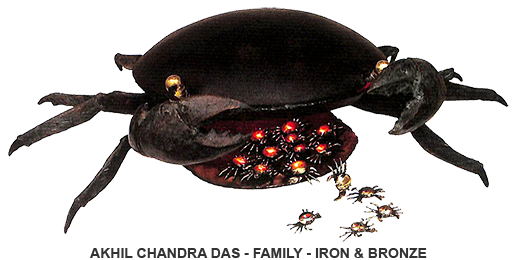
GenNext was equally important for contemporary sculpture.
Debanjan Roy (GenNext I) became widely recognised for his thought-provoking sculptures that place Mahatma Gandhi within contemporary consumer culture, creating works that are simultaneously humorous, critical and deeply relevant.
Akhil Chandra Das (GenNext I) developed a powerful sculptural language across multiple media and today occupies an important position within contemporary Indian sculpture.
Among subsequent participants, Subrata Biswas (GenNext II) established a reputation through 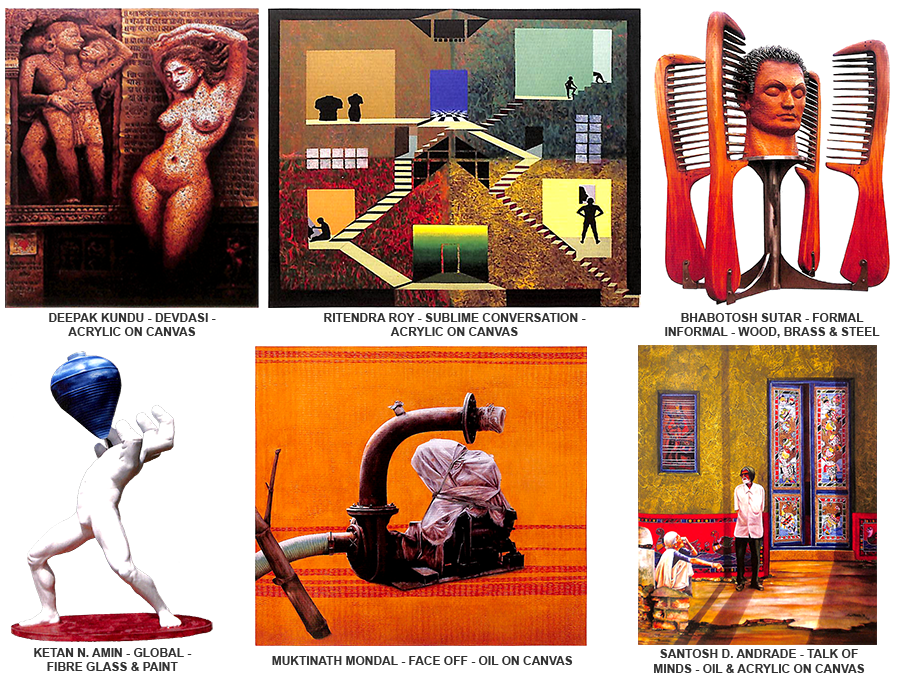 finely crafted bronze and metal sculptures, while Tapas Biswas (GenNext II) created a distinctive practice centred on intricate metal-wire constructions and relief forms.
Other notable sculptors associated with the series include Deepak Kundu (GenNext I), Ritendra Roy (GenNext I), Bhabotosh Sutar (GenNext III), Ketan N. Amin (GenNext III), Muktinath Mondal (GenNext III), Santosh D. Andrade (GenNext III), Buddhadev Mukherjee (GenNext V) and Romicon Revola (GenNext IV), all of whom contributed to the diversity and ambition of the programme.
Opening the Door to the World
Perhaps what most distinguished GenNext from many other emerging artist initiatives was its increasingly international outlook.
As the programme matured, submissions began arriving from across the globe. By the fourth and fifth editions, artists from the United States, Pakistan, France, Croatia, Lithuania, Italy, South Korea, Hungary, China, Austria, Brazil, Canada, Poland and the United Kingdom were exhibiting alongside Indian participants.
This transformed GenNext from a regional exhibition into a genuinely international dialogue.
Rather than presenting Indian art in isolation, the exhibitions positioned young Indian artists within a broader global conversation about contemporary practice.
International Artists Who Achieved Wider Recognition
Opening the Door to the World
What truly distinguished GenNext from many emerging artist exhibitions of its time was its increasingly international outlook.
While the primary objective of the programme was to identify and support promising young artists from India, the curatorial vision quickly expanded beyond national boundaries. As the reputation of the exhibition grew, submissions began arriving from artists across Europe, North America, South America, the Caribbean, and South Asia. By the fourth and fifth editions, GenNext had evolved into an international platform that brought together artists from the United States, Pakistan, France, Croatia, Lithuania, Italy, Austria, Brazil, Canada, Poland, China, South Korea, Jamaica, and the United Kingdom alongside their Indian counterparts.
This was particularly significant during a period when the Indian contemporary art market was still largely focused on domestic narratives. GenNext offered emerging artists the opportunity to exhibit within an environment where diverse artistic traditions, cultural experiences, and visual languages could engage in meaningful dialogue.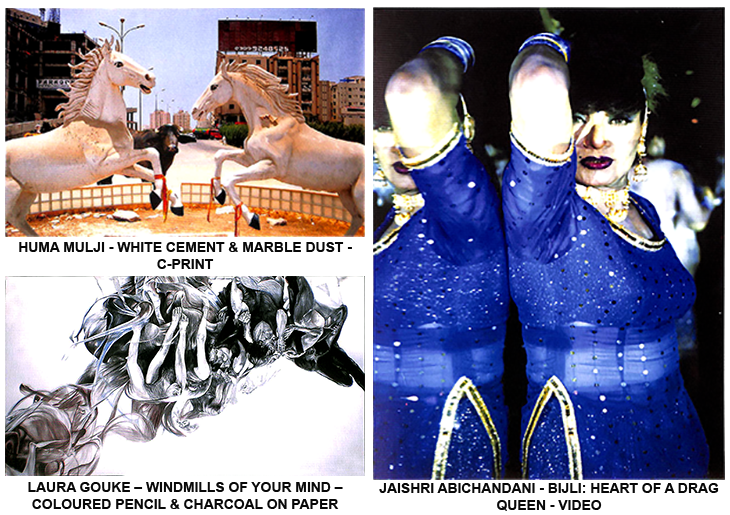
Rather than presenting Indian art in isolation, the exhibitions situated young Indian practitioners within a broader global conversation about identity, migration, memory, urbanisation, gender, politics, ecology, and contemporary life. For many participating artists, it represented their first exposure to an international audience in India.
Among the most distinguished participants was Jaishri Abichandani (USA), whose feminist and diasporic practice has since earned international recognition. Founder of the South Asian Women’s Creative Collective (SAWCC), Abichandani has exhibited at major institutions including MoMA PS1, Queens Museum, Asia Society, and the Brooklyn Museum. Her participation reflected GenNext’s willingness to engage with artists whose concerns extended beyond traditional geographical categories.
Equally significant was Huma Mulji (Pakistan), now regarded as one of South Asia’s leading contemporary artists. Through sculpture, photography, and installation, Mulji explores themes of borders, migration, displacement, and global politics. Her subsequent participation in major international exhibitions including the Venice Biennale and Gwangju Biennale highlights the calibre of artists represented within the GenNext programme.
The Lithuanian artist Laura Guoke later gained international attention through her participation in the prestigious BP Portrait Award programme in London, while 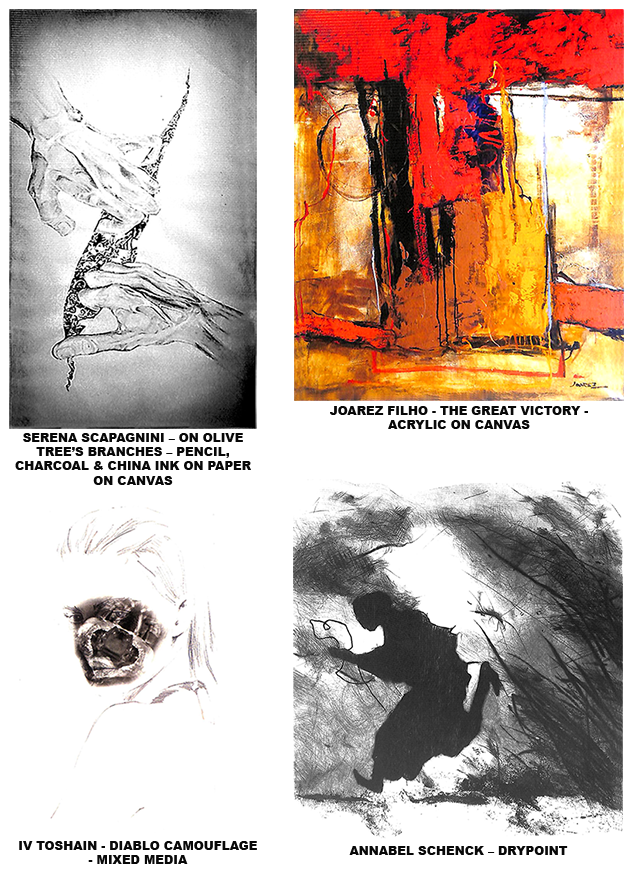 French printmaker Annabel Schenck developed a respected reputation for her large-scale woodcuts and architectural prints. Croatian artist Dino Bakić brought a distinctly European sensibility to contemporary painting through expressive figurative and surrealist imagery.
The international participation extended well beyond Europe and South Asia. Artists such as Dione Simpson (Jamaica), Gregory Chenu Vidal (France), IV Toshain (Austria), Joarez Filho (Brazil), Justin Tyler Tate (Canada), Maciej Gador (Poland), Mathew Tom (USA), Serena Scapagnini (Italy), and the collaborative duo Ruth Avra Kleinman and Dana Lynn Kleinman (USA) contributed to an increasingly diverse and multicultural exhibition environment.
Viewed in retrospect, these international inclusions were not merely symbolic. They reflected a curatorial belief that artistic excellence transcends geography and that emerging artists benefit from exposure to multiple perspectives. Long before global connectivity became routine within the art world, GenNext demonstrated how a regional initiative could successfully foster international artistic exchange.
The result was a programme that not only discovered talent but also encouraged dialogue across cultures, disciplines, and national boundaries. In doing so, GenNext helped position Aakriti Art Gallery as one of the few Indian institutions actively supporting a genuinely international conversation among emerging artists during the first decade of the twenty-first century.
A Legacy of Looking Forward
The true significance of GenNext cannot be measured solely through the subsequent success of individual artists.
Its lasting contribution lies in its willingness to recognise promise before it became obvious.
For seven consecutive editions between 2006 and 2013, Aakriti Art Gallery created a space where emerging artists could experiment, exhibit and engage with audiences at a formative stage of their careers. Some participants went on to achieve national and international prominence; others built respected professional practices away from the spotlight.
Together they form an important record of the artistic energies that shaped the first decade of the twenty-first century.
Today, GenNext stands not only as an exhibition history but as a curatorial archive of future possibilities—a reminder that every celebrated artist was once an emerging voice waiting to be heard.
- Research & Compiled by Aakriti Art Gallery team
Comments
Join the Discussion
Please login to post comments.
Login