How Japanese, Chinese and Other Asian Thinkers Helped Rediscover Indian Art (1880–1950)
Asia Discovers India
When discussing the rediscovery of Indian art during the late nineteenth and early twentieth centuries, attention is usually directed towards European archaeologists, colonial administrators, museum curators, and Western scholars. Their contributions were undoubtedly significant. Yet another equally important story remains less explored.
Between 1880 and 1950, India attracted artists, scholars, monks, writers, and intellectuals from across Asia who viewed the country through a very different lens. Unlike many European observers, they did not see India primarily as a colonial possession, an archaeological site, or an exotic destination. For many of them, India represented a civilisational source, a spiritual homeland, and an essential chapter in the shared cultural history of Asia.
Their visits, writings, paintings, journals, and institutional initiatives helped shape new understandings of Indian art at a crucial moment in its modern development. They also influenced some of the most important artistic movements of the period, including the Bengal School and the broader Pan-Asian cultural revival.
Today, their contributions remain one of the lesser-known chapters in the history of Indian art.
The Birth of a Pan-Asian Idea
By the late nineteenth century, Asia was undergoing profound change.
Japan had emerged from the Meiji Restoration and was rapidly modernising. China was confronting political upheaval and foreign intervention. Across Asia, intellectuals grappled with questions of identity, tradition, and modernity.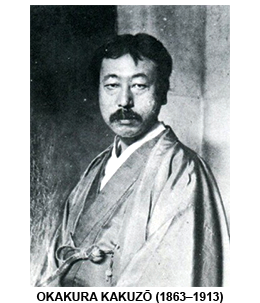
In this atmosphere, many thinkers began searching for cultural alternatives to Western dominance.
One of the most influential voices was the Japanese art historian and cultural philosopher Okakura Kakuzō (1863–1913), widely known as Tenshin Okakura.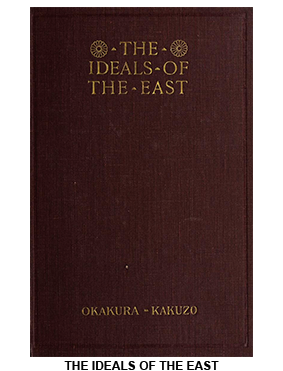
His famous declaration—
“Asia is One”
—became one of the defining ideas of the period.
Okakura argued that the artistic and spiritual traditions of India, China, Japan, and other Asian cultures were interconnected. In his influential book The Ideals of the East (1903), he placed India at the heart of this shared cultural history, describing it as one of the great sources from which Asian civilisation had emerged.
For Okakura, understanding Asia required understanding India.
Japan Encounters India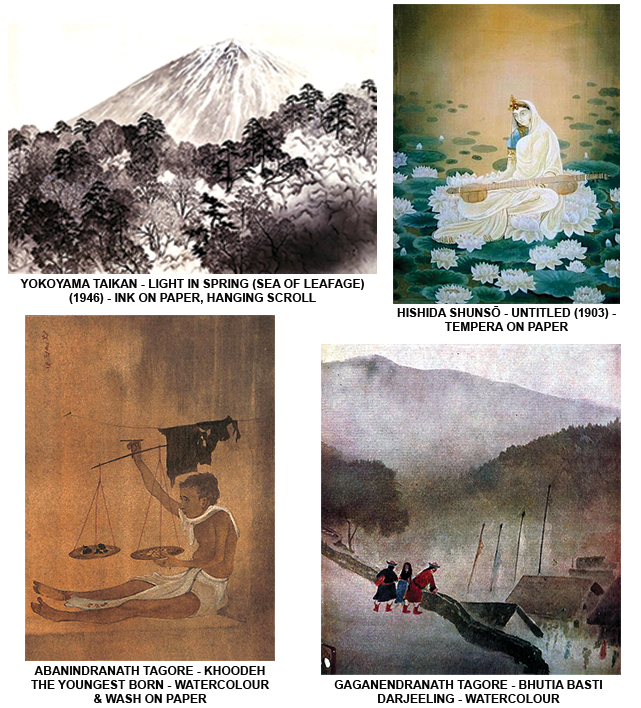
Okakura’s ideas were not confined to books.
His visits to India and friendships with Rabindranath Tagore, Abanindranath Tagore, Gaganendranath Tagore, and Sister Nivedita helped establish one of the most important artistic dialogues in modern Asian history.
At the time, many Indian artists were seeking alternatives to European academic realism. Japanese artists were engaged in a similar process, attempting to modernise without abandoning indigenous traditions.
The exchange proved transformative.
Japanese painters such as Yokoyama Taikan and Hishida Shunsō visited India and interacted closely with artists in Calcutta. Their techniques, particularly the use of wash painting and atmospheric brushwork, profoundly influenced the emerging Bengal School.
Abanindranath Tagore’s later paintings reveal clear affinities with Japanese methods while remaining rooted in Indian themes and narratives.
This was not imitation.
It was collaboration.
For perhaps the first time in the modern era, artists from different parts of Asia were consciously engaging with one another outside the framework of Europe.
Ajanta Through Asian Eyes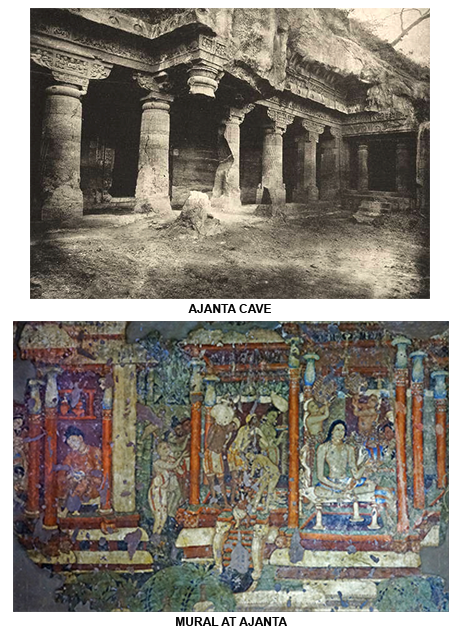
Among the artistic treasures that captivated Asian visitors, none was more influential than Ajanta.
Discovered by British officers in 1819 and gradually documented throughout the nineteenth century, the caves became a source of fascination for artists across Asia.
To Japanese scholars and painters, Ajanta represented much more than a historical monument.
They saw in its murals evidence of a shared Buddhist artistic heritage linking India to East Asia.
Artists such as Kampo Arai and Kosetsu Nosu studied the murals closely, producing copies and writings that circulated in Japan. These reproductions introduced many Japanese audiences to the sophistication of ancient Indian painting.
At a time when European scholars often viewed Indian art through archaeological frameworks, Japanese artists recognised Ajanta as a living artistic achievement.
Their enthusiasm helped elevate international appreciation of Indian painting and encouraged Indian artists themselves to re-examine their own traditions.
Journals, Images and the Printed Conversation
Ideas travelled through people, but they also travelled through publications.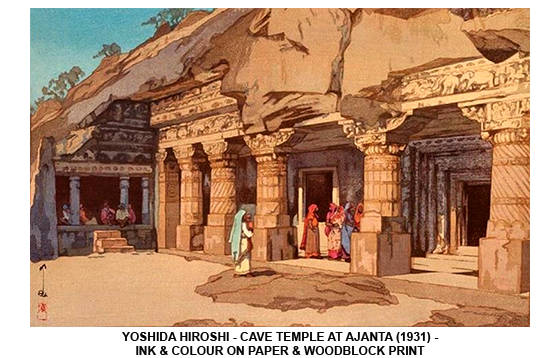
One of the most influential platforms was the Japanese journal Kokka, founded in 1889. The magazine published studies of Asian art and played a crucial role in promoting dialogue between India, China, and Japan.
Through essays, reproductions, and scholarly articles, Kokka introduced readers to Indian art and encouraged a broader understanding of Asia’s interconnected cultural heritage.
In India, journals such as Rupam, Modern Review, Prabasi, and later publications associated with Santiniketan helped sustain similar conversations.
Long before the internet, these journals created intellectual networks that crossed national boundaries.
They allowed images, ideas, and debates to circulate across Asia.
Santiniketan: Where Asia Met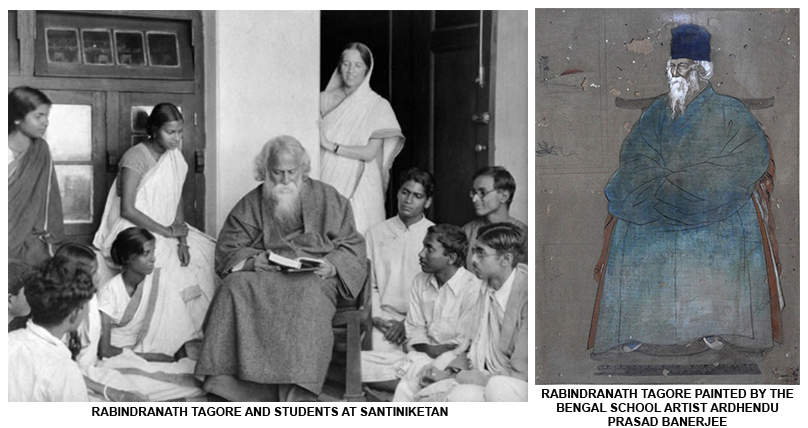 If there was one place where these exchanges found their fullest expression, it was Santiniketan.
Rabindranath Tagore envisioned Visva-Bharati as a meeting ground of cultures. He sought to create an institution where scholars and artists from different parts of Asia could engage with one another as equals.
The result was one of the most ambitious cultural experiments of the twentieth century.
Japanese artists, Chinese scholars, European intellectuals, Buddhist monks, and Indian artists all passed through its campus.
Santiniketan became a living embodiment of Pan-Asian cultural exchange.
Its influence on modern Indian art remains immeasurable.
Tan Yun-Shan and the Chinese Connection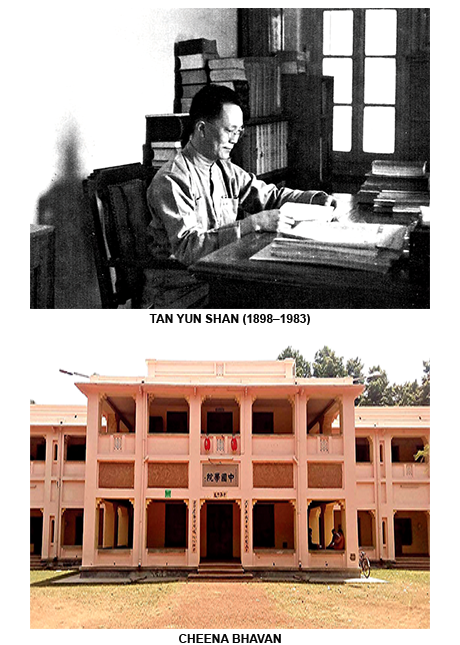 The most significant Chinese figure associated with this movement was Tan Yun-Shan (1898–1983).
Invited by Rabindranath Tagore, Tan arrived at Santiniketan in 1928 and later established Cheena Bhavana, the centre for Chinese studies at Visva-Bharati.
His work strengthened intellectual and cultural links between India and China at a time when both countries were undergoing profound transformation.
Through his efforts, scholars, students, and visitors gained access to Chinese and Indian traditions in a shared academic environment.
Tan viewed art, philosophy, and history as bridges between cultures.
His contribution extended far beyond scholarship.
He helped create a framework through which Indian and Chinese civilisations could engage in meaningful dialogue.
Xu Beihong and Artistic Exchange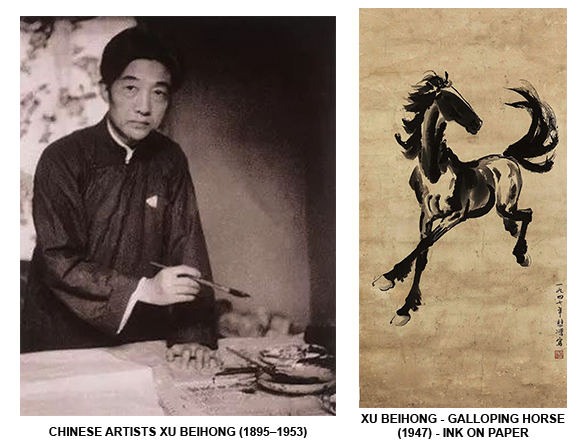
Among the most important Chinese artists associated with India was Xu Beihong (1895–1953).
Known for his powerful paintings and commitment to artistic modernisation, Xu visited Santiniketan and interacted with Indian artists and intellectuals.
His presence symbolised the growing artistic connections between India and China.
The exchanges that occurred during these visits contributed to broader conversations about modernity, tradition, education, and artistic identity across Asia.
Buddhist Pilgrims and Sacred Landscapes
Not all visitors came as artists or scholars.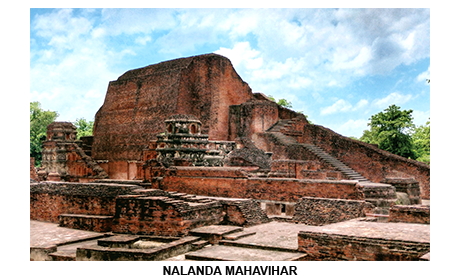 Throughout this period, Buddhist monks and pilgrims from China, Japan, Sri Lanka, Burma, Thailand, and other Asian countries travelled to Bodh Gaya, Sarnath, Nalanda, Kushinagar, and other sacred sites.
Their writings frequently contain observations on sculpture, architecture, murals, and sacred landscapes.
Unlike many colonial observers, they approached these monuments not primarily as archaeological remains but as living expressions of a shared spiritual heritage.
Their accounts preserve perspectives that are often absent from conventional art history.
The Impact on Indian Art
The significance of these encounters extends far beyond travel history.
Japanese artists influenced the techniques and aesthetics of the Bengal School.
Asian intellectual networks helped re-evaluate Ajanta and Buddhist art.
Santiniketan emerged as a centre of international cultural exchange.
Journals facilitated dialogue across national boundaries.
Most importantly, these interactions encouraged Indian artists and scholars to view themselves as participants in a wider Asian cultural world.
At a time when colonial narratives often emphasised dependence upon Europe, these exchanges offered alternative models of artistic modernity rooted in Asian experience.
The history of Indian art cannot be understood solely through its encounters with Europe.
Between 1880 and 1950, Japanese artists, Chinese scholars, Buddhist pilgrims, and Asian intellectuals played an important role in shaping how Indian art was studied, interpreted, and valued.
They helped rediscover Ajanta, influenced the Bengal School, strengthened Santiniketan’s international vision, and contributed to a broader understanding of Asia’s shared cultural heritage.
Their story reminds us that modern Indian art developed not only through dialogue with the West but also through conversations within Asia itself.
In recovering these histories, we gain a richer understanding of the networks, friendships, ideas, and artistic exchanges that helped shape modern Indian art.
Editorial Note: Much of the history of Asian engagement with Indian art remains dispersed across institutional archives, private papers, correspondence, travel accounts, journals, and publications in Japanese, Chinese, Bengali, and English. This essay is intended as an introductory survey of a field that deserves substantially deeper scholarly investigation.
Selected Bibliography
- Okakura Kakuzō. The Ideals of the East: With Special Reference to the Art of Japan. London: John Murray, 1903.
- Okakura Kakuzō. The Awakening of Japan. New York: The Century Co., 1904.
- Okakura Kakuzō. The Book of Tea. New York: Fox, Duffield & Co., 1906.
- Tagore, Rabindranath. Nationalism. London: Macmillan, 1917.
- Tagore, Rabindranath. Creative Unity. London: Macmillan, 1922.
- Early issues of Kokka (Tokyo, 1889 onwards).
- Rupam: An Illustrated Quarterly Journal of Oriental Art. Calcutta.
- Archives of Visva-Bharati University, Santiniketan.
- Archives of Cheena Bhavana, Visva-Bharati University.
——————————————————————————————————
(Recommended image programme (12–15 visuals)
- Okakura Kakuzō portrait
- Cover of The Ideals of the East
- Kokka magazine cover
- Yokoyama Taikan painting
- Hishida Shunsō painting
- Abanindranath Tagore wash painting
- Ajanta mural detail
- Japanese copy of Ajanta murals
- Rabindranath Tagore photograph
- Santiniketan archival photograph
- Tan Yun-Shan portrait
- Cheena Bhavana photograph
- Xu Beihong photograph
- Bodh Gaya c.1900
- Nalanda archaeological site)
- Research & Compiled by Aakriti Art Gallery team
Comments
Join the Discussion
Please login to post comments.
Login