Revisiting Early Women Artists of Modern India: Histories Beyond the Mainstream
Explore the lives and contributions of Sunayani Devi, Ambika Dhurandhar, Atasi Barua, Devayani Krishna, Hemangini Baradoloi and Fatima Ahmed—important women artists who helped shape modern Indian art beyond mainstream narratives.
The history of modern Indian art is often narrated through a familiar set of names. Raja Ravi Varma, Abanindranath Tagore, Nandalal Bose, Amrita Sher-Gil, M.F. Husain, F.N. Souza and S.H. Raza occupy prominent positions within textbooks, exhibitions and auction catalogues. Their importance is unquestionable. Yet this dominant narrative frequently leaves little room for many artists whose contributions were equally significant within their own contexts.
Among those deserving renewed attention are several women artists who worked during the formative decades of modern Indian art. Some achieved recognition during their lifetimes, exhibited internationally, or participated in important artistic movements. Others built careers under social conditions that offered few opportunities to women pursuing professional artistic practice.
Today, their works survive in museums, institutional collections and private holdings, yet many remain absent from mainstream discussions of Indian art. Revisiting their lives and artistic achievements allows us to expand our understanding of modern Indian art beyond established narratives.
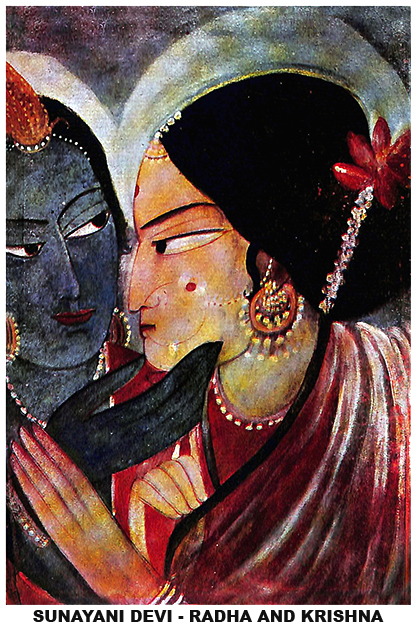
Sunayani Devi: A Modern Vision Rooted in Tradition
Any discussion of early women artists in India must begin with Sunayani Devi (1875–1962).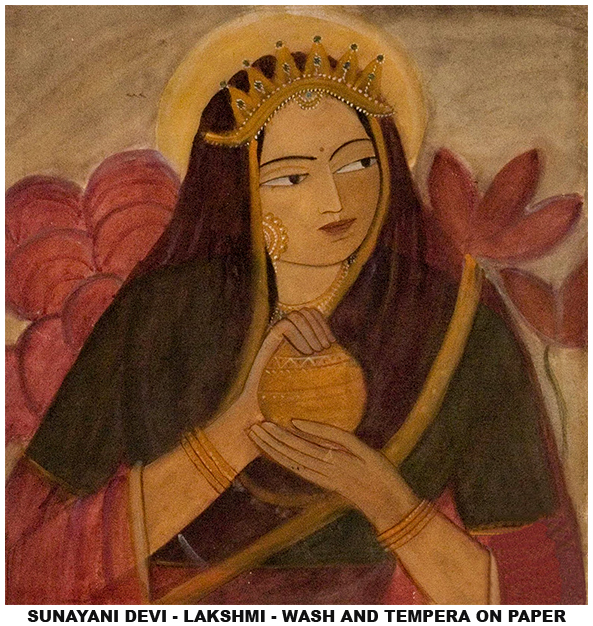
Born into the celebrated Tagore family of Calcutta, she was the sister of Abanindranath Tagore and Gaganendranath Tagore. Unlike her brothers, however, she received no formal artistic training. She began painting relatively late in life and developed a highly personal style inspired by folk traditions, devotional imagery and domestic visual culture.
Art historian Stella Kramrisch famously regarded her as one of the earliest truly modern painters in India. Her works drew upon village pata paintings, clay dolls and indigenous visual traditions rather than academic realism. At a time when many artists were consciously formulating a national artistic identity, Sunayani arrived at a modern language through intuition rather than theory.
Her paintings depicting Krishna, Radha, ascetics and mythological subjects possess an unusual stillness and simplicity. The flattened space, stylised figures and restrained colour palette distinguish her work from both academic realism and the more intellectual formulations of the Bengal School.
In retrospect, Sunayani Devi appears remarkably contemporary. Long before modernism embraced vernacular traditions, she demonstrated how indigenous visual culture could serve as the foundation of a sophisticated artistic language.
Ambika Dhurandhar and the Academic Tradition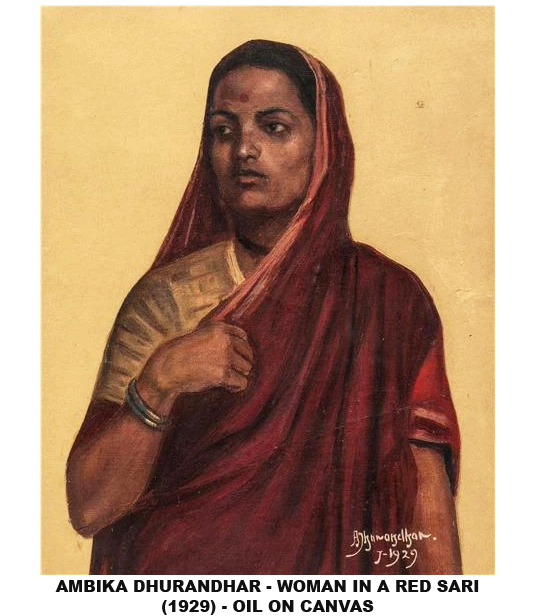
If Sunayani Devi represents one path to modern Indian art, Ambika Dhurandhar represents another.
Associated with the Sir J.J. School of Art in Bombay, Ambika Dhurandhar belonged to a family deeply connected with academic art. She was among the first women to complete formal art training at the institution and worked under the influence of her father, Rao Bahadur M.V. Dhurandhar, one of the leading academic painters of colonial India.
The history of Indian modernism has often privileged artists who rejected academic realism. As a result, practitioners working within academic traditions have sometimes received less scholarly attention. Yet academic realism remained an important component of Indian art well into the twentieth century.
Ambika’s paintings reveal technical discipline, careful draftsmanship and an enduring commitment to representational art. Her career provides valuable insight into the role of women within formal art education during a period when professional opportunities for female artists remained limited.
Her life also serves as a reminder that modern Indian art developed through multiple parallel traditions rather than a single stylistic movement.
Atasi Barua: Buddhism and the Santiniketan Legacy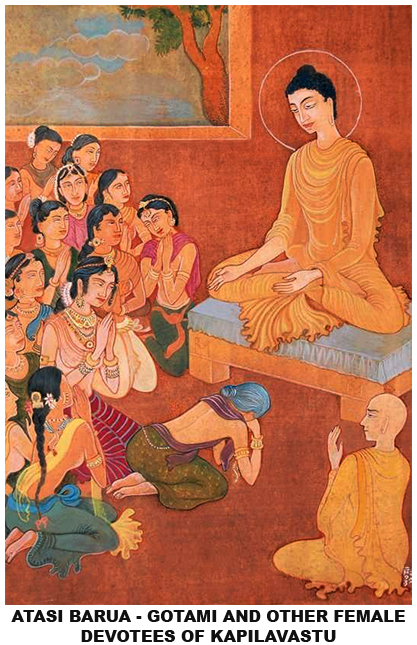
Atasi Barua (1921–2016) occupies a distinctive place within modern Indian art.
Born at Santiniketan and connected to the extended Tagore family, she inherited an artistic environment shaped by cultural experimentation and intellectual inquiry. Her father, Asit Kumar Haldar, was himself an important artist associated with the Bengal School. Rabindranath Tagore is said to have named her.
Unlike many of her contemporaries, Atasi developed a sustained engagement with Buddhist themes. Influenced by her husband, the scholar Dr. Arabinda Barua, she created works inspired by the life of Buddha, Ajanta murals and Buddhist philosophy. Her artistic practice combined elements of realism with spiritual and historical subjects.
Her works were exhibited internationally, including in Colombo, Tehran, Cairo, Bangkok, Tokyo and the United States. Despite this global exposure, she remains far less discussed today than many of her male contemporaries.
Atasi’s career highlights the international dimensions of Indian art during the twentieth century and demonstrates how Buddhist themes continued to inspire modern artistic expression.
Devayani Krishna: Experimentation Beyond Painting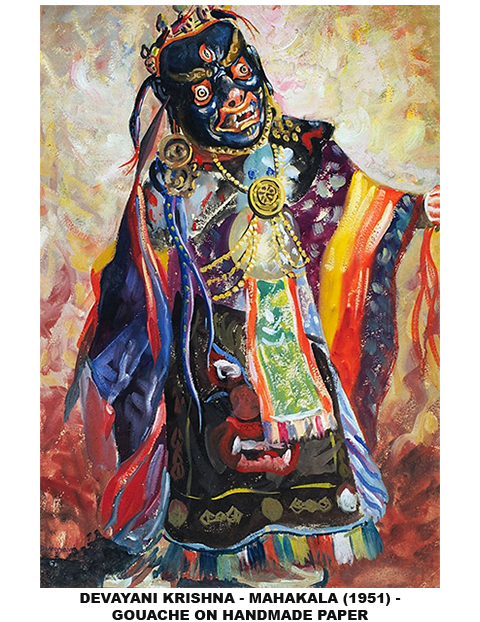
Devayani Krishna (1918–2000) represents one of the most versatile figures among early women artists of modern India.
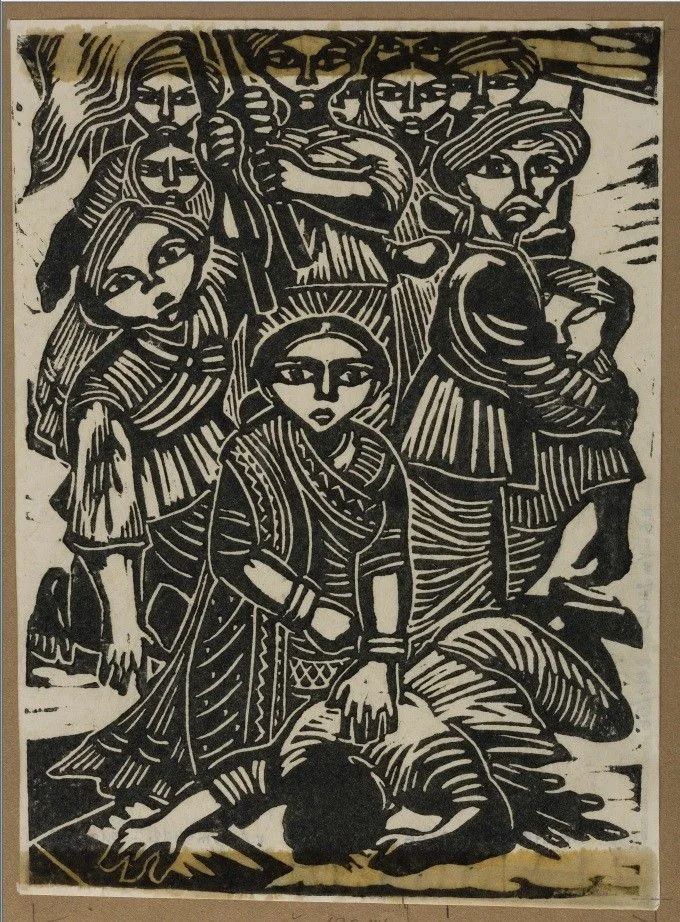
Painter, printmaker, educator and researcher, she pursued an unusually diverse artistic career. Trained at the Sir J.J. School of Art, she travelled extensively with her husband, the artist Kanwal Krishna, documenting Himalayan cultures, Tibetan traditions and Buddhist visual heritage. These experiences profoundly influenced her artistic development.
Art critic Richard Bartholomew reportedly described her as one of India’s foremost women artists. Yet her name rarely appears in broader surveys of Indian modernism today.
What makes Devayani particularly significant is her refusal to remain confined within a single medium. Alongside painting and printmaking, she conducted research into folk motifs, toys, batik and traditional design practices. Her career anticipated contemporary interests in interdisciplinary artistic practice.
In many ways, Devayani Krishna exemplifies a broader category of artists whose contributions extend beyond individual artworks into research, teaching and cultural documentation.
Hemangini Baradoloi and the Regional Story
One of the persistent challenges within Indian art history is its tendency to focus on a few metropolitan centres such as Calcutta, Bombay, Delhi and Baroda.
Yet important artistic developments occurred across the country.
Artists such as Hemangini Baradoloi remind us that modern Indian art cannot be understood solely through metropolitan narratives. Working from Assam, she contributed to the visual culture of a region whose artistic history remains comparatively underrepresented within national discourse.
Her inclusion is important not merely as an individual artist but as a representative of broader regional histories that deserve deeper scholarly attention.
As research on Indian art expands, the contributions of artists working outside major urban centres will likely become increasingly significant.
Fatima Ahmed and Modern Art in Hyderabad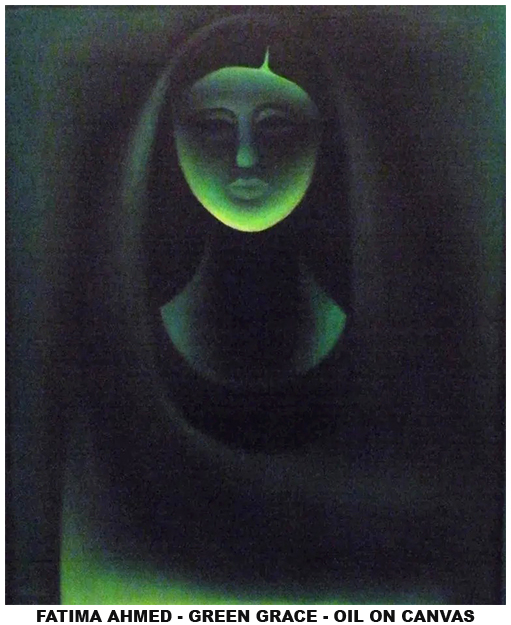
The history of modern Indian art in South India remains insufficiently explored compared with developments in Bengal and Bombay.
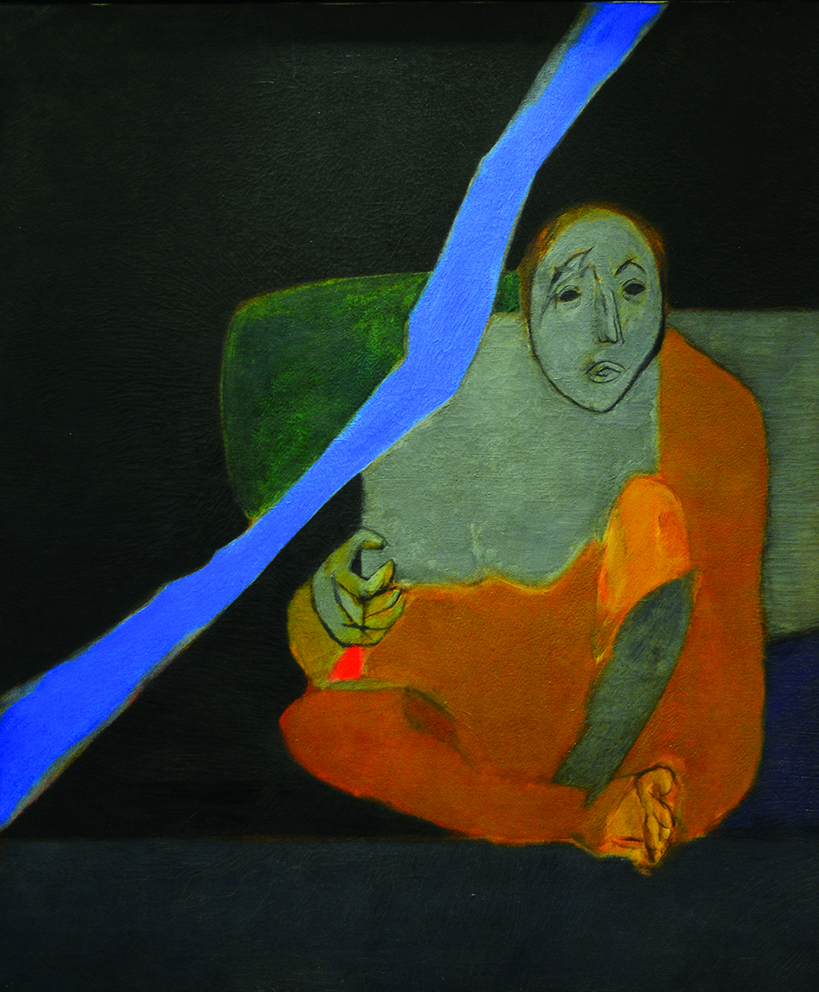
Fatima Ahmed (1928–2015) occupies an important place within this context. Working from Hyderabad, she emerged during a period when women artists faced significant social and professional barriers.
Her paintings demonstrate a strong engagement with colour, form and everyday life while contributing to the development of modern art in the Deccan region.
Today, Fatima Ahmed represents an important chapter in the broader story of Indian modernism beyond the dominant centres of artistic activity.
Her career reminds us that modern Indian art developed through multiple regional conversations rather than a single national narrative.
Expanding the Canon
Why revisit these artists today?
The answer is not because they were entirely forgotten. Many exhibited widely, received critical attention and entered important collections. Rather, they have gradually become less visible within contemporary discussions dominated by a relatively small group of canonical figures.
Recovering their histories allows us to ask different questions about Indian art.
How did women negotiate artistic careers in the late nineteenth and early twentieth centuries?
How did regional artistic traditions contribute to modernism?
What role did teaching, research and cultural documentation play alongside painting?
How do we construct art historical canons, and who remains outside them?
Such questions help us move beyond simplified narratives and towards a richer understanding of modern Indian art.
The story of modern Indian art is far more diverse than standard histories often suggest.
Artists such as Sunayani Devi, Ambika Dhurandhar, Atasi Barua, Devayani Krishna, Hemangini Baradoloi and Fatima Ahmed worked across different regions, traditions and artistic languages. Together they reveal a broader landscape of artistic activity in which women played significant roles as painters, educators, researchers and cultural intermediaries.
Revisiting their contributions does not require rewriting the history of Indian art. It simply requires expanding it.
By looking beyond the mainstream, we gain a fuller understanding of the many voices that helped shape modern Indian art and the cultural histories that continue to inform it today.
Selected Bibliography
- Mitter, Partha. The Triumph of Modernism: India’s Artists and the Avant-Garde, 1922–1947.
- Guha-Thakurta, Tapati. The Making of a New Indian Art.
- Siva Kumar, R. Santiniketan: The Making of a Contextual Modernism.
- Dhurandhar, Ambika. Majhi Smaranchitre.
- Delhi Art Gallery. A Place in the Sun: Women Artists from 20th Century India.
- National Gallery of Modern Art Archives.
- Exhibition catalogues and institutional archives relating to Sunayani Devi, Atasi Barua and Devayani Krishna.
Editorial Note :
Articles published in Art Insights are researched and compiled using archival material, exhibition catalogues, institutional records, scholarly publications, museum resources and other credible sources. Bibliographies are provided wherever applicable to encourage further reading and research.
For the digital edition, selected articles are supplemented with metadata, keywords, image credits and related references to improve discoverability and accessibility through the Aakriti Art Gallery website and research archive.
- Research & Compiled by Aakriti Art Gallery team
Comments
Join the Discussion
Please login to post comments.
Login