The Missing Depth: On Patience, Honesty and Freedom in Indian Art
Reflections on Depth, Patience and Authenticity in Contemporary Indian Art
An empty hand, an empty mind and a blank piece of paper—there the fingers sway in their playful motion for some distant quest in the heart and mind. From here the journey truly begins. It is here the word is born, the line begins to trace. It is from this dawning moment that the artist and the writer are reborn as explorers. They wander every trail of search, of chisel dream and blade—all the roads of longing that their own creation made. In this original spirit of creative awakening knowing the truth becomes the very “truth” in itself and when this truth stands unveiled before the world, honoring or valuating it becomes the ultimate test of the system. If harmony dwells between the source from which the truth first arose and the ground where it is tested and weighed, then only the system can widen its “sacred circle” to absorb new thoughts or ideologies. For any thought current to flow smoothly in a graceful manner, critical awakening of the mass of people who share the thread is also essential. This awakening breaks the systemic inertia. But the question is, “how is it possible to string all this together in a single thread?” So come, let’s meditate over this thread in such a way that we reach the very heart and depth of each individual bead.
Let’s begin with the academic design that shapes --the future artists and the future of artists. The journey of any academic research and learning begins with curiosity and fresh perspectives that help the students look at the world differently. With raw potential, their minds are ready to receive ideas without preconceptions. Research is not all about collection of facts—it is an artistic, energetic and personal process where researchers/learners put their passion, curiosity and life force into exploration and new discovery. Unfortunately, today research and learning begin with rigid structures based on accumulated knowledge.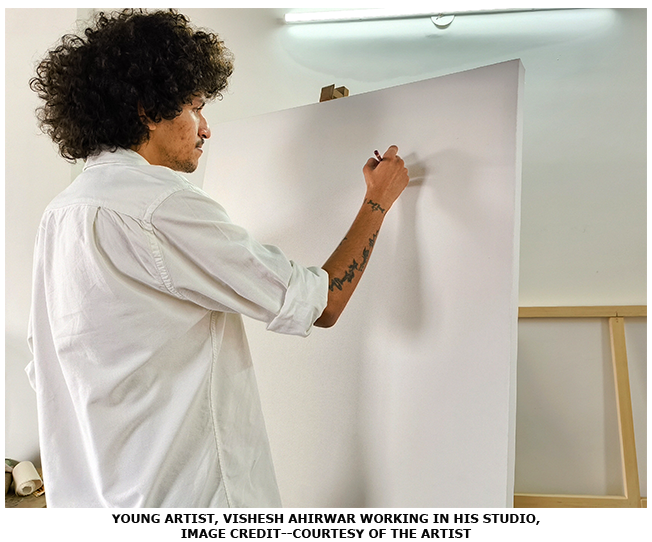 This academic approach fails to channel the young energies into more individual journeys. Students heavily loaded with historical canons, can never turn their blank paper/canvas into a site where personal energy melts with intellectual curiosity.
The earlier generations of pre-digital era, who reshaped the very age with the power of their ideas, had the desire to know and would continuously break the boundaries of knowledge. Despite the lack of facilities and comforts, an ordinary middle-class person, struggling through the hardships of life, appeared as a responsible individual who changed the times through the spark of his thoughts. He was slow-paced and had the patience to freely explore new directions in the open sky of ideas. In contrast, today the era of computer and technology has made the man hasty, less thoughtful and impatient. Intellectual depth, struggle and thoughtful approach of the past seem to have been replaced by speed and superficiality. Technological progress while bringing convenience has eroded these qualities that defined earlier generations of artists. Learning and true exploration need time but today everything seems explorable at the tips of our fingers, seizing up the mind to let thoughts pass through freely. It is being said that the circle has expanded. Yes, today’s youth is doing many things differently. A lot has grown and advanced at the level of experimentation but is this the real truth that we seek in art? Whether this fast-paced, experimental, screen-mediated boundary-breaking art is authentic and fulfilling, or if something essential—depth, patience, real human connection, honesty and inner peace is being lost.
After creating art and truly understanding it, technology is needed to explain or share it—but allowing that technology to dominate over art itself or using it as a shortcut is a very dishonest act. Professionally, social media and technology can be helpful tools for explaining, promoting and deepening the understanding of finished art. However, during the learning process, technology often becomes a weapon that kills creativity. Students/premature artists, with just one click, turn countless artworks into their inspiration but in doing so, they stop looking within themselves. This is where the very first link in the chain of genuine artistic development becomes weak, making the artist an imitator rather than a creator.
Now, after completing their academic qualification, the next step for our youth is to step into their professional field where the world is completely different. Many times they feel as if they have to learn everything all over again. This phase leaves them in a mixed emotional state—partly exited and enthusiastic about the new opportunities and partly anxious or nervous about the challenges ahead. It was not a distant past when this transitional period used to be much more supportive in the making of an artist. It was like an open field where art centers used to play a very important role in helping youth make a smoother transition from academic life to professional artistic career. These dedicated art centers were the training ground where the young artists could visit and work in their workshops, observe the artistic and creative atmosphere, earn practical skills and gradually absorb that knowledge and culture into themselves. Let us cite an example of Bharat Bhawan as an exemplary institution. Master artists like Swaminathan and Manjeet Bawa turned this art centre into a thriving model by opening its doors not only for urban contemporary art but also for tribal art forms. It provided a supportive ecosystem for the emerging artists. Workshops, hand-on learning, exhibitions, meaningful dialogues and interaction were the regular features. This created a true ‘incubator effect’ where artists would gradually find their footing and establish themselves. Prominent galleries would visit this vibrant centre, view artworks, offer exhibitions and sometimes purchase art. This provided crucial exposure and economic opportunities. Galleries were also thriving in such a strong ecosystem because this robust local scene strengthened their ability to discover talent organically and then promote it globally. Legendary masters like M.F. Hussain, Manjeet Bawa and S.H. Raza had given companionship and guidance to the then emerging artists in the very courtyards of the centre. These masters had spent an entire era in cultivating a nourishing environment and had left their footprints for the coming generation of artists. This was the generation that proved to be a vital link between our legends and the youth—though it also failed, to some extent, in proving itself and sustaining the momentum.
The time does not remain the same. The centres like Bharat Bhawan that once echoed with vibrant presence and influence of artists gradually became hollow, falling victim to government policies. People’s voices were suppressed. The doors of workshops for the youth were shut tight with the chains of rules and regulations. Sometimes rust settled on the printing press, and sometimes that fan’s gave out. Slowly, one such centre became a victim of political agenda. Government funds dried up. Frustrated, artists gradually retreated and shrank into their homes or rented studios. And on the chairs of the now-empty art centres, the feet of Babu (bureaucrat) stretched out as they lounged and slept. Bats made their homes on the priceless artworks adorning the walls, and pigeons built their nests. Politicians, using art as a mask to fulfill their agenda, could never hear this lament on the decline and decay of India’s public art institutions and the cultural loss that has happened.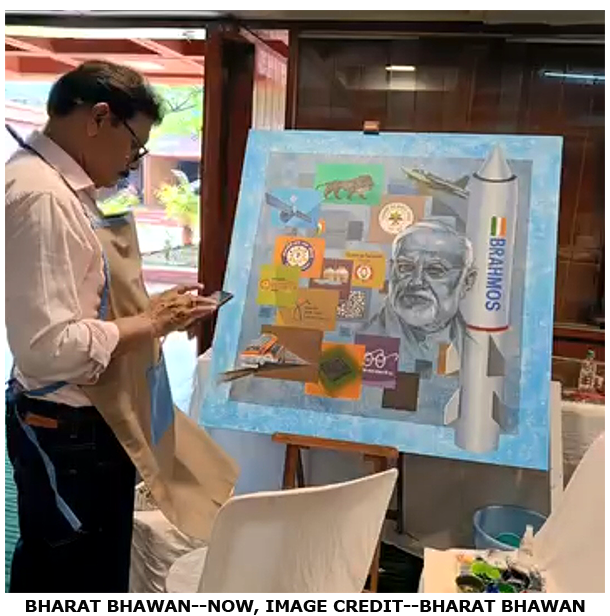
Now, let’s talk about our outcast artist who was still trying to plant his feet in the art field. He is the one who could neither turn his work into religious propaganda for easy gains, nor succeeding commercially as he has not yet established his signature identity. When he looked around him he found no fertile space, no intellectual engagement, and no debates on art that could ignite broader discourse or set the mind ablaze with some spark.
Anyway, from here two paths emerge—one belongs to those artists who live for art itself. These are the committed ones who endure hardship. Through deep thoughts, silence and endurance they reach a breakthrough point where they first liberate themselves from limiting circles and then liberate their art from any such constraint, finding growth through inner resolve rather than external validation. This is a difficult path, akin to a spiritual journey towards truth and honesty. History bears witness to such artists who became masters later in life. The second path is taken by those artists who have already learned the craft/artistry. To draw a clear value judgment, we need to dive deep together and find a difference between ‘true art’ and ‘craftsmanship’.
A true art requires personal transformation and endurance. It comes from a deep personal journey or experience, while craftsmanship is trapped in technical dependence or proficiency that can be achieved through training, imitation, repetition or formal education. An undiscerning person often confuses technical mastery with true artistic creativity, posing an existential challenge for a true artist. The difference between craftsmanship and art must exist also because the former is not an outcome of a deep and philosophical journey but merely a fascination or a superficial attraction that fades away quickly. Whereas artistic journey is something that is codified, it makes history. It has creative, emotional and experiential timeless quality.
The next and the most important chain in this interconnected ecology of art are the galleries and when we talk about ‘What is Missing?’ specifically about Indian art galleries, three different perspectives come into view. The first perspective is connected to those name-worthy galleries that have travelled a long journey in the art field. They have witnessed the brushstrokes of masters and through close association with legendary artists possess not just knowledge of the subtleties and truths of art, but also maintain a continuous effort to keep an eye on those artists who are navigating their art journey with vision and depth even in this difficult phase where there is a serious lack of seriousness required for a meaningful dialogue. Even these galleries have become trapped in commercial pressures of what is being sold and what is visible. They are stuck in a limbo and have pushed aside even their own previous experiences. They have lost their soul in following the same trend, promoting similar kinds of art—and this mindless chasing has left them exhausted and weary.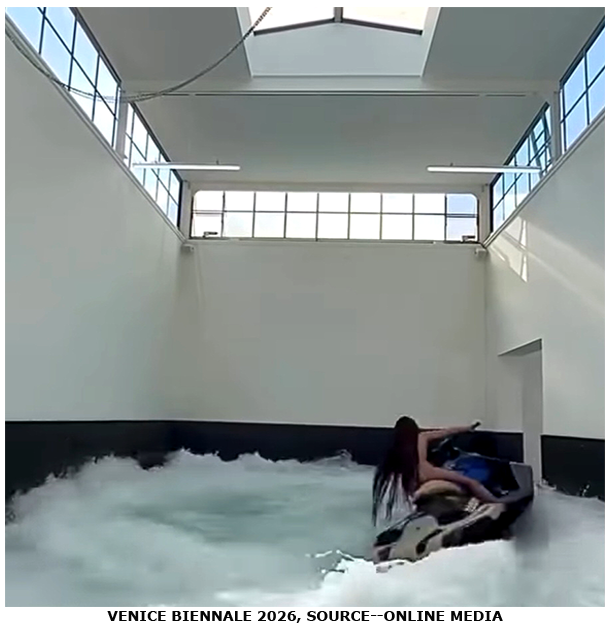
Then, there are galleries that have emerged only some time ago. They try to match with the global elite art scene under the fashionable label of ‘New Media’ because they participate in international art fairs and biennales where, in the name of new media, a whole lot of noise, junk and circus has been set up. These contemporary art spaces have been hijacked by affluent, high-society women who show off their clothes, jewellery and status rather than genuinely engaging with art. These galleries have taken a detour onto a Western-dominated track, causing a loss of long authentic continuity of Indian art which was progressing smoothly with a strong, unbroken lineage from pre-history to history and from modern to contemporary art with deep roots in philosophy, culture and aesthetics—the strength that had gained ground in international auctions. Now, blindly copying or chasing those Western aesthetics, glamour and trends is like digging up one’s own roots. Such instability has greatly affected investment in art. The trends that are adopted superficially do not retain their existence over time. They are neither preserved as cultural heritage, nor valued as asset and as soon as the trend changes, they lose their charm. In such cases the collapse of the market is natural.
Now, let’s take a tour of the third type of galleries that operate more like businesses than genuine art spaces. In the name of providing platform, they dictate and guide the young artists on what to create. They decide trendy themes like textile art, environmental issues, urban development etc. and push artists to fit into those themes. Art is projected or transformed in such a way that it becomes a decorative piece that can be easily used in interior designing. In such a scenario, there are quite a few artists who, on the galleries’ instructions, not only change their color palette every day but also shift their entire vision daily. Some even go to the extent of creating collages from cutouts of commercial magazines, adding saleable tags like ‘feminism’ and repackaging them as visually pleasing decorative objects that fit into someone’s living room.
Let’s pull the discourse toward the curator—facilitator who connects and enables the artist’s work to unfold its true vision. If he gives freedom to the artists, then he becomes the thread-holder but if he tries to impose direction, then the beads will fall. Galleries, art fairs and biennales are hiring curators to create a scenario but these curators often have a rushed approach which makes the narrative merely the weave of an individual perspective. When a serious or deeply philosophical work of art comes before such a curator, he struggles to find words. This is because he had not undertaken the journey of living that art/vision that would shape and determine his direction of thought. Without this deep immersion, the curator remains an outsider who only creates superficial framework.
Like curators, writers are also constrained by their own perceptual framework and other institutional or personal biases that make them unable to recognize fresh and deep voices to have a more inclusive review. We have had enough of run-of-the-mill writing on art and exhibitions that no longer engages the readers. If we truly want to revive the dying artistic ecology, we must understand that genuine artistic progress and meaningful art do not come from rigid academic training, market demands, curatorial concepts or institutional frameworks but from real artistic freedom--without which the artist is reduced to a mere cog in the machine of the art world.
-- Dr Saba Gulraiz
An Independent Art Writer
Comments
Join the Discussion
Please login to post comments.
Login