When Paintings Entered Every Home: Revisiting S. N. Joshi’s 1911 Publication on Raja Ravi Varma
Print Culture, Mythology and the Democratization of Art in Colonial India
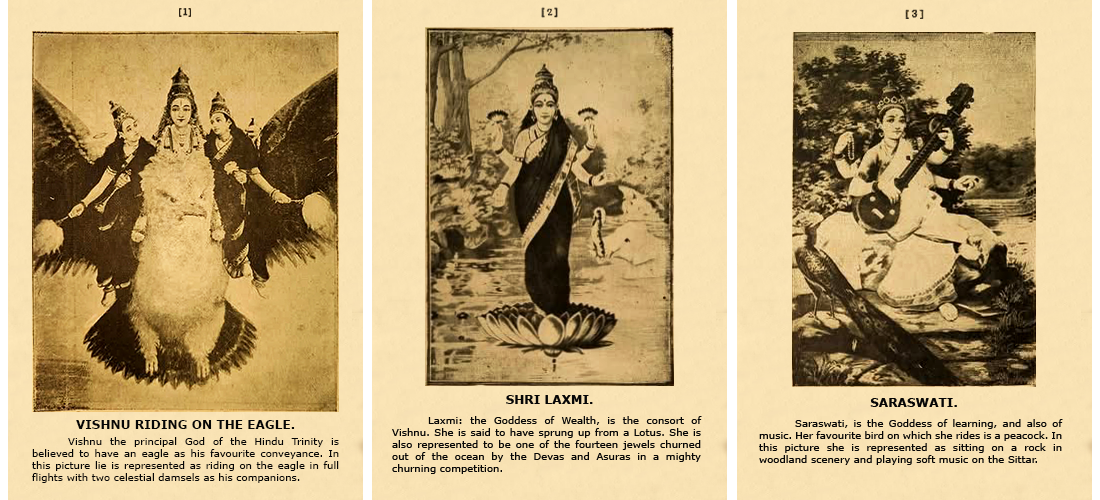
The history of Indian art is often narrated through the achievements of great painters and sculptors. Equally important, however, are the publications that carried these works beyond galleries and royal collections into the hands of ordinary readers. One such landmark publication is Half-Tone Reprints of the Renowned Pictures of the Late Raja Ravivarma, compiled by S. N. Joshi and published by Chitra-shala Steam Press, Poona, in 1911. This article examines the historical significance of the volume, its role in disseminating Raja Ravi Varma’s imagery, and its contribution to the formation of modern Indian visual culture. Far more than an illustrated book, it represents one of the earliest attempts to document an Indian artist’s work systematically while making art and mythology accessible to a wider public.
Raja Ravi Varma (1848–1906) occupies a unique position in the history of Indian art. His paintings combined European academic realism with subjects drawn from Indian epics and mythology, creating images that were both technically sophisticated and emotionally familiar to Indian audiences. His influence extended far beyond the world of painting through the widespread circulation of printed reproductions.
While much attention has been given to the famous Ravi Varma Press oleographs, comparatively little discussion has focused on early publications that documented his work. Among these, S. N. Joshi’s Half-Tone Reprints of the Renowned Pictures of the Late Raja Ravivarma deserves special recognition. Published only five years after the artist’s death, it stands as one of the earliest monographic studies devoted to an Indian painter and offers valuable insight into the relationship between art, publishing, and public education.
The Historical Context
The early twentieth century witnessed rapid developments in printing technology across India. Improvements in mechanical reproduction made it possible to circulate images at relatively low cost, allowing paintings to reach audiences that would otherwise never encounter original works.
By 1911, Raja Ravi Varma had already achieved legendary status. His paintings had transformed the visual representation of Hindu mythology, and reproductions of his works were increasingly found in homes, schools, and public institutions. The publication of S. N. Joshi’s volume came at a moment when India was developing a broader visual literacy and when printed books played an important role in shaping cultural identity.
The Publication
Printed by the Chitra-shala Steam Press in Poona, the volume contains a portrait of Raja Ravi Varma, a brief biographical account, and approximately eighty-seven reproduced paintings accompanied by explanatory notes.
Unlike expensive art albums intended for collectors, the publication appears to have been designed for educational use and popular readership. The inclusion of descriptive texts suggests that readers were expected not only to admire the images but also to understand the stories and symbolism behind them.
Its significance lies not merely in reproducing paintings but in presenting them within a coherent narrative that connected art, mythology, and history.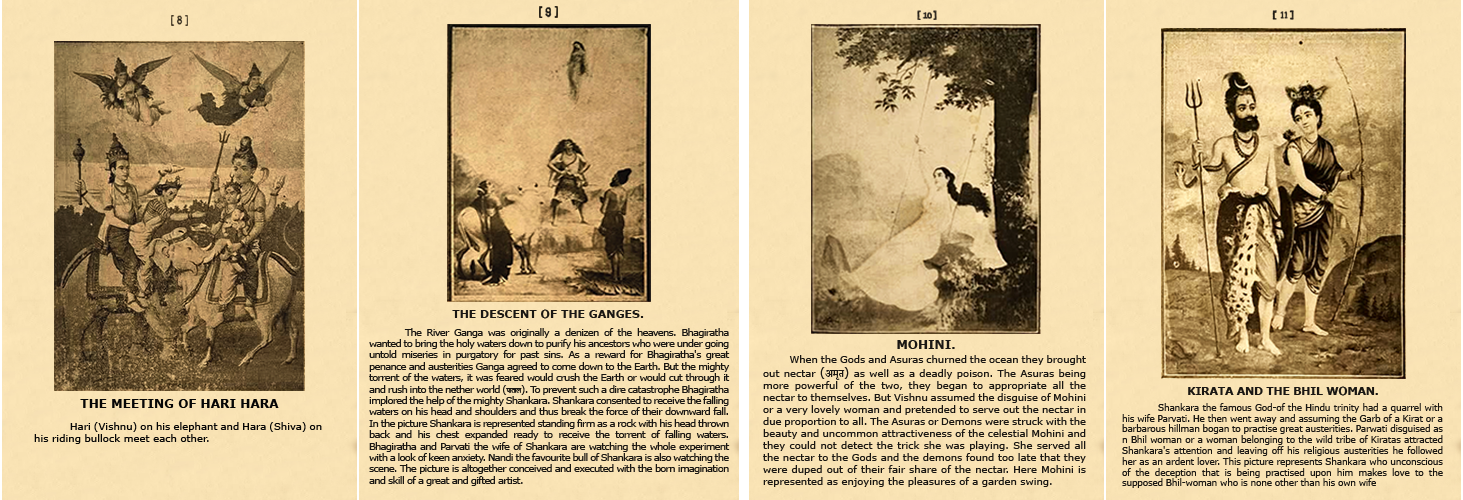
Half-Tone Printing and the Expansion of Visual Culture
The book employed half-tone printing, a technology that converted tonal variations into tiny dots, enabling photographs and paintings to be reproduced economically in books and newspapers.
Although monochrome reproduction could not capture the richness of Ravi Varma’s colour palette, it succeeded in preserving composition, gesture, and narrative structure. This technological innovation dramatically expanded access to art.
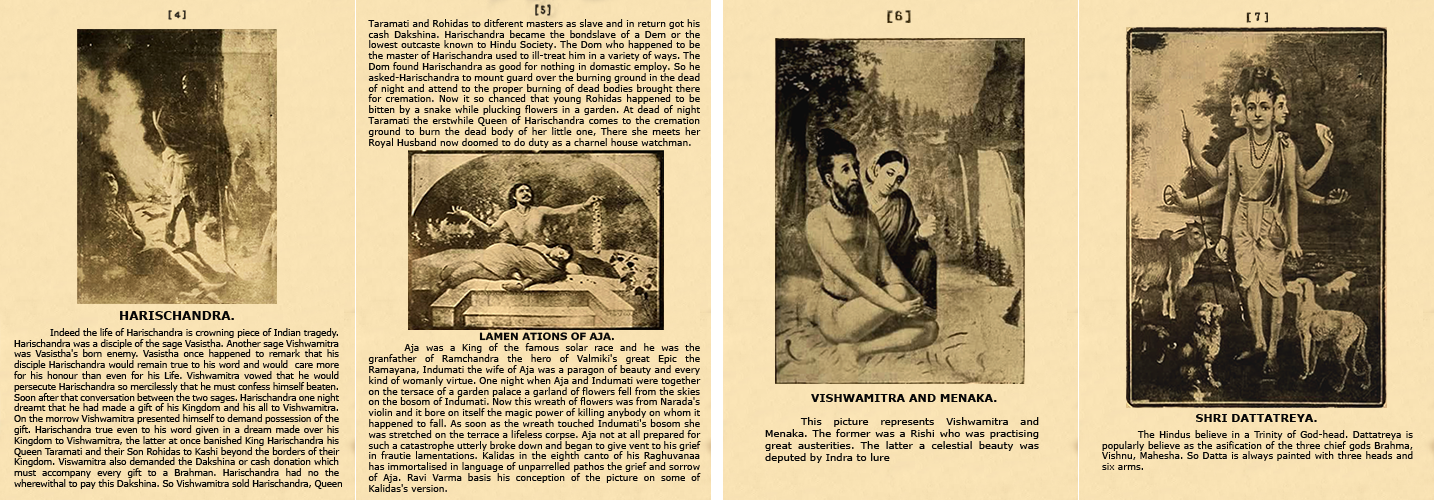
For many readers, these reproductions would have been their first encounter with celebrated images such as Lakshmi, Saraswati, Vishnu Riding on Garuda, The Descent of the Ganga, Marriage of Sita, and Sita in the Ashoka Forest.
The publication therefore illustrates how printing technology became an instrument for cultural dissemination.
Art as Education
One of the distinguishing features of the volume is its explanatory text accompanying each illustration.
Rather than assuming prior knowledge of Indian mythology, the descriptions introduce readers to the stories, characters, and religious significance represented in the paintings. This approach transformed the publication into both an art book and an educational resource.
Such integration of image and narrative reflects a broader effort to preserve and communicate cultural heritage during a period of social and political change.
The book demonstrates that visual art was increasingly viewed not only as an object of aesthetic appreciation but also as a medium for learning and public instruction.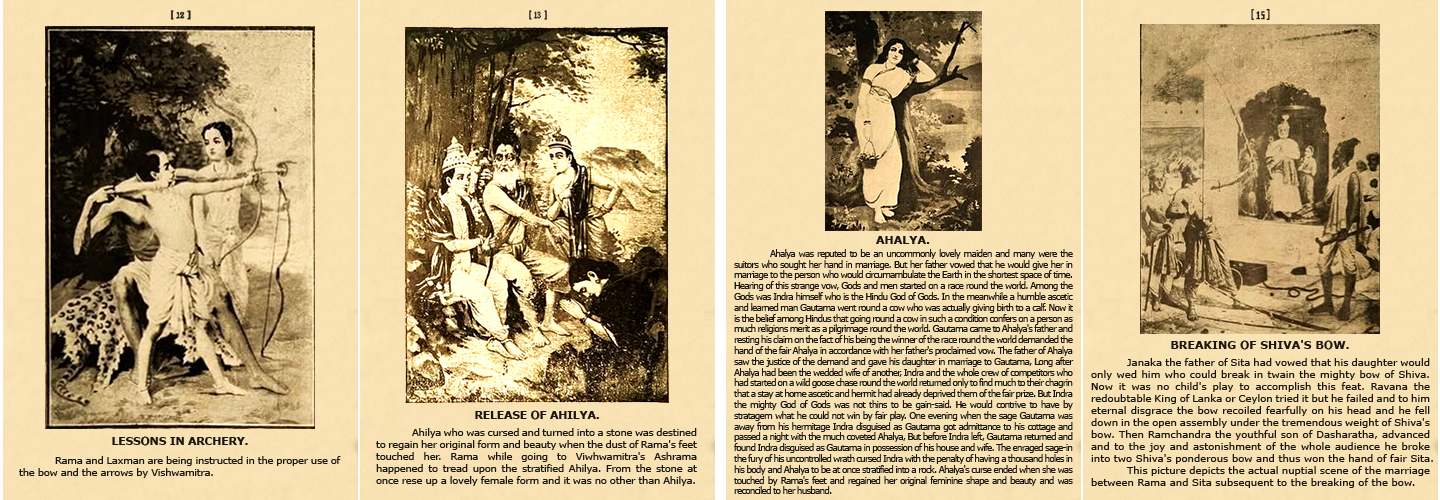
Standardising the Visual Imagination
Perhaps the greatest contribution of Ravi Varma’s printed reproductions was their role in establishing a shared visual language.
Before the widespread circulation of these images, depictions of mythological figures varied considerably across regions and artistic traditions. Through books, prints, and oleographs, Ravi Varma’s interpretations gradually became accepted as canonical representations.
The image of Lakshmi standing upon the lotus, Saraswati holding the veena, or Sita in quiet contemplation owes much of its enduring familiarity to the circulation of such printed material.
In this sense, publications like S. N. Joshi’s volume participated directly in constructing the visual identity of modern India.
Chitra-shala Steam Press and Indian Publishing
The role of the Chitra-shala Steam Press deserves equal attention.
Established in Poona during the late nineteenth century, the press became one of India’s important centres for illustrated publications and religious imagery. By publishing works related to Ravi Varma, it contributed significantly to the preservation and dissemination of Indian visual culture.
The press represents an important chapter in the history of Indian publishing, demonstrating how advances in printing technology intersected with artistic production and public education.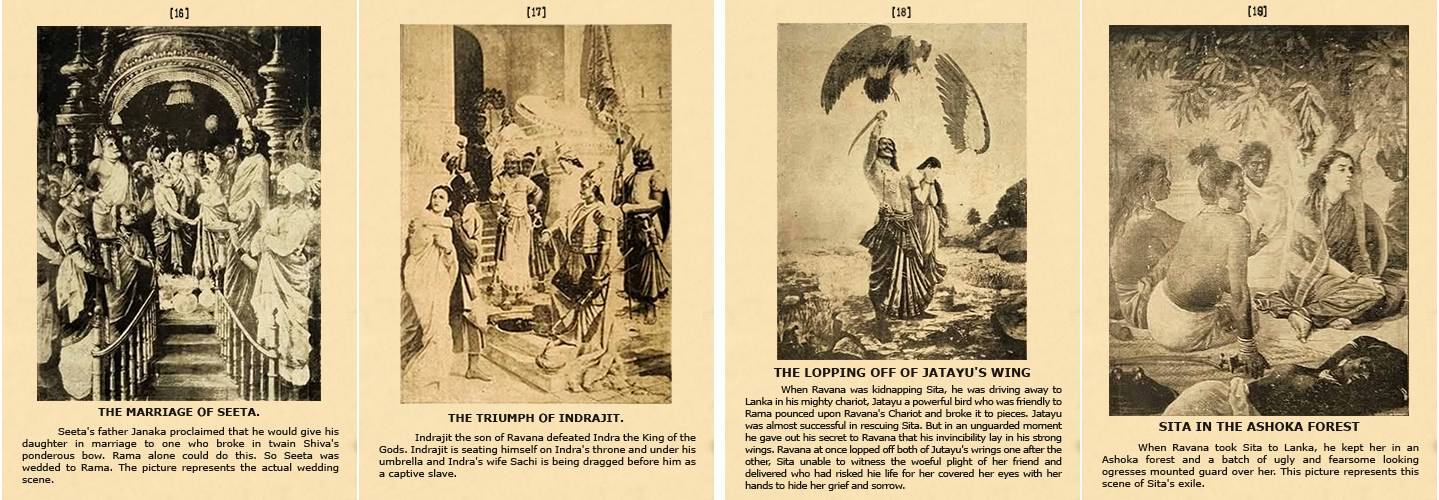
Collecting and Research Value
Today, surviving copies of Half-Tone Reprints of the Renowned Pictures of the Late Raja Ravivarma are increasingly recognised as valuable historical documents.
For scholars, the publication provides early titles, descriptions, and visual records of Ravi Varma’s paintings. For collectors, it represents one of the earliest dedicated books on an Indian artist and an important example of colonial-era art publishing.
Its rarity and historical importance extend beyond bibliophilic interest. The volume offers evidence of how artworks were interpreted, reproduced, and circulated during the formative decades of India’s modern cultural history.
The story of Raja Ravi Varma cannot be understood solely through his original paintings. Equally important are the books and printed reproductions that carried his imagery across the subcontinent.
S. N. Joshi’s 1911 publication stands as a landmark in this process. It transformed celebrated paintings into educational resources, connected mythology with modern printing technology, and enabled thousands of readers to engage with Indian art beyond the walls of palaces and private collections.
More than a century later, the volume remains an indispensable resource for historians, collectors, and researchers. It reminds us that the history of art is also the history of publication, reproduction, and public access. In preserving Ravi Varma’s images for future generations, the book helped shape the visual memory of modern India itself.
Selected Bibliography
Chatterjee, Ramananda. Ravi Varma: The Indian Artist. Allahabad, 1903.
Joshi, S. N. Half-Tone Reprints of the Renowned Pictures of the Late Raja Ravivarma. Poona: Chitra-shala Steam Press, 1911.
Neumayer, Erwin, and Christine Schelberger (eds.). Raja Ravi Varma: Portrait of an Artist – The Diary of C. Raja Raja Varma. New Delhi: Oxford University Press, 2005.
Parimoo, Ratan (ed.). The Legacy of Raja Ravi Varma the Painter. Baroda: Maharaja Fatehsingh Museum Trust, 1998.
Pinney, Christopher. “An Authentic Indian ‘Kitsch’: Raja Ravi Varma and the Printed Image.” Journal of Arts & Ideas.
StoryLTD. Half-Tone Reprints of the Renowned Pictures of the Late Raja Ravivarma (Auction Catalogue Essay).
Tuli Research Centre for India Studies. Catalogue entry for Half-Tone Reprints of the Renowned Pictures of the Late Raja Ravivarma.
- Research & Compiled by Aakriti Art Gallery team
Comments
Join the Discussion
Please login to post comments.
Login